REGARDER L’ART · ART IN DIALOGUE
When Art Brings Our Monsters to Life
Witches, demons, monsters and masked faces… For centuries, artists have given shape to our fears. But who are the real monsters: those they imagine, or those we become?
Introduction
For centuries, artists have filled their works with witches, demons and fantastic creatures. These imaginary beings tell us far more than frightening stories: they give a face to our beliefs, anxieties and fantasies.
From Bosch to Ensor, monsters change their appearance. Sometimes terrifying, sometimes grotesque, they also reveal the fears and concerns of their time.
The question
What if the monsters we imagine revealed more about ourselves than about them?
Works in dialogue
Web Gallery of Art · Public Domain Mark 1.0 · Source
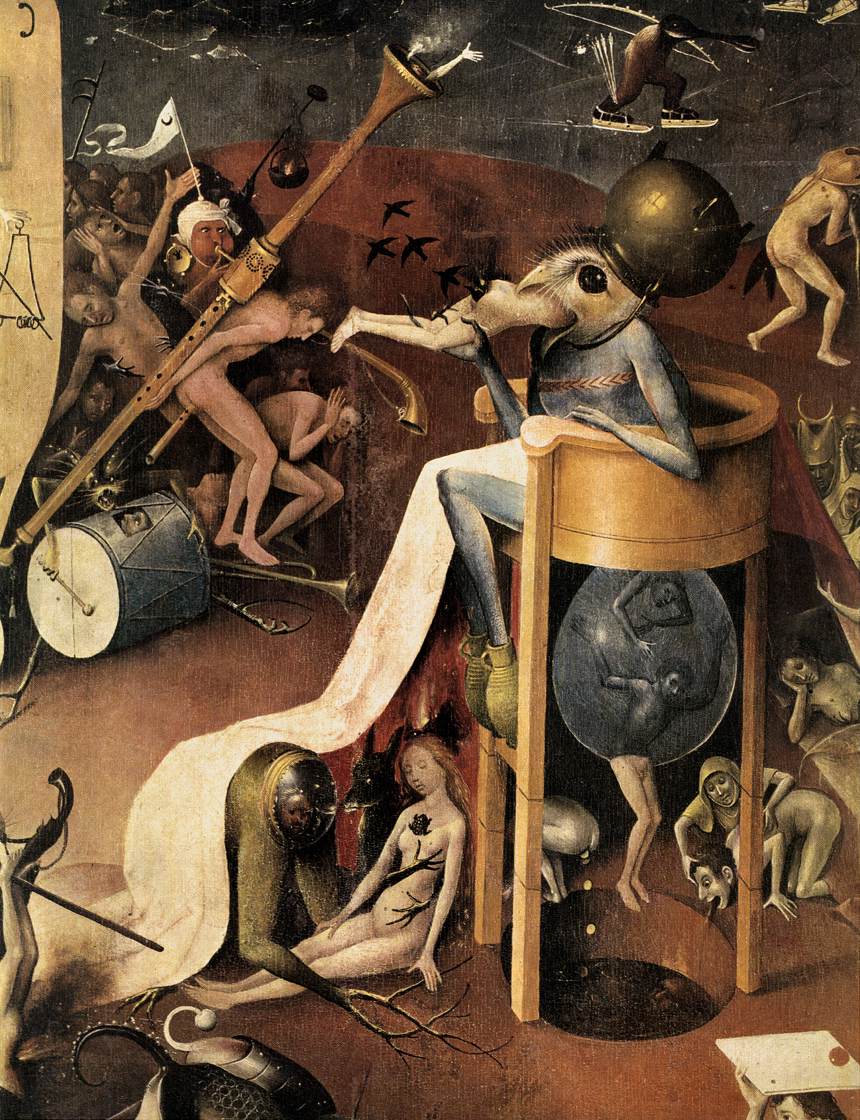
The Garden of Earthly Delights — Hell (detail)
Jérôme Bosch · Vers 1500 (datation estimée entre 1480 et 1505) · Madrid / Museo del Prado
Look closely — At the centre, a bird-headed creature swallows human beings. Around it, bodies are humiliated, objects become threatening, and everything seems to defy reason.
UnderstandingBosch imagines a hell in which human behaviour turns against those who gave in to their vices. The monster makes the consequences of sin and the religious fears of his time visible.
Our first fear is of a world in which evil triumphs.
Google Arts & Culture · Domaine public (Public Domain Mark 1.0). · Source
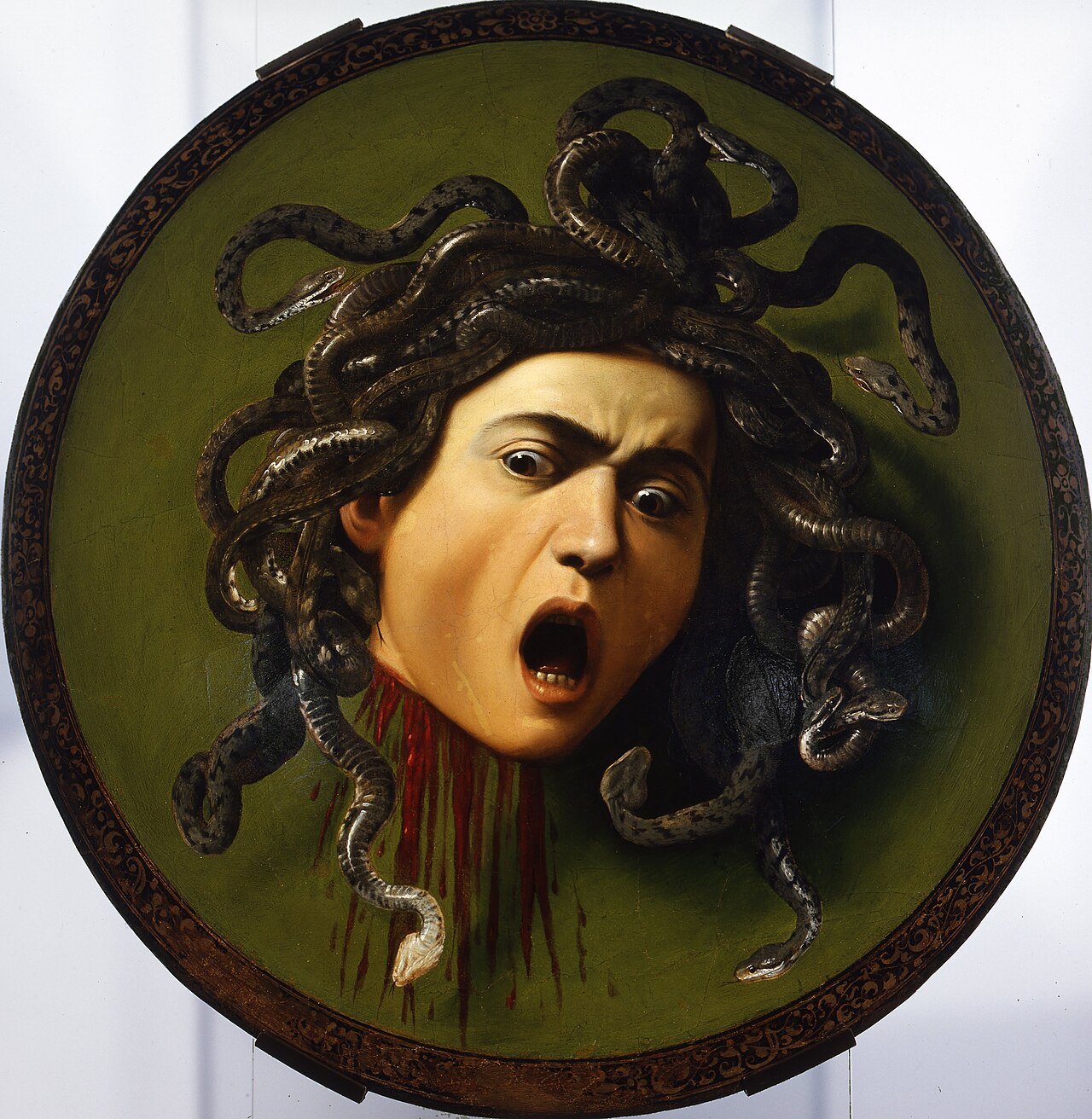
Medusa
Caravaggio · 1597–1598 · Florence / Uffizi Gallery
Look closely — Medusa opens her mouth in a scream. Her eyes are wide, and snakes take the place of her hair. Blood spurts from her severed neck.
UnderstandingCaravaggio chooses the instant just after Medusa has been beheaded. The creature whose gaze could turn others to stone now seems petrified by terror herself.
After the monsters of hell comes one we must never look in the eye.
Gandalf's Gallery — Flickr · CC BY-NC-SA 2.0 · Source
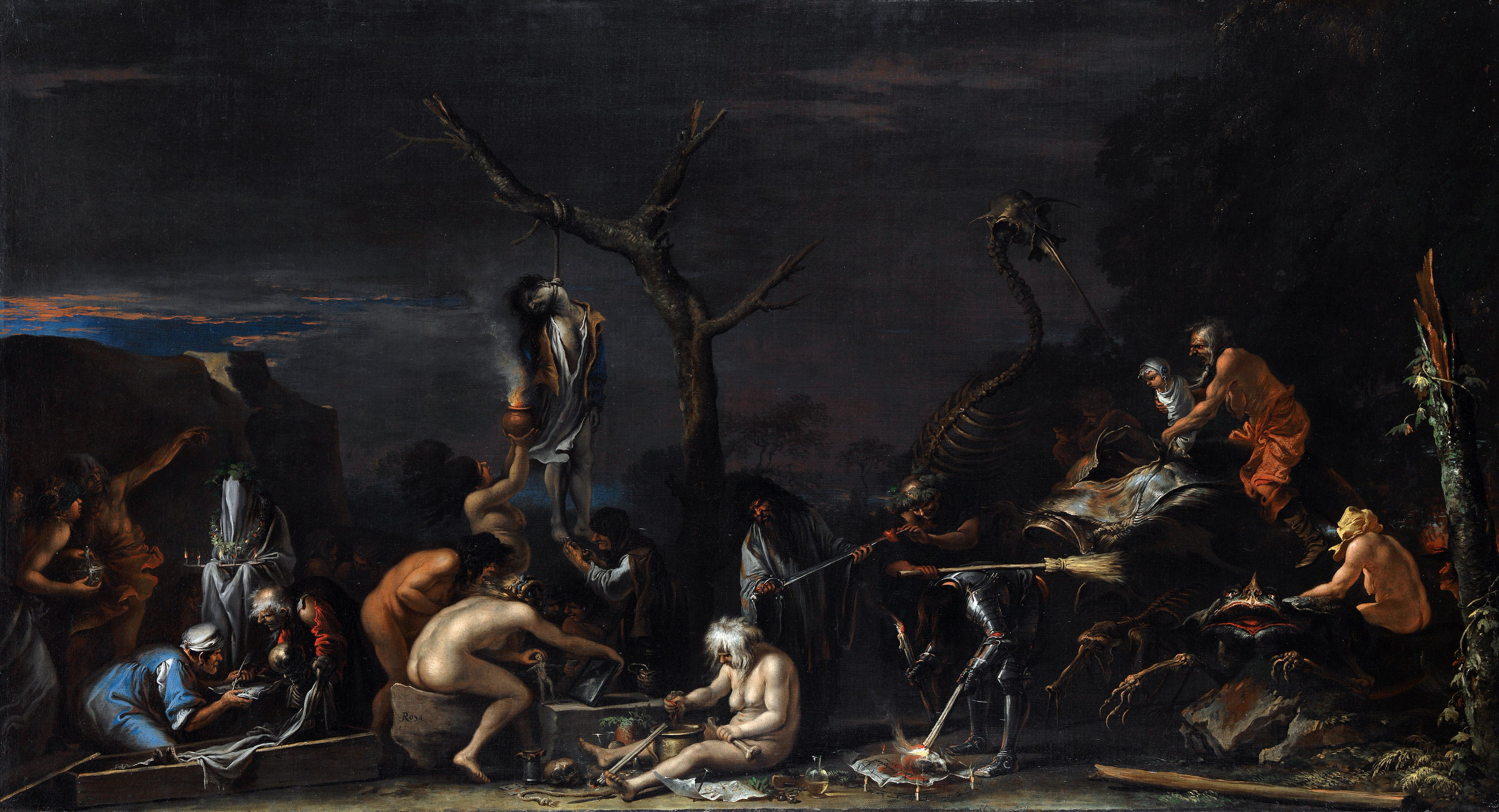
Witches at their Incantations
Salvator Rosa · Vers 1646 · London / National Gallery
Look closely — In the darkness, several figures take part in mysterious practices. Strange objects, bodies and unsettling creatures form a scene that is difficult to decipher.
UnderstandingIn the seventeenth century, beliefs in witchcraft still fuelled collective fears. Rosa turns this imaginary world into a spectacle in which supernatural forces seem able to act upon the world of the living.
The monster no longer dwells only in hell: people now believe it can be summoned.
Tulip Hysteria · CC BY 2.5 · Source
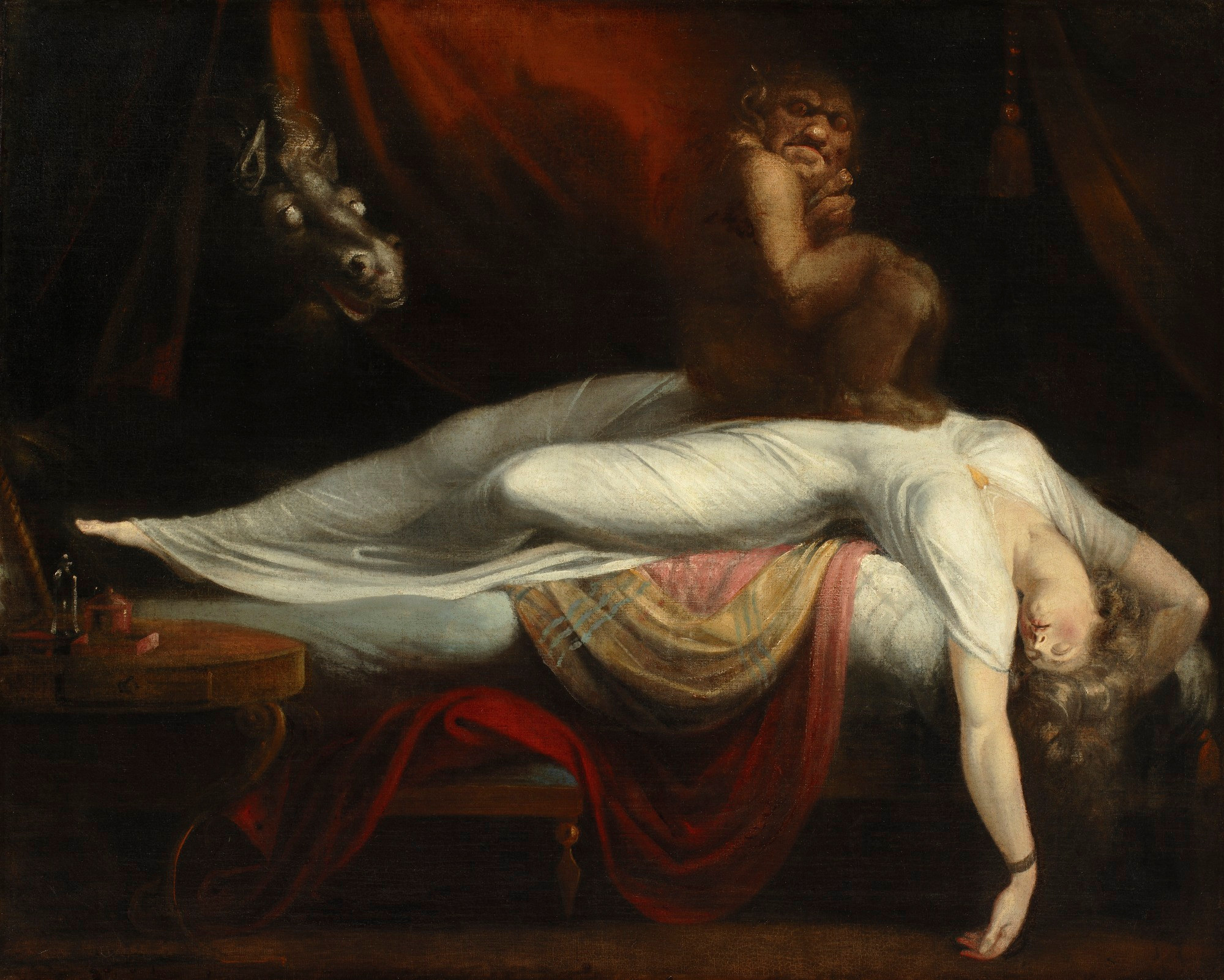
The Nightmare
Johann Heinrich Füssli (Henry Fuseli) · 1781 · Detroit / Detroit Institute of Arts
Look closely — A woman lies asleep, sprawled across her bed. A small demon sits on her chest while a horse’s head emerges from the darkness.
UnderstandingFuseli gives shape to nocturnal anxiety. The incubus, a creature from folklore, embodies a terror over which the sleeper has no control.
Fear no longer needs a hell or a ritual: it arises within our own minds.
Tulip Hysteria / Flickr, via Wikimedia Commons · Creative Commons Attribution 2.5 · Source
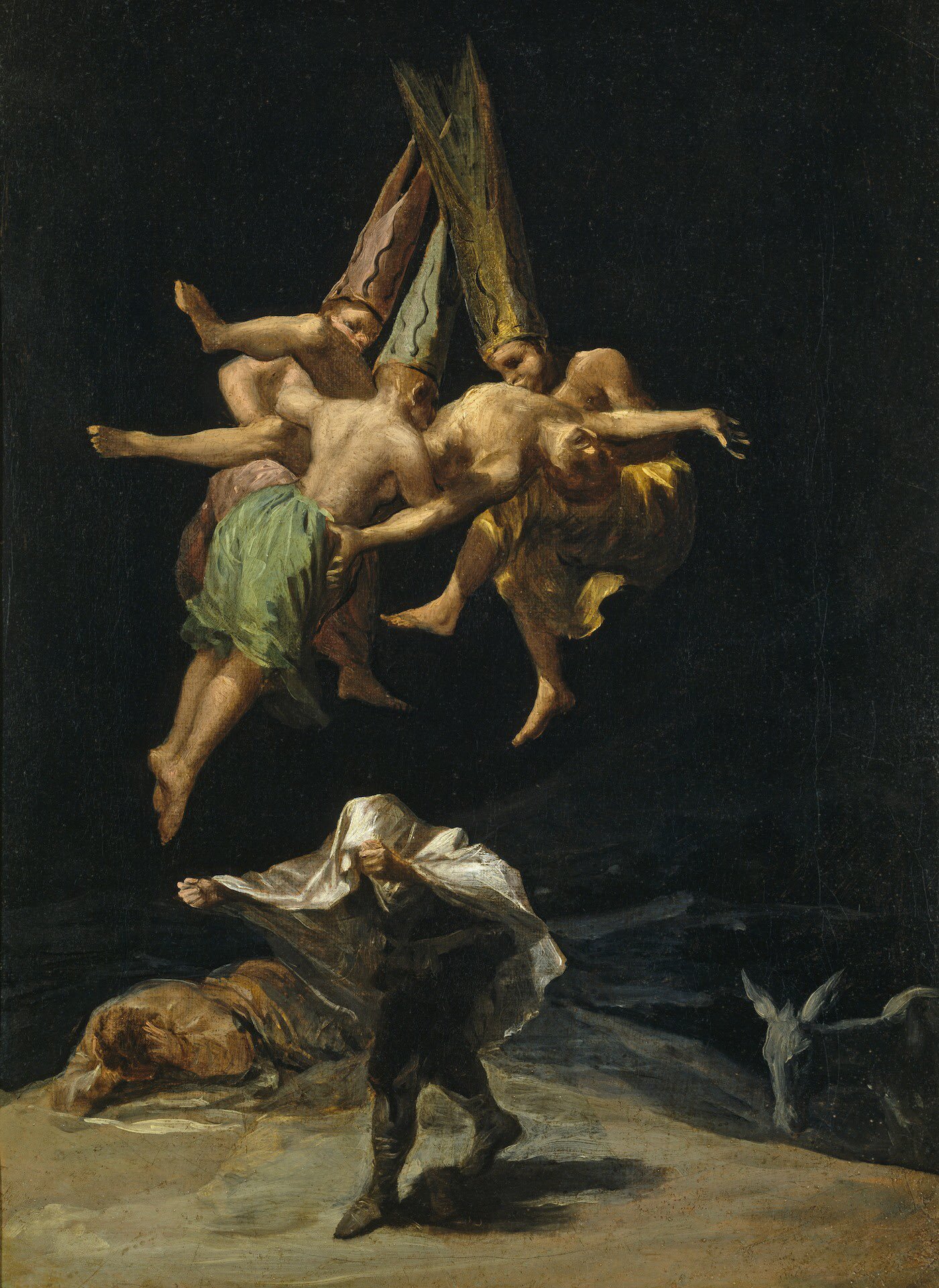
Witches' Flight
Francisco de Goya · Vers 1798 · Madrid / Museo del Prado
Look closely — Three figures suspended in mid-air carry a man away. Below them, others cover their faces or try to flee.
UnderstandingGoya depicts a world ruled by fear and irrational beliefs. The scene can be read as a fantastic vision, but also as a criticism of superstition.
Perhaps what frightens us now is not the witch, but how readily we believe in her.
Eurocles / Arpoma, via Wikimedia Commons · Domaine public (Public Domain Mark) · Source
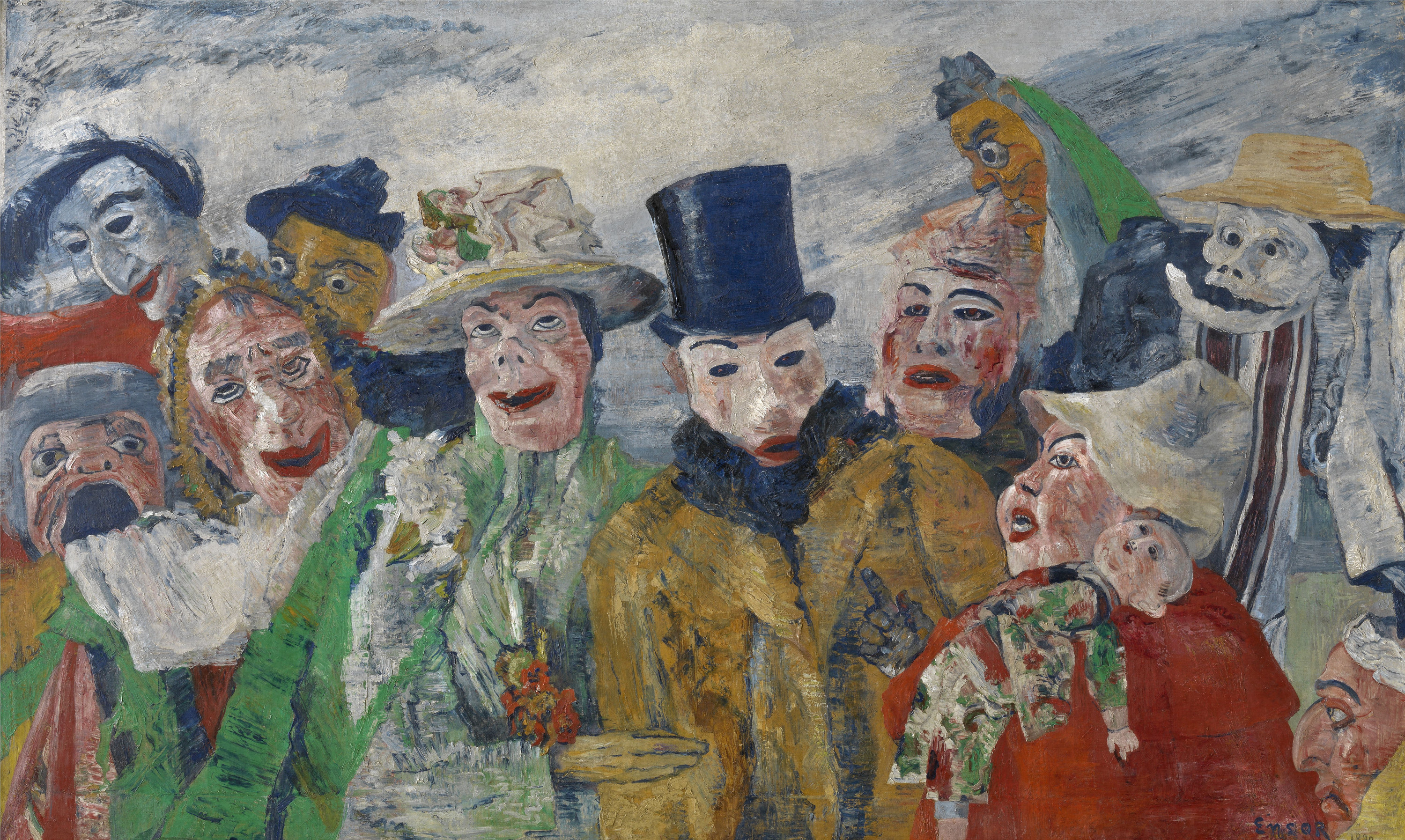
The Intrigue
James Ensor · 1890 · Antwerp / Royal Museum of Fine Arts Antwerp
Look closely — Masked figures crowd together. Their faces are distorted, their expressions exaggerated. It is impossible to know what they are really thinking.
UnderstandingIn Ensor’s work, masks become a way of exposing hypocrisy, cruelty and the absurdity of human relationships. Monsters no longer come from another world: they take on the appearance of people like us.
What if the most unsettling face were the one we choose to show?
Key takeaway
From Bosch to Ensor, monsters change their appearance, but they continue to embody our fears. First imagined in hell and legend, they emerge in rituals, nightmares and superstitions, before hiding behind human masks. The history of these creatures is also the history of how we see the world — and ourselves.