REGARDER L’ART · ARTISTS

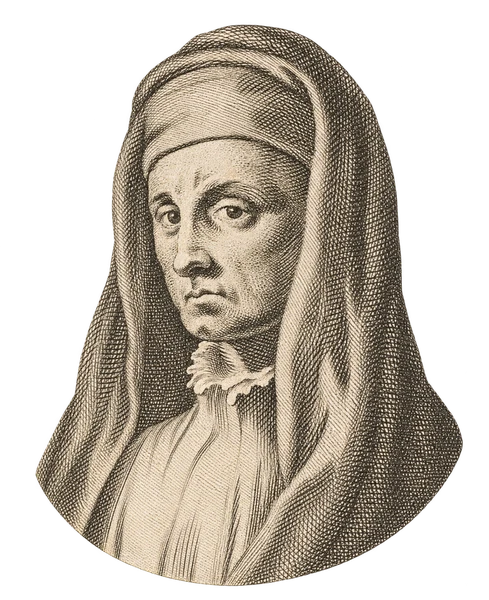
Giotto

Vers 1267–1337

With Giotto, figures do more than represent a sacred story: they seem to feel emotions, occupy space and interact with one another.

He does not yet paint according to the rules of 15th-century mathematical perspective. Yet he gives bodies weight, gestures meaning and scenes remarkable intensity.

When figures begin to come alive

Giotto

In a few words

In the early 14th century, he helps transform painting: his figures acquire physical presence, gestures express feelings and religious episodes take the form of lived scenes.

A few milestones in his life

Giotto di Bondone was probably born around 1267 near Florence and died in Florence in 1337. A celebrated painter in his lifetime, he worked in several Italian cities, including Florence, Padua and Naples.

According to a tradition later recorded by Giorgio Vasari, Giotto was discovered and trained by Cimabue. This story is famous, but the details of his training are not firmly established.
A few milestones

c. 1267 — Probable birth in Tuscany.

c. 1303–1305 — Painting of the major cycle in the Scrovegni Chapel, Padua (dating debated across sources).

1334 — Appointed master of works at Florence Cathedral; the bell tower bears his name.

1337 — Death in Florence.

Giotto belongs to the late Middle Ages, often described as the “pre-Renaissance”: he prepares changes that 15th-century painters will develop.

The Scrovegni Chapel: a treasure behind a modest façade

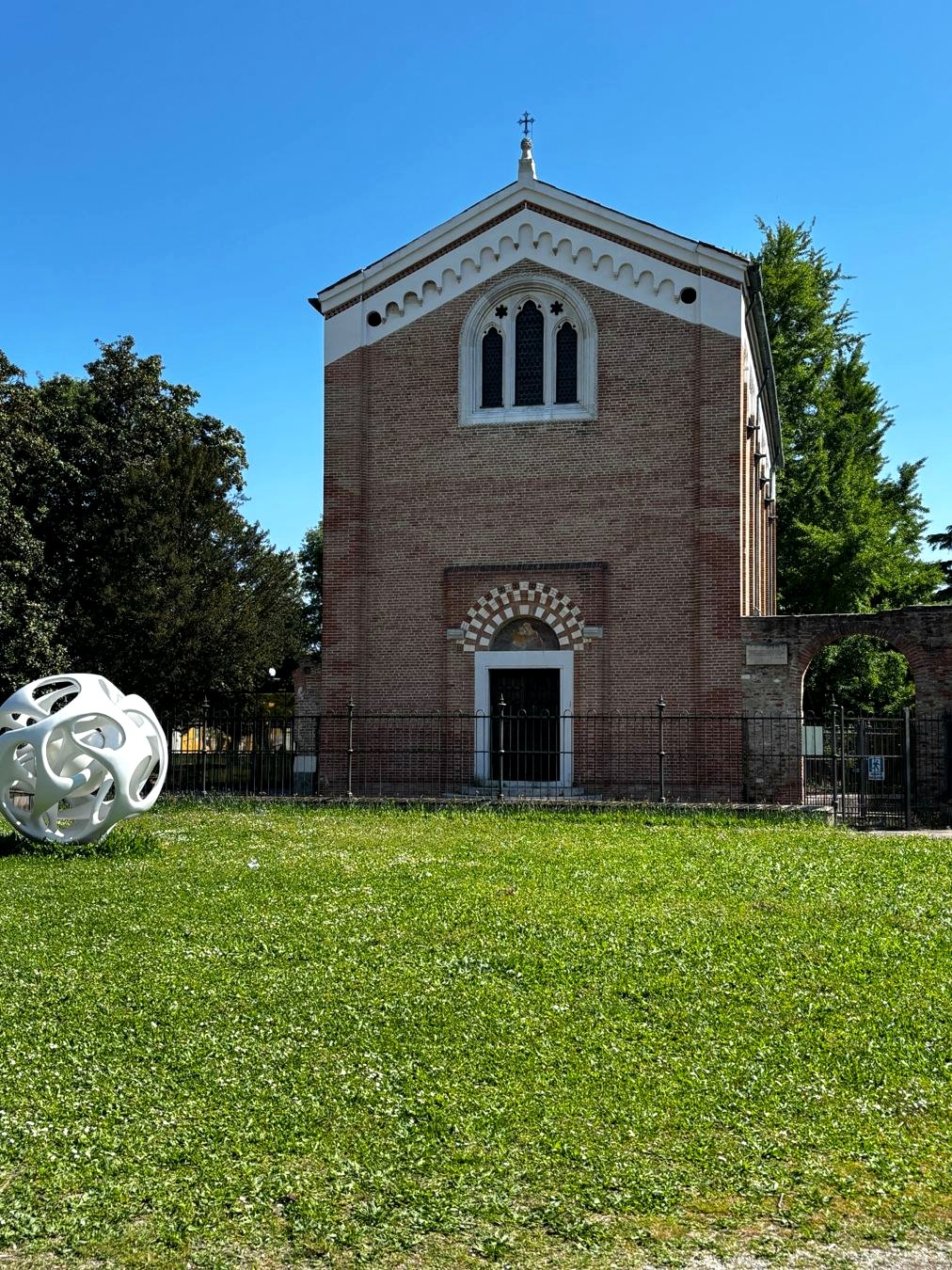
The Scrovegni Chapel, Padua

The Scrovegni Chapel, Padua

Photographie personnelle

In Padua, the chapel commissioned by Enrico Scrovegni houses an exceptional fresco cycle painted by Giotto in the early 14th century, generally dated around 1303–1305.

The restrained exterior contrasts with walls entirely covered in images. Episodes from the lives of Joachim and Anne, Mary and Christ unfold as a story that the eye can follow.

Look closely: the difference between the exterior architecture and the interior decoration, then the way the scenes are arranged in several tiers.

A chapel conceived as a whole

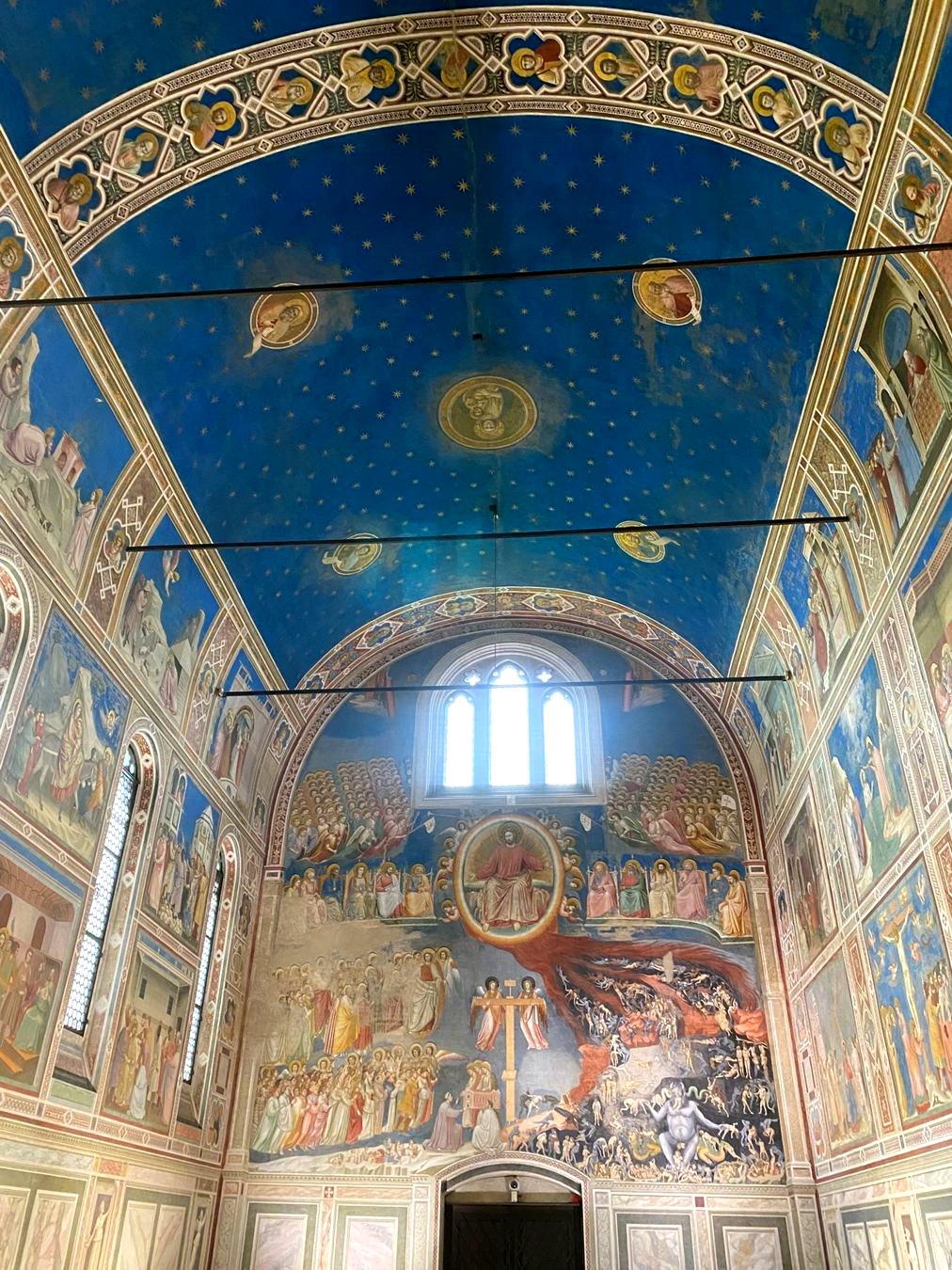
General view of the interior and starry vault

Auteur du site

A chapel conceived as a whole

The star-studded blue vault, painted frames and frescoes create a continuous visual experience. Each scene has its own frame, yet all contribute to a single programme.

03 · UNE ŒUVRE À REGARDER

A story told on the walls

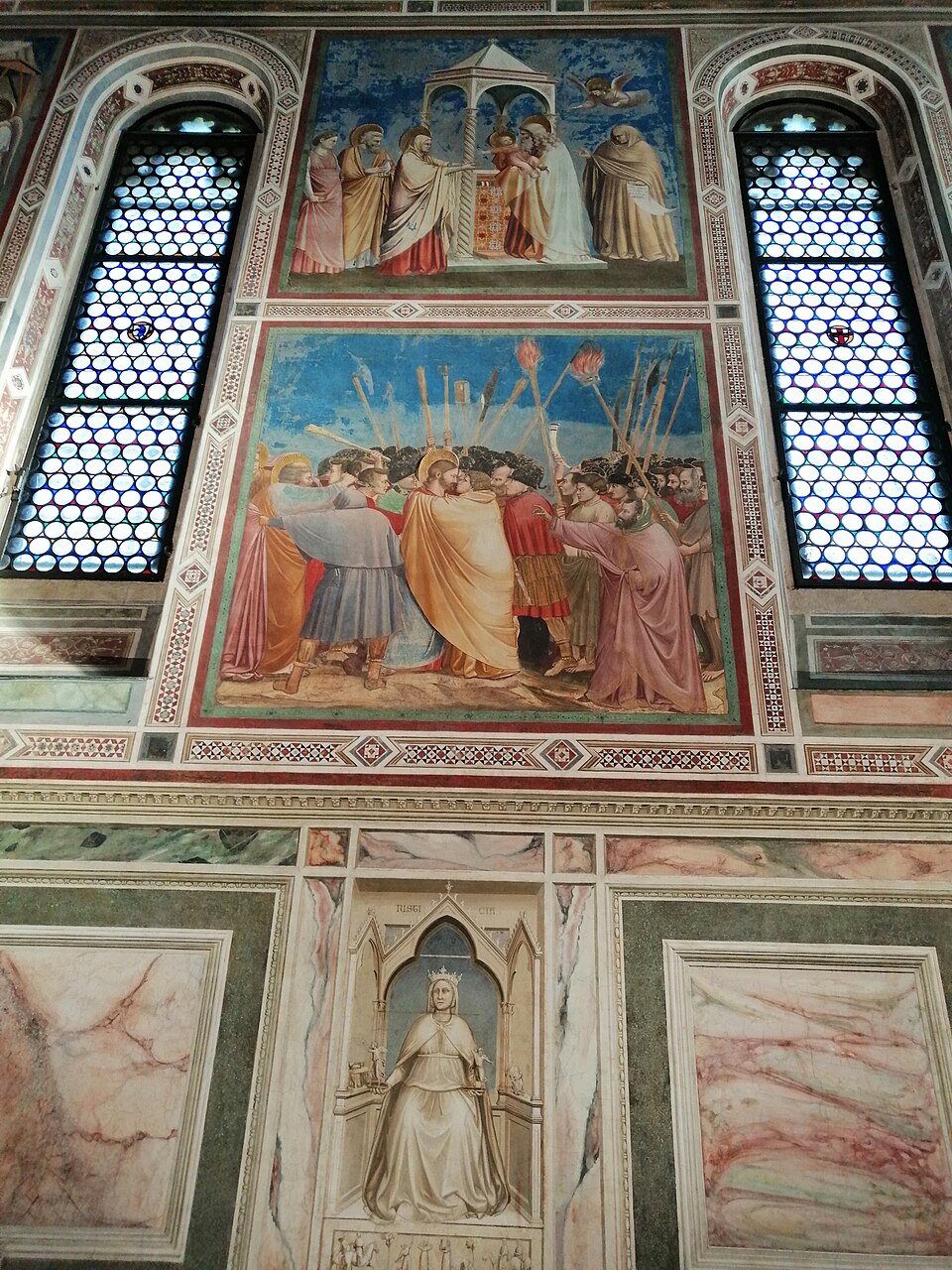
Les fresques disposées en registresNew markerNew markerNew marker
Giotto · Frescoes arranged in tiers
Bramfab · CC BY-SA 4.0 · Wikimedia Common

Look closely

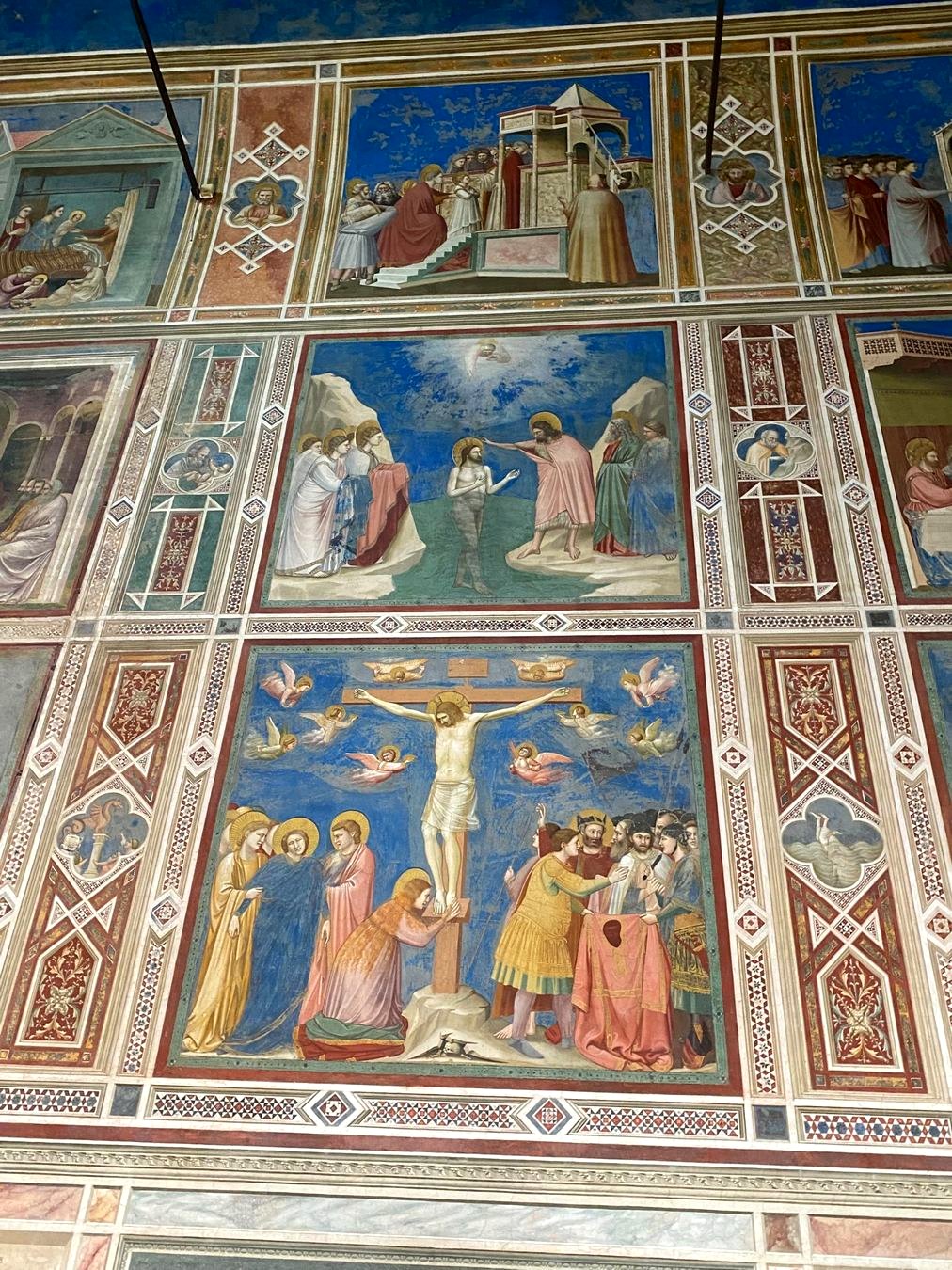
Giotto arranges the frescoes in tiers, one above another: the episodes unfold like chapters in a great painted story. The sequence runs from one wall to another, rather than simply from top to bottom.

Understanding

Joachim and Anne, then Mary

01 · Upper tier

The lives of Mary’s parents and episodes from Mary’s own life. Here we find The Meeting at the Golden Gate, with the kiss of Joachim and Anne.

The Life of Christ

02 · Middle tiers

Christ’s birth, miracles and Passion. Among the scenes is The Kiss of Judas.

Virtues and Vices

03 · Lower tier

Figures in grisaille, painted to resemble sculptures, invite reflection on human choices.

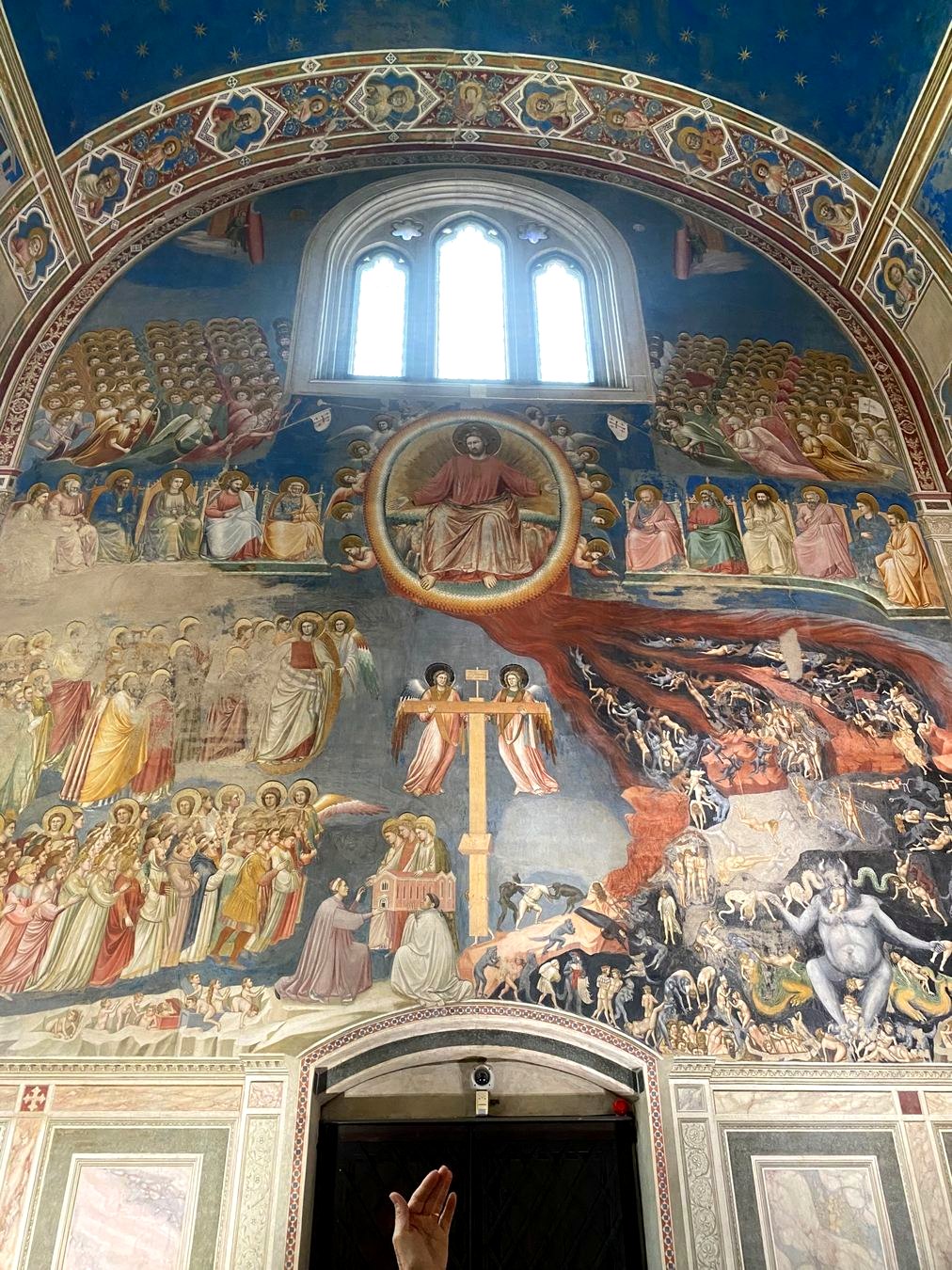
On the entrance wall: the great Last Judgement completes the programme. Above it all, the star-studded blue vault envelops the visitor.

04 · UNE ŒUVRE À REGARDER

The Last Judgement: Reading a Monumental Composition Convertir en PDF

Le Jugement dernier
Giotto · The Last Judgement
Photographie personnelle ·

Look closely

An image organised around Christ

At the upper centre, Christ the Judge dominates the composition. To his right, on the left of the image, lies the world of the saved; to his left, on the right of the image, that of the damned and Hell.

Contrasting colours, crowded figures and movement guide the eye towards these different fates.

Understanding

Le cercle qui entoure le Christ, la procession des élus, les anges près de la croix et la figure monstrueuse de l'Enfer.

La scène comprend aussi, dans sa partie inférieure, Enrico Scrovegni présentant un modèle réduit de la chapelle.

Two kisses, two emotions

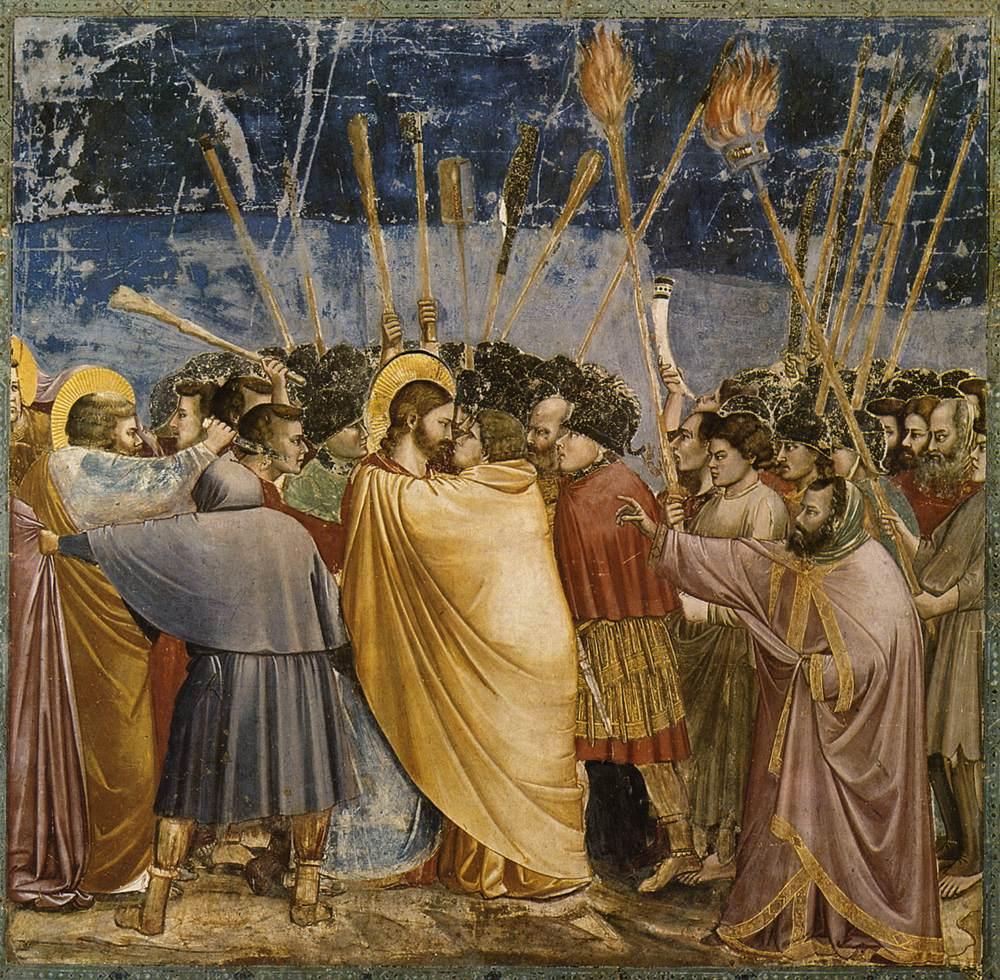
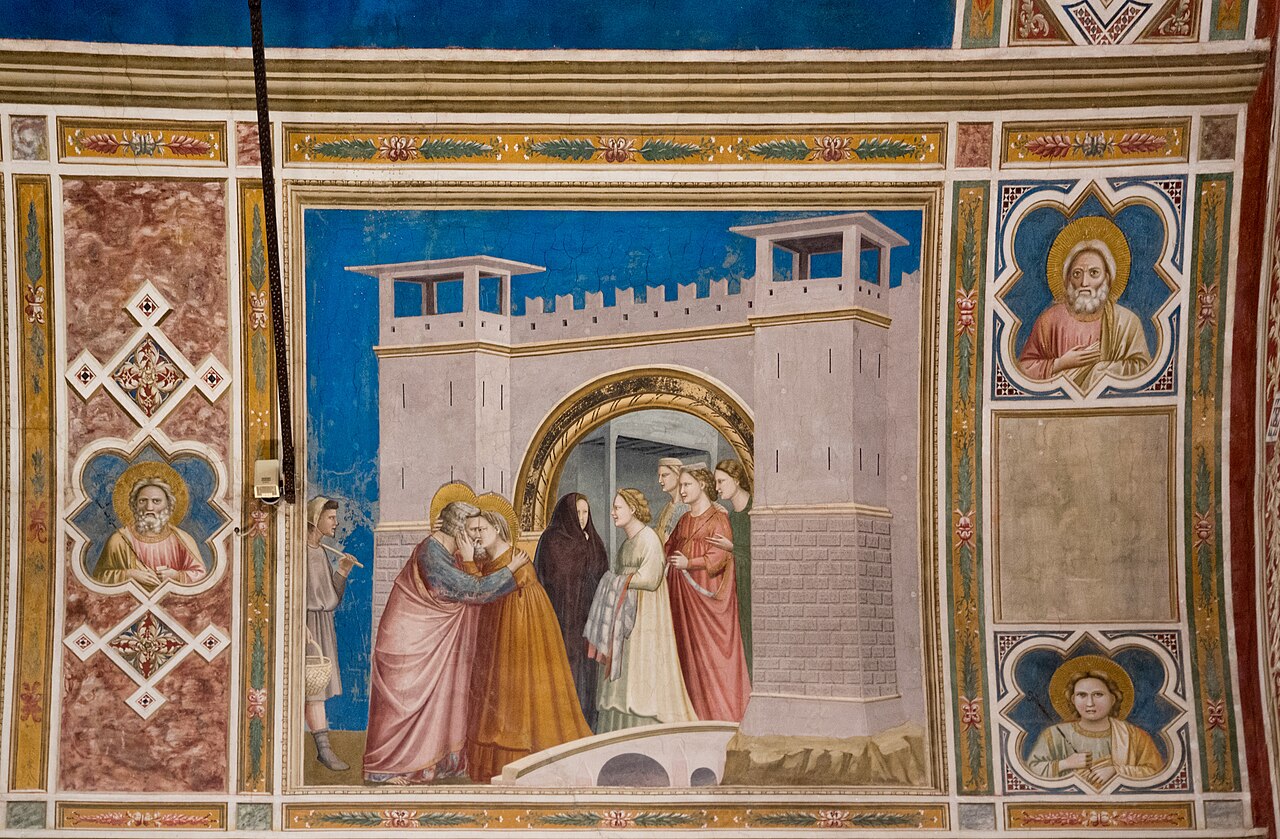
Giotto tells of two contrasting encounters: the tenderness of Joachim and Anne, then Judas’s betrayal. Gesture becomes a language.

The Kiss of Judas: betrayal

The Kiss of Judas: betrayal

Giotto, Scrovegni Chapel, Padua, c. 1303–1305

Reproduction d’une œuvre du domaine public — auteur photographique non précisé · PD-Art / Public Domain Mark 1.0

At the centre, Judas wraps Jesus in his large yellow cloak. The two faces confront one another, still amid the agitated crowd. Torches, lances and gestures converge on this encounter.

Look for the gazes, the cloak uniting the silhouettes and the contrast between calm and agitation.

The Kiss of Judas — Giotto

France Culture · Les Regardeurs · 58 min · In French

Listen to the podcast →

The kiss of Joachim and Anne: tenderness

The kiss of Joachim and Anne: tenderness

Giotto, Scrovegni Chapel, Padua, c. 1303–1305.

Jörgens.Mi/Wikipedia · CC BY-SA 3.0

In The Meeting at the Golden Gate, Anne holds Joachim’s face and their cheeks touch. Hands and gazes express palpable affection: an intimate moment portrayed with remarkable humanity.

Look for the hands on the face, the eyes close together and the contact between the two figures.

From Cimabue to Giotto: Christ’s body gains weight

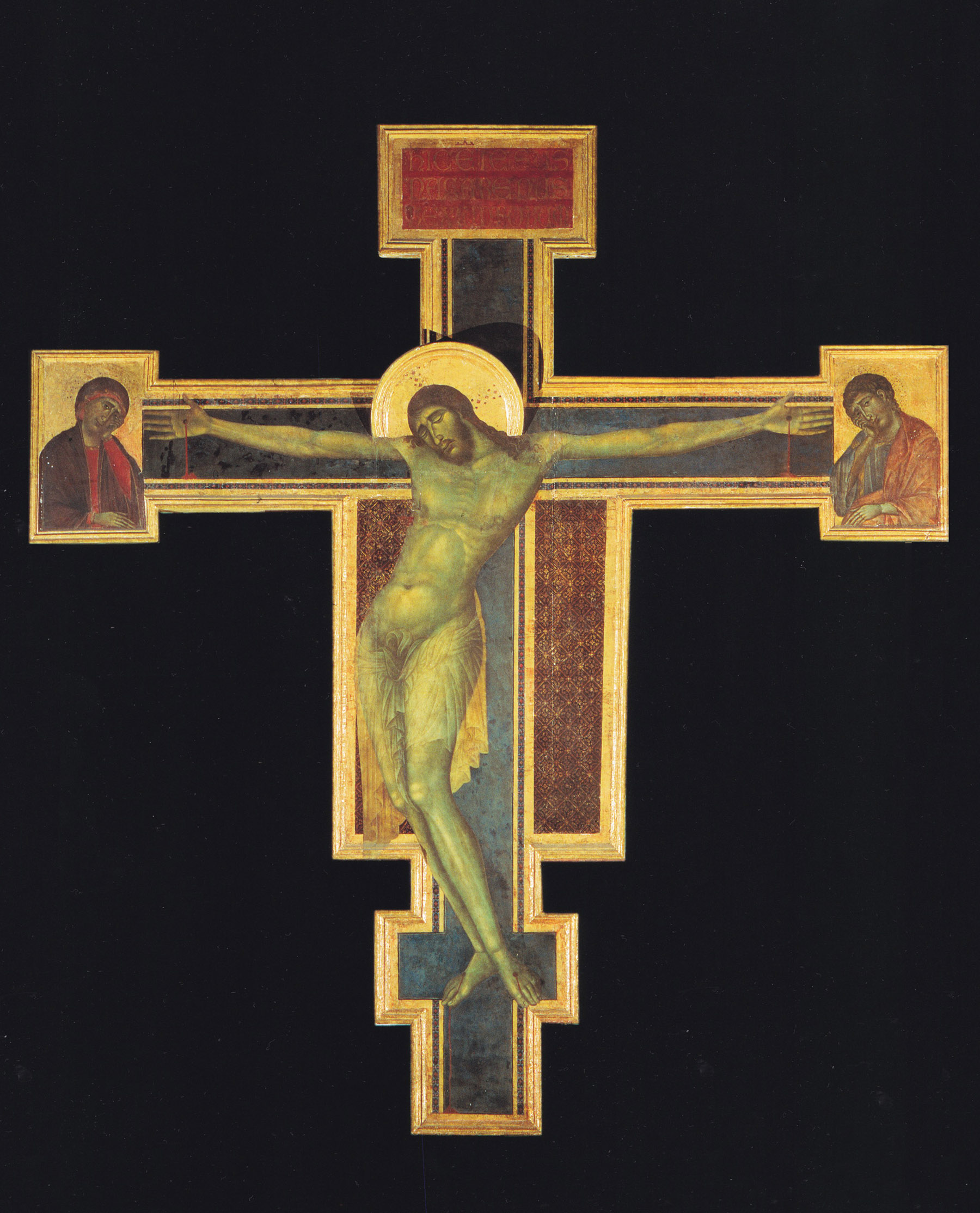
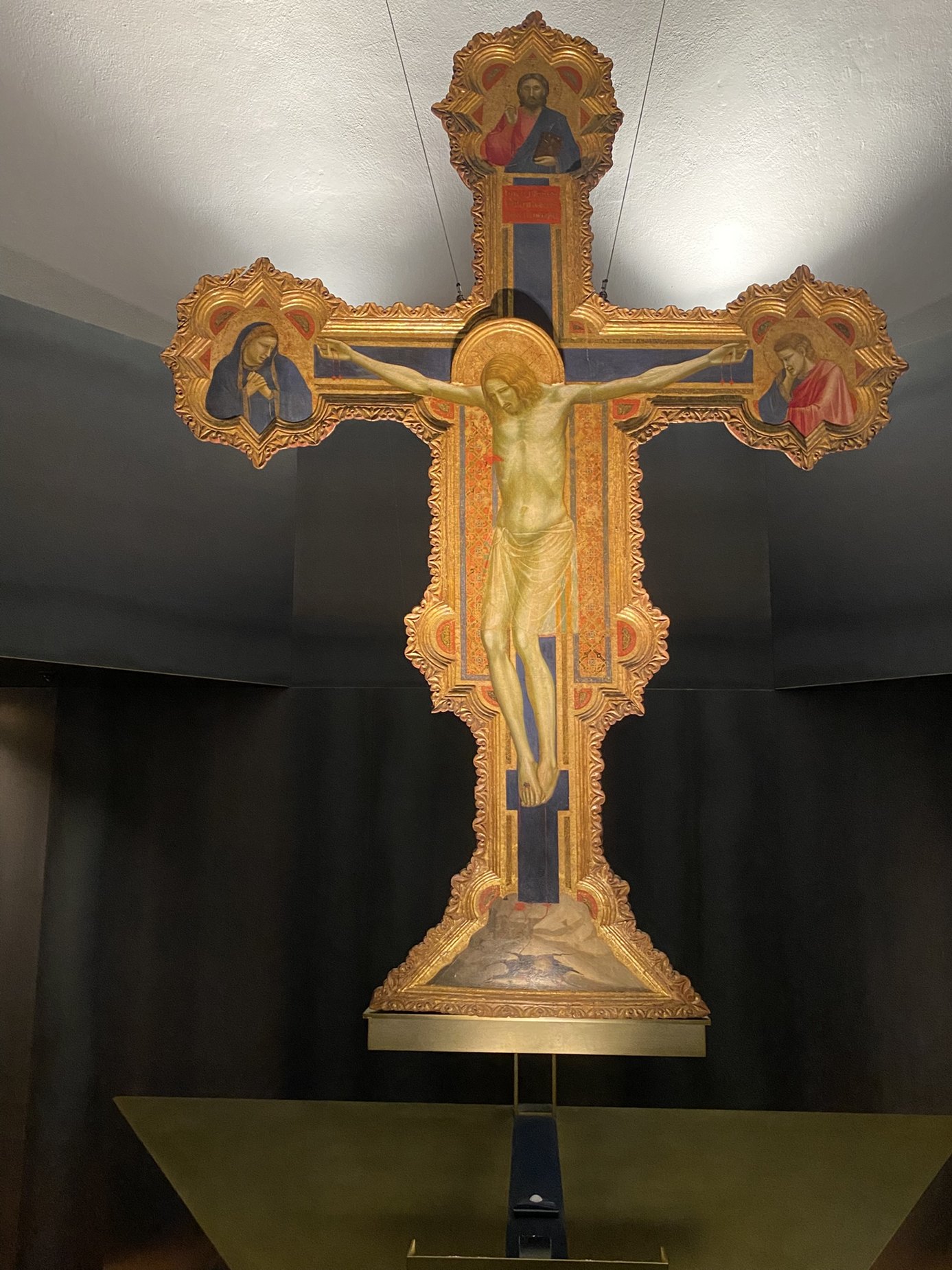
Two painted crucifixes reveal a gradual development: Cimabue already seeks an expressive depiction of suffering; Giotto emphasises physical presence and the body’s weight. This is not an instant break, but a transformation of pictorial language.

Cimabue · Santa Croce, Florence

Cimabue · Santa Croce, Florence

Cimabue’s Crucifix, 13th century, Basilica of Santa Croce, Florence. Look at the pronounced curve of the body, the tilted head and the expressive outline. Reproduction of the artwork.

Giotto · Musei Civici, Padua

Giotto · Musei Civici, Padua

Giotto’s Crucifix, early 14th century, Musei Civici agli Eremitani, Padua. Personal photograph by the site author. Look at the modelled torso, the legs and the sense of weight.

Auteur du site

Look closely: compare the shoulders, the tilt of the head, the shape of the abdomen and the legs. In Giotto, the body seems more subject to gravity. In Cimabue, the curve and drawing already express suffering powerfully.

This comparison complements the Scrovegni Chapel scenes: in Giotto, human presence asserts itself both in great painted narratives and in a single figure.

From Cimabue to Giotto, then Masaccio

Cimabue

Figures gain presence and volume while remaining connected to the Byzantine tradition.

Explore Cimabue →

Giotto

Bodies seem to inhabit space; gazes and gestures make the stories more human.

Masaccio

In the 15th century, geometric perspective and light give painted space a new coherence.

Explore Masaccio →

A qualification: Giotto does not “discover” realism single-handedly, nor does he yet use the mathematical perspective developed in the Renaissance. His major contribution is a new narrative power and the figures’ physical and emotional presence.

How to recognise Giotto?

Telling stories through gestures

Telling stories through gestures

Figures look at one another, draw closer, reach out or lean forward. The story becomes readable through their postures.

Look at the Baptism of Christ and the Crucifixion.

Giving bodies weight

Giving bodies weight

Draperies envelop solid forms, and the figures seem seated, standing or gathered within a shared space.

Look at the Last Supper in the lower tier.

Organising a story

Organising a story

Scenes follow one another in tiers. Buildings, rocks and architecture give the actions a setting.

Look at the frames and the scenes arranged one above another.

Key takeaways

Giotto does not invent geometric perspective, but gives new strength to painted narrative and the representation of human beings.