Fra Filippo Lippi
Vers 1406–1469
A painter-monk who gave the figures of paradise the faces of everyday life.
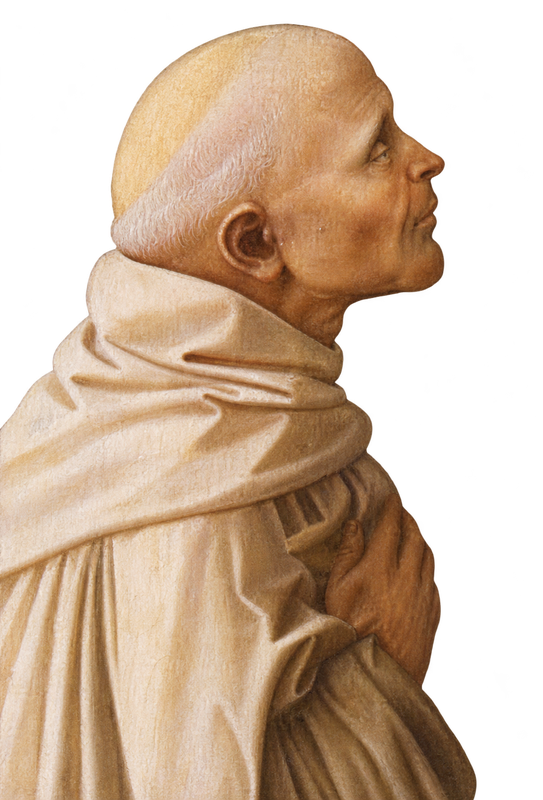
In a few words
Fra Filippo Lippi (c. 1406–1469) grew up in Florence and joined the Carmelite order. Both a painter and a friar, he observed the faces, gestures and feelings of those around him. His Madonnas have the tenderness of real women; his angels, the spontaneity of children. Among his pupils was Botticelli, and his son Filippino Lippi also became a painter.
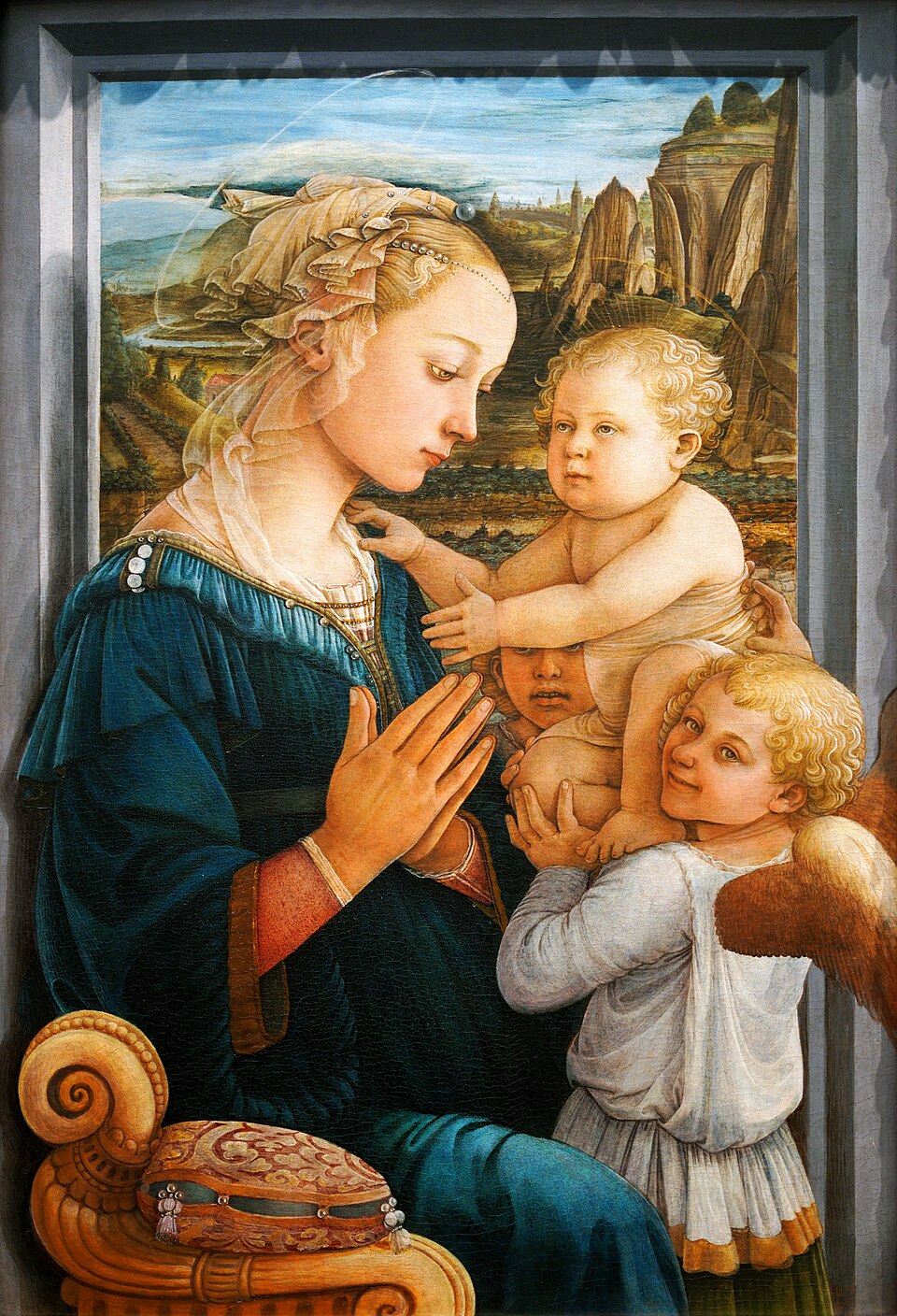
In this sacred scene, the faces and gestures feel drawn from life.
Google Arts & Culture · CC BY-SA 4.0
Look closely
Mary’s face: with lowered eyes and clasped hands, she seems absorbed in a private thought.
The smiling angel in front: he turns towards us, creating an unexpected sense of intimacy.
In the background: a window opens onto a landscape, giving space to this close-up scene.
Understanding
Mary is no distant, solemn figure: Lippi gives her the presence of a young woman of his own time. The angel’s smile brings a touch of everyday spontaneity into a sacred image.
This human warmth would influence his pupil Botticelli.

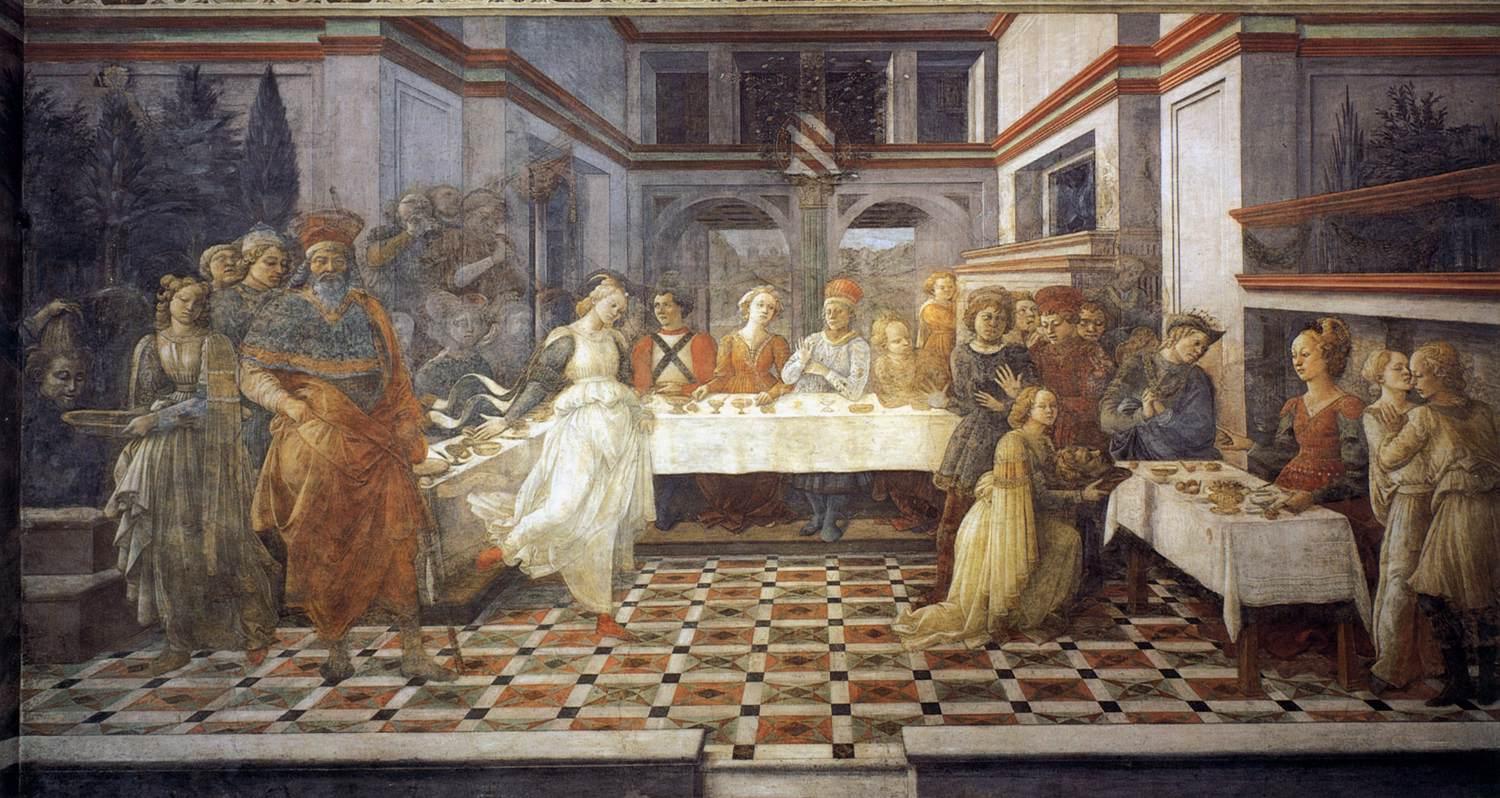
One setting brings together several moments of the drama
Web Gallery of Art · Domaine public — PD-Art / Public Domain Mark 1.0
Look closely
Follow Salome: she appears more than once in the same setting, at different moments of the story.
Study the banquet: the guests’ gestures and the architecture guide our eyes from one episode to another.
Notice the contrast: elegant clothes and dancing coexist with a violent story.
Understanding
Lippi uses continuous narrative: successive moments unfold within a single image. We follow the characters to piece together what happened.
The fresco belongs to the cycle devoted to Saint John the Baptist in Prato Cathedral. The book medallion reveals the story without giving it away on the page.

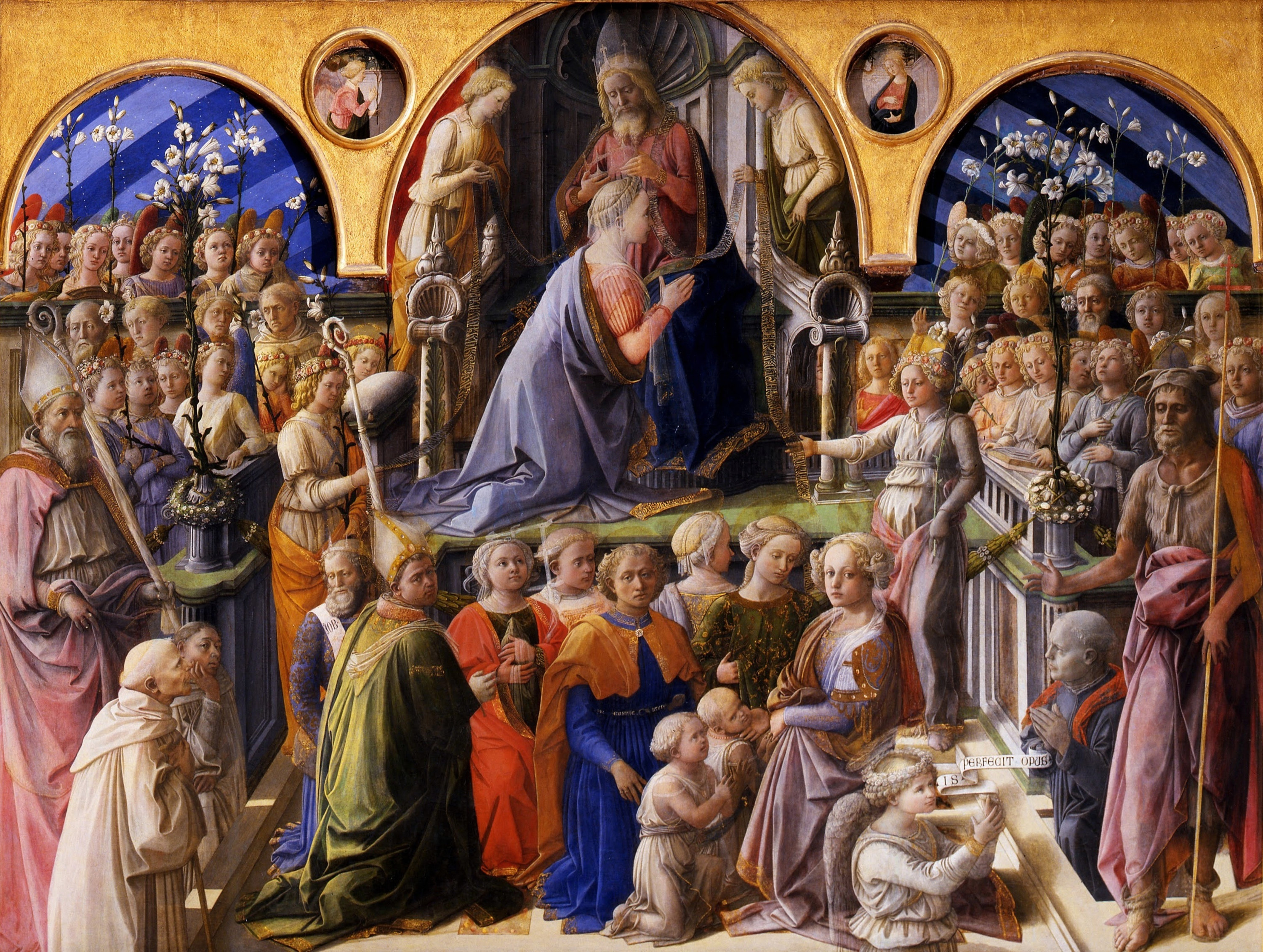
The splendour of the ceremony does not conceal the individuality of the many faces.
The Yorck Project (2002) / DIRECTMEDIA · Domaine public — PD-Art / Public Domain Mark 1.0
Look closely
At the top: Mary’s coronation anchors the composition.
Around her: angels and saints form a dense crowd, yet their faces and gestures differ.
At the lower left: look for a friar facing us, often considered a self-portrait of the artist.
Understanding
Paradise is not filled with interchangeable figures. Lippi gives this heavenly gathering individual faces and gestures, recalling people he might have observed in daily life.
The painter may even have included himself among them, quietly connecting the earthly world to the sacred scene.
How to recognise Fra Filippo Lippi?
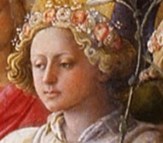
Soft, familiar faces
Soft, familiar faces.
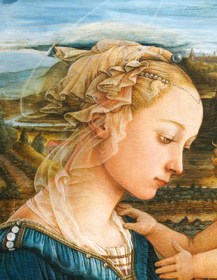
Madonnas drawn from life
Madonnas who resemble young Florentine women.
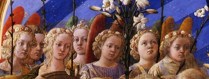
Angels with childlike expressions
Angels with childlike expressions.
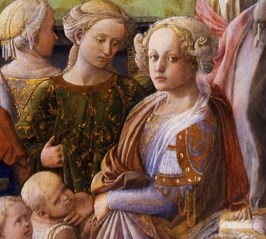
Gestures full of tenderness
Gestures full of tenderness.
Key takeaways
Soft, familiar faces; Madonnas who resemble young Florentine women; angels with childlike expressions; and gestures full of tenderness. In Fra Filippo Lippi’s work, sacred figures feel profoundly human.