Pietro Vannucci, dit Le Pérugin
Vers 1450–1523
Measured gestures, serene faces and spacious landscapes: in Perugino’s paintings, everything seems to find its rightful place.
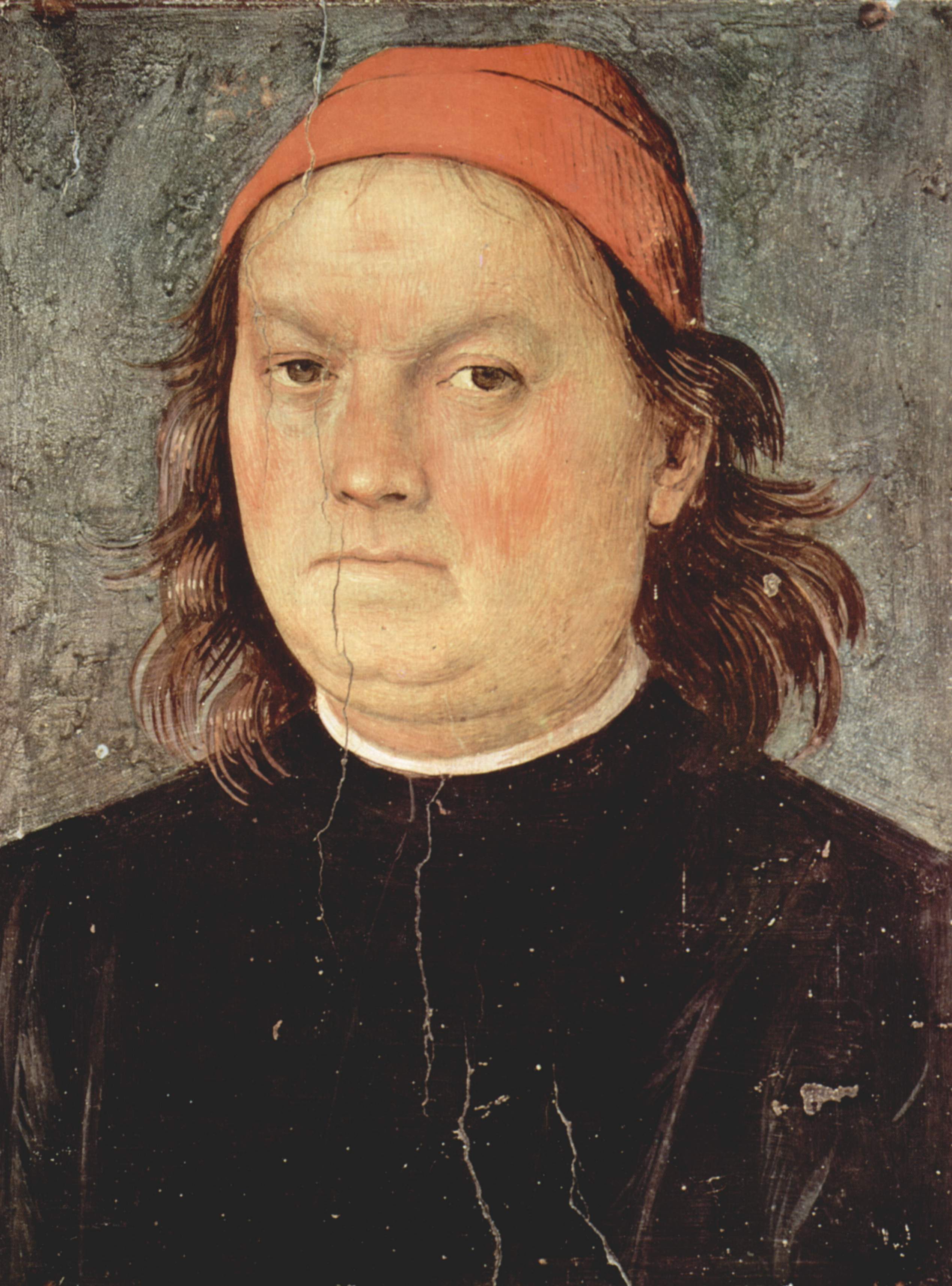
In a few words
Pietro Vannucci, known as Perugino (c. 1450–1523), was an Italian painter from Umbria.
In Florence, he worked in Verrocchio’s circle at the same time as Leonardo da Vinci. He went on to become one of the most sought-after painters of his day and helped decorate the Sistine Chapel.
His balanced compositions, serene faces and luminous landscapes profoundly influenced the young Raphael.
In a world of balance, a gesture establishes authority
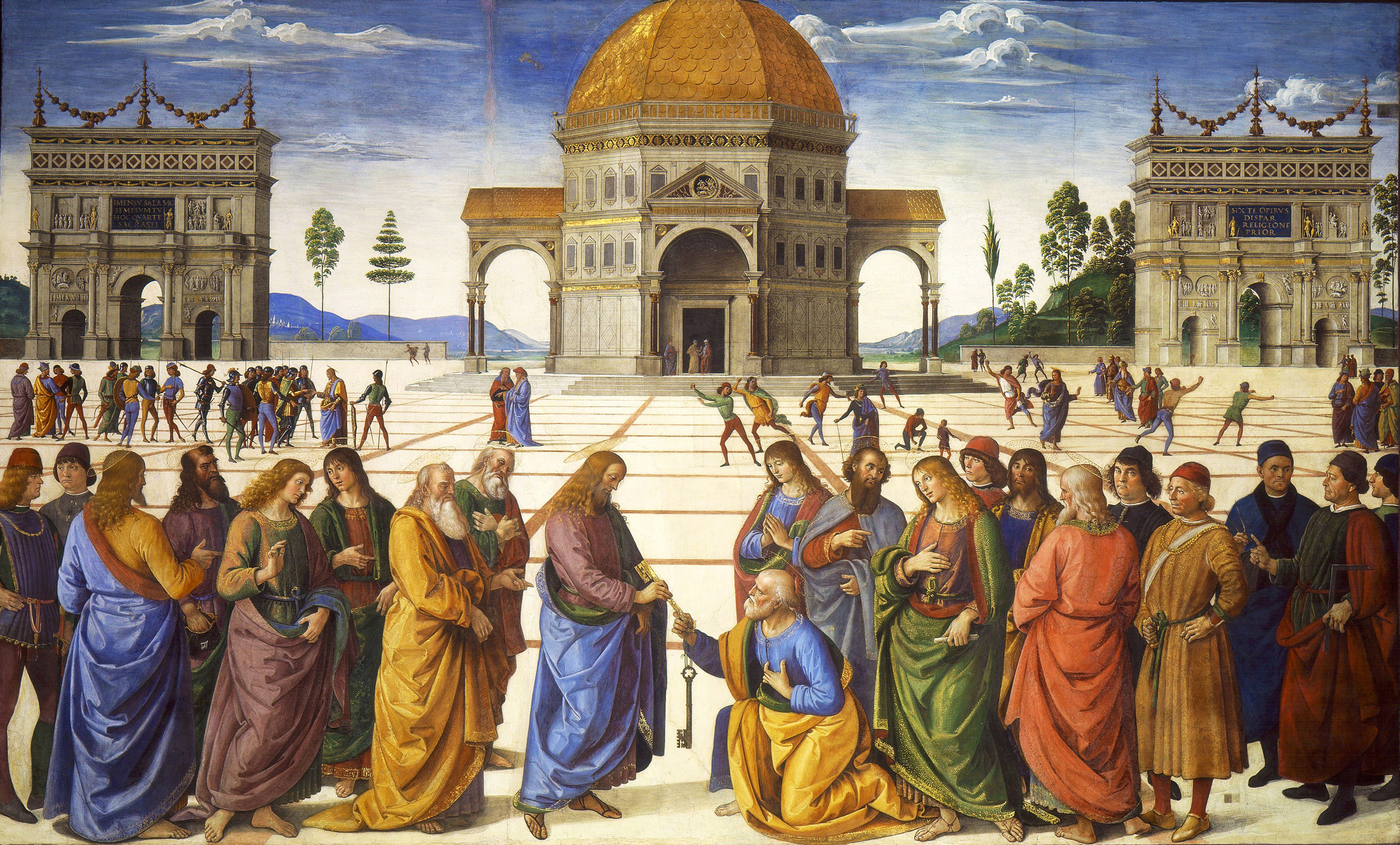
Erzalibillas — recadrage : Alonso de Mendoza · Domaine public — reproduction d’une œuvre du domaine public
Look closely
Follow the lines of the paving: they converge on the doorway of the central temple, drawing us into the square. Two triumphal arches balance the setting on either side.
In the foreground, the figures leave space around Christ and Peter, making the handing over of the keys clearly visible.
Between this gathering and the temple, small figures establish scale and give the composition room to breathe.
Understanding
The keys symbolise the spiritual authority Christ entrusts to Peter. In the Pope’s chapel, where the Pope is regarded as Peter’s successor, this subject also affirms the legitimacy of papal authority.
Perugino makes this transfer solemn through an ordered composition and measured gestures. Perspective does more than create depth: it gives the event a stable, monumental and harmonious setting.


When grief falls silent
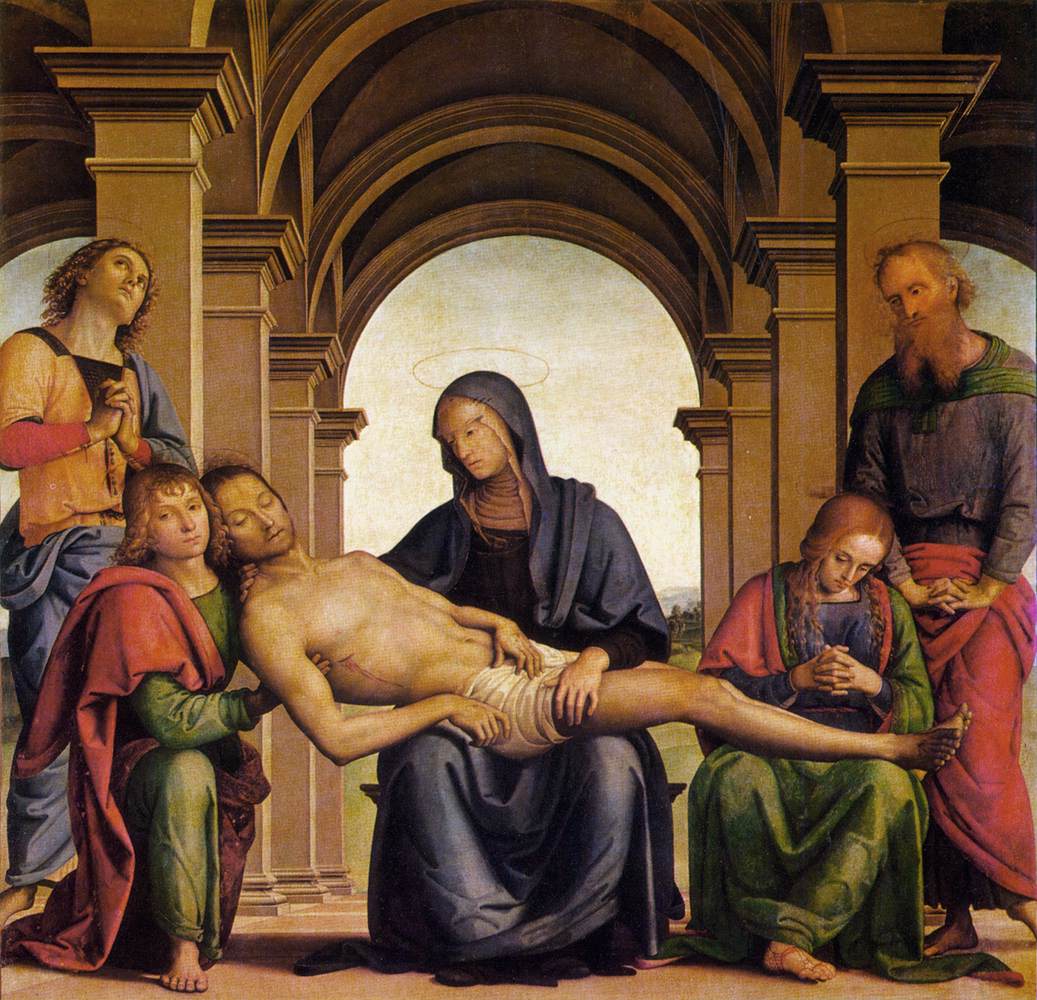
Web Gallery of Art · Domaine public — reproduction d’une œuvre du domaine public
Look closely
Observe Christ’s body: its pallor and limpness contrast with the figures supporting him. On the left, Saint John lifts his upper body; on the right, Mary Magdalene clasps her hands, tears marking her cheeks. Gazes turn down towards him. Behind the group, pillars and vaults lead the eye towards a luminous landscape.
Understanding
The calm composition does not erase the grief: it invites us to linger over it. Perugino expresses mourning through faces, hands and the care given to the body rather than through dramatic movement. The architecture orders the scene and gathers the figures around Christ. Perspective, already central to Christ Giving the Keys to Saint Peter, here serves an intimate emotion.
A moment of tenderness, an endless landscape
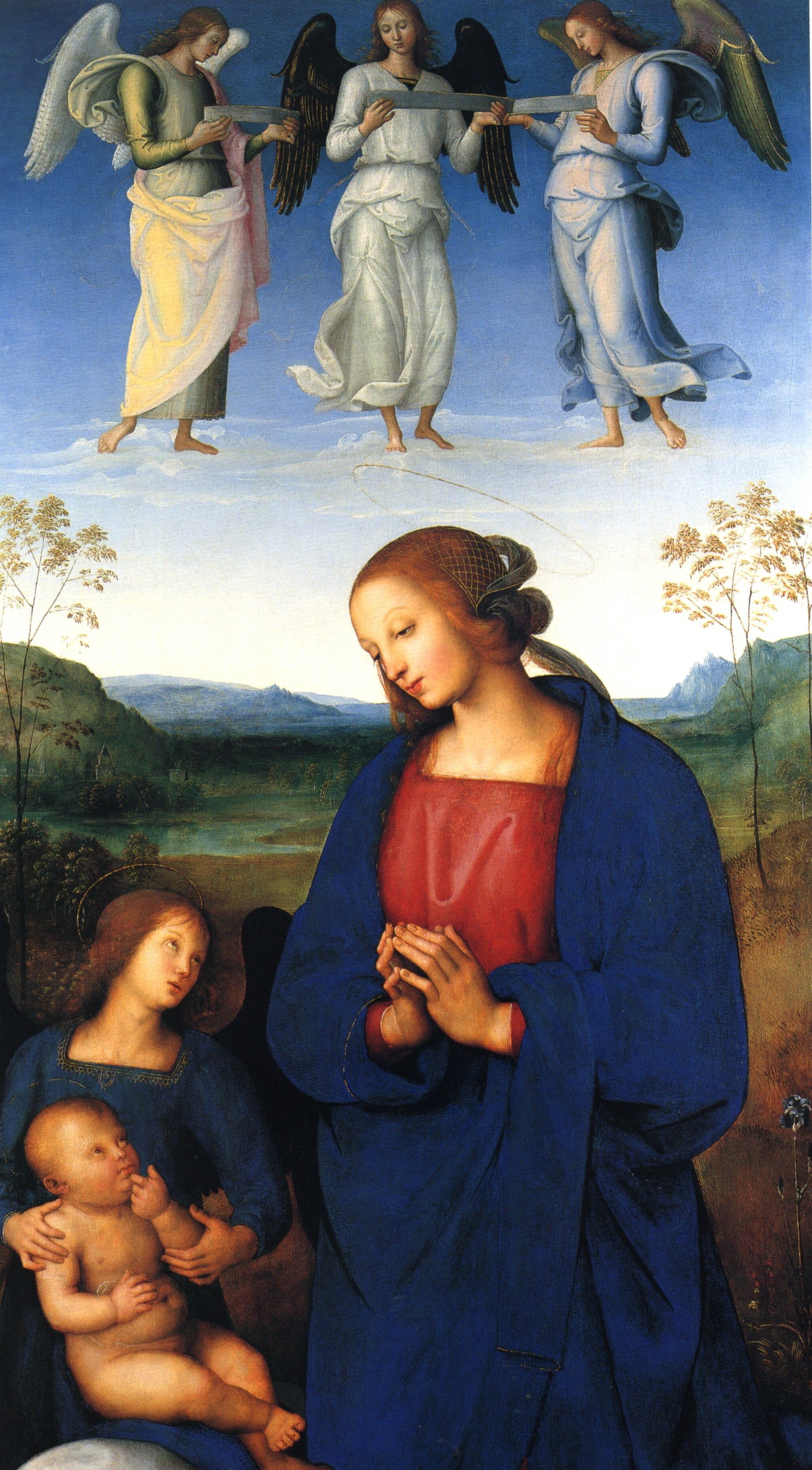
Art Gallery ErgsArt · Domaine public — reproduction d’une œuvre du domaine public
Look closely
Mary kneels in the grass before the Child, who is supported by an angel. Notice her clasped hands, her bowed face and the gentle gazes.
Behind them, a river winds through the hills. The mountains become bluer and paler as they recede: the landscape seems to extend far beyond the figures.
Understanding
By placing Mary directly on the ground, Perugino emphasises her humility. The scene combines tenderness towards a child with the adoration of Christ. Delicate transitions in oil paint soften the faces, while the landscape’s colours create depth.
Here, harmony emerges from the relationship between gestures, light and nature.
The Marriage of the Virgin: From Perugino to Raphael - One wedding, two ways of inhabiting space.
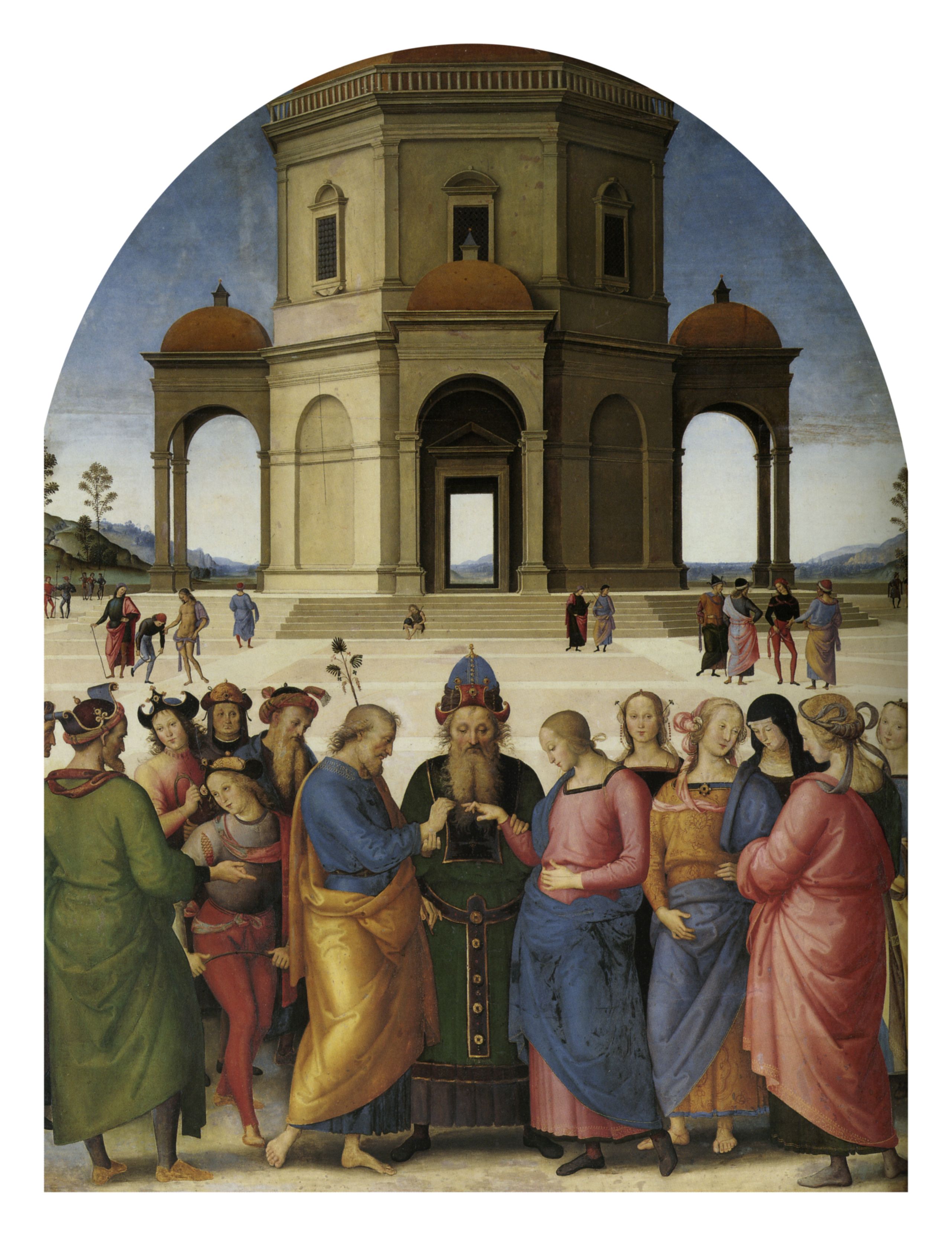
The figures form a row across the foreground. At the centre, the priest joins Mary’s and Joseph’s hands, aligned with the temple doorway. The paving leads our gaze towards this monumental building. The arrangement is frontal and solemn: each figure finds a place within an ordered whole.
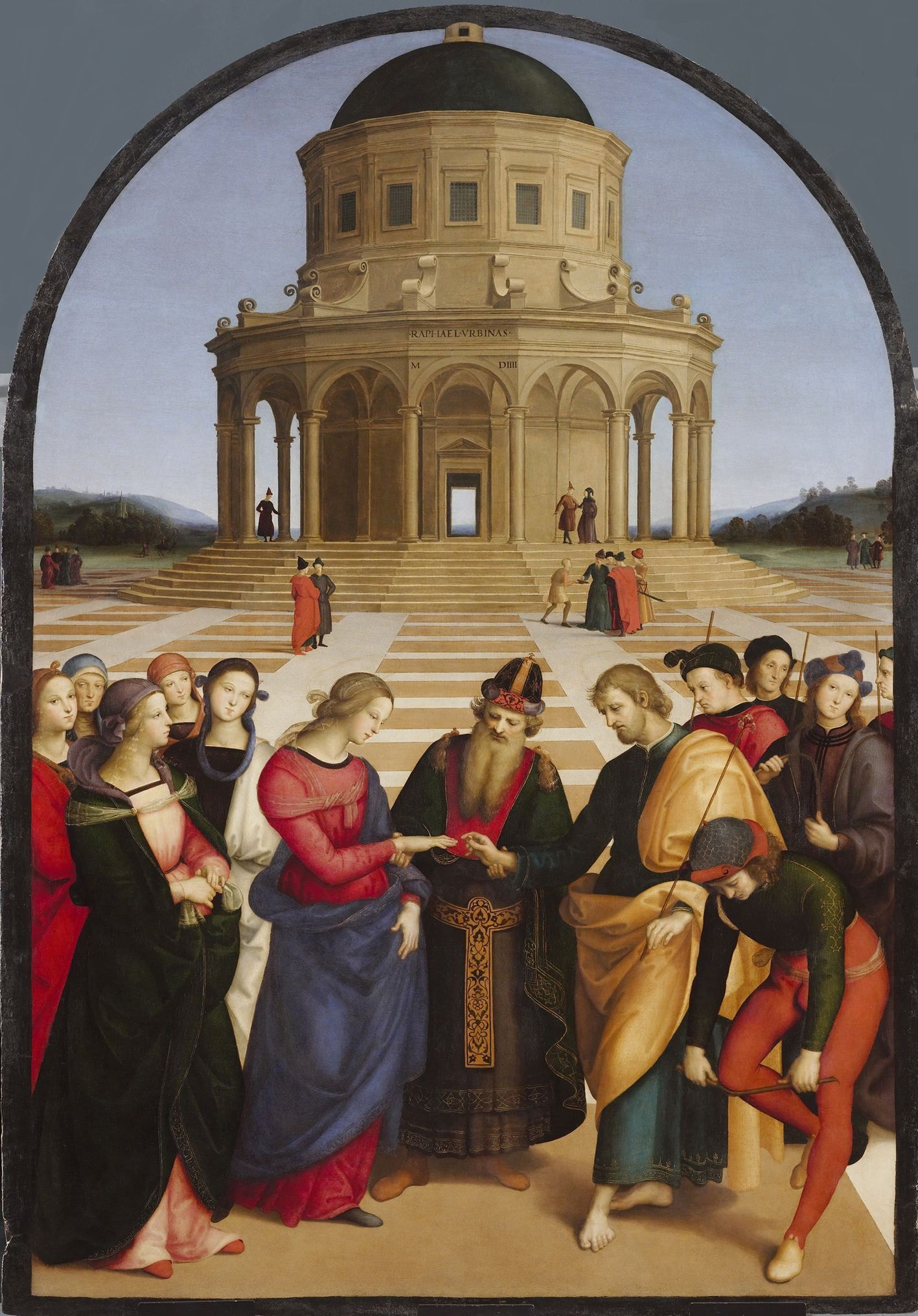
The group curves and the poses become more varied. On the right, a suitor bends to break his staff against his knee, bringing movement to the foreground. The temple, surrounded by a portico, appears lighter. More space separates it from the figures, and small silhouettes lead us into the distance.
Look closely
Find the man breaking his staff in each painting. In Perugino’s version, he remains on the left, behind the main group; in Raphael’s, he stands prominently in the right foreground. A similar detail, but a different energy.
Understanding
Both paintings are dated 1504. Raphael draws on a familiar visual language: a central temple, perspective and balanced figures. But he makes the arrangement more fluid and strengthens the connection between the group, the square and the architecture. In Perugino, we admire a majestic order; in Raphael, we feel space and movement flowing more freely.
How to recognise Pietro Vannucci, dit Le Pérugin?
1. Compositions with room to breathe
Figures are spaced apart and groups are balanced. Even in a crowded scene, the essential gesture remains easy to identify.
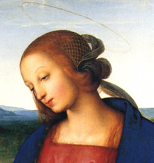
2. Serene faces
Oval faces, lowered eyelids and gently tilted heads express emotion with tenderness and restraint.
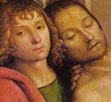
3. Measured gestures
Hands pray, support or pass something on. Each gesture is clear, without excessive movement.ure
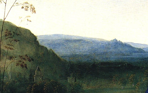
4. Landscapes opening into the distance
Slender trees punctuate the hills. Distant forms grow paler and bluer, creating a sense of space and calm.
Key takeaways
Perugino makes harmony an expressive force: space, gestures and colour bring clarity to his scenes without diminishing their emotion. A leading master of his time, he gave the young Raphael a visual language that Raphael would transform.