Domenico Ghirlandaio
1449–1494
A birth, a tragedy, a miracle, a glance: Ghirlandaio turns painting into storytelling and gives sacred stories the faces of his own time.
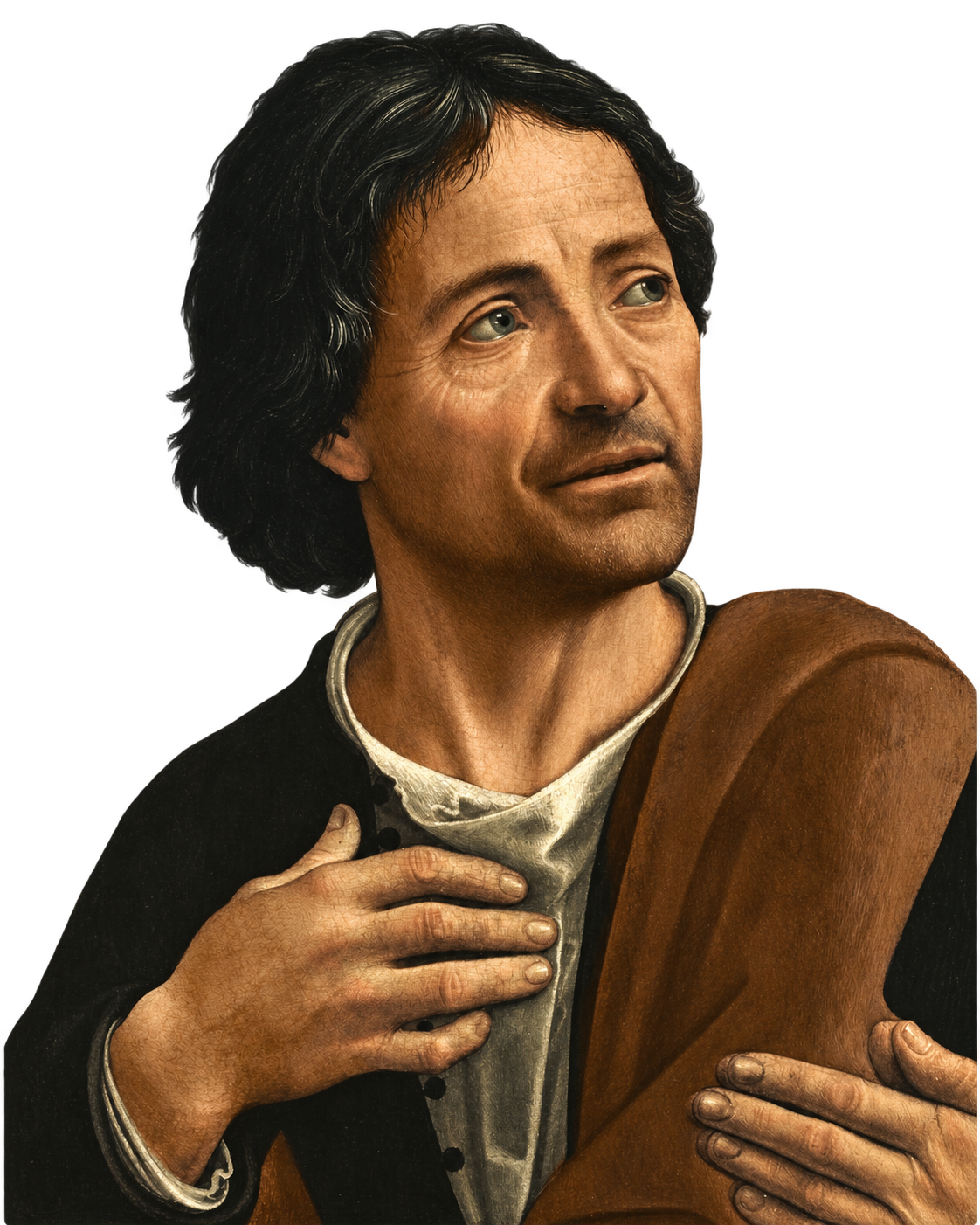
In a few words
Domenico Ghirlandaio worked in Florence in the second half of the fifteenth century. With his brothers and collaborators, he ran a workshop capable of producing large fresco schemes. The young Michelangelo received part of his training there.
Ghirlandaio had a storyteller’s eye: he arranged gestures, gathered figures and invited viewers to discover small stories around the main subject. In his religious scenes, clothing, interiors and portraits also bring Florentine society into view.
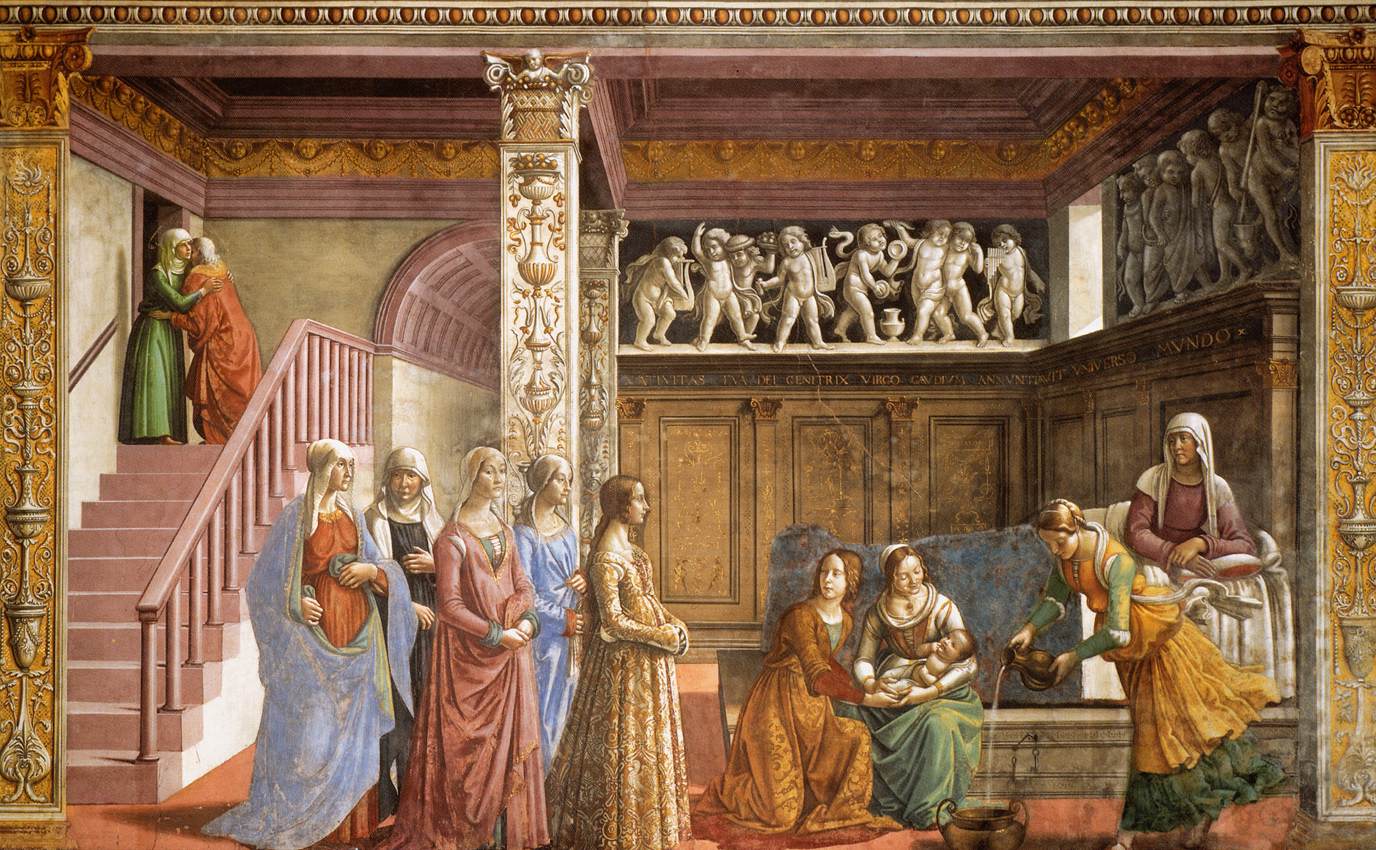
The Birth of the Virgin
Web Gallery of Art · Domaine public — PD-Art / Public Domain Mark 1.0
Look closely
First find the newborn and the women caring for her. Then follow their gestures: water being poured, arms holding the baby, eyes turning towards the visitors.
Compare the women tending the child with the group entering the room: their poses and clothes give the scene different rhythms. The woodwork, frieze and depth of the room turn this birth into a scene to explore.
Understanding
This fresco belongs to the cycle of the life of Mary in the Tornabuoni Chapel at Santa Maria Novella. The Virgin’s birth, narrated in apocryphal tradition, takes on the appearance of an event in a Florentine home.
Ghirlandaio tells two stories at once: a sacred narrative and a glimpse of the customs, clothing and social distinctions familiar to his patrons.

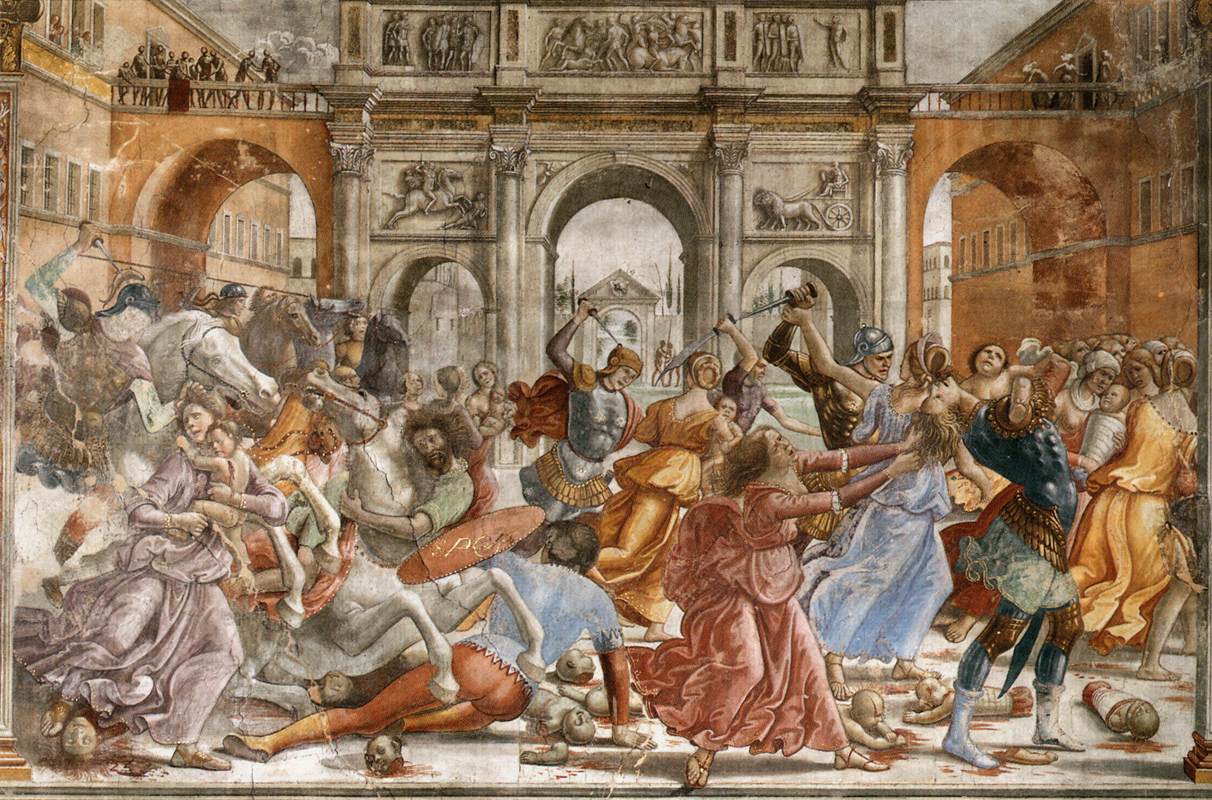
The Massacre of the Innocents
Web Gallery of Art · PD-Art / Public Domain Mark 1.0
Look closely
Notice arms holding, pushing away or trying to protect. Bodies collide and gestures echo one another: the eye moves from group to group without finding rest.
The great arch in the background contrasts with this turmoil. Look at its battle reliefs: the setting itself echoes the violence in the foreground.
Understanding
The Gospel of Matthew recounts Herod’s order to kill the young children of Bethlehem in the hope of eliminating Jesus. Ghirlandaio focuses on the mothers and soldiers.
Here storytelling depends on movement, confrontation and expression. References to antiquity also contribute to the dramatic staging.
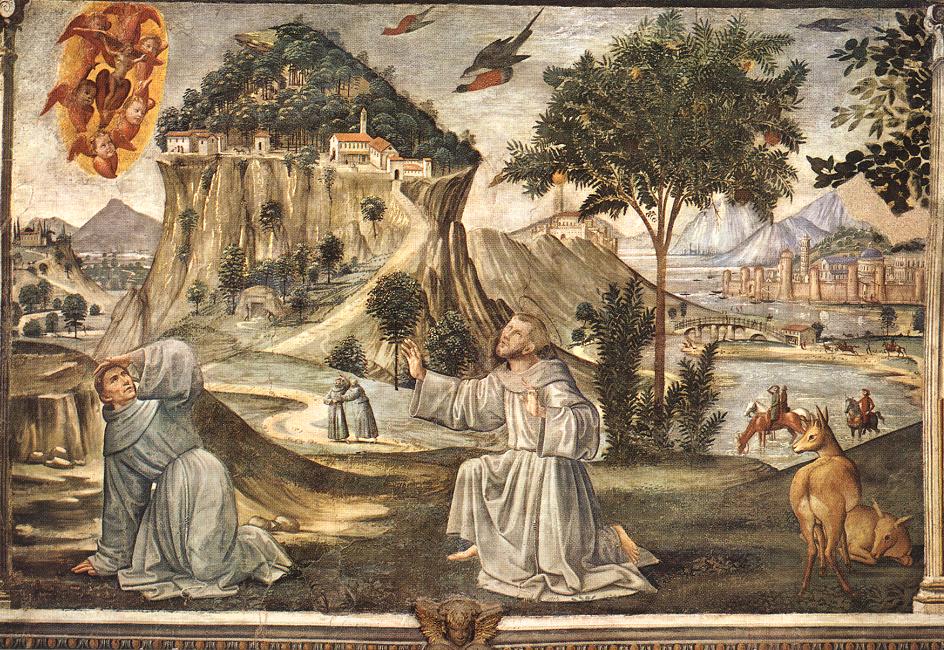
Saint Francis Receiving the Stigmata
Web Gallery of Art · Domaine public — PD-Art / Public Domain Mark 1.0
Look closely
Find the kneeling Francis, then the winged Christ appearing to him. Notice the direction of his face and hands: they make the relationship between the saint and the vision visible.
Then widen your view to the landscape. The miracle takes place within a larger world, inviting you to look beyond the central event.
Understanding
According to Franciscan tradition, Francis received the marks of Christ’s wounds—the stigmata—at La Verna in 1224. The episode expresses his spiritual closeness to the suffering Christ.
In the Sassetti Chapel, Ghirlandaio returns to a subject already painted by Giotto. The landscape opens an extensive setting around the miracle for the viewer to explore.

Portrait of an Old Man and a Young Boy
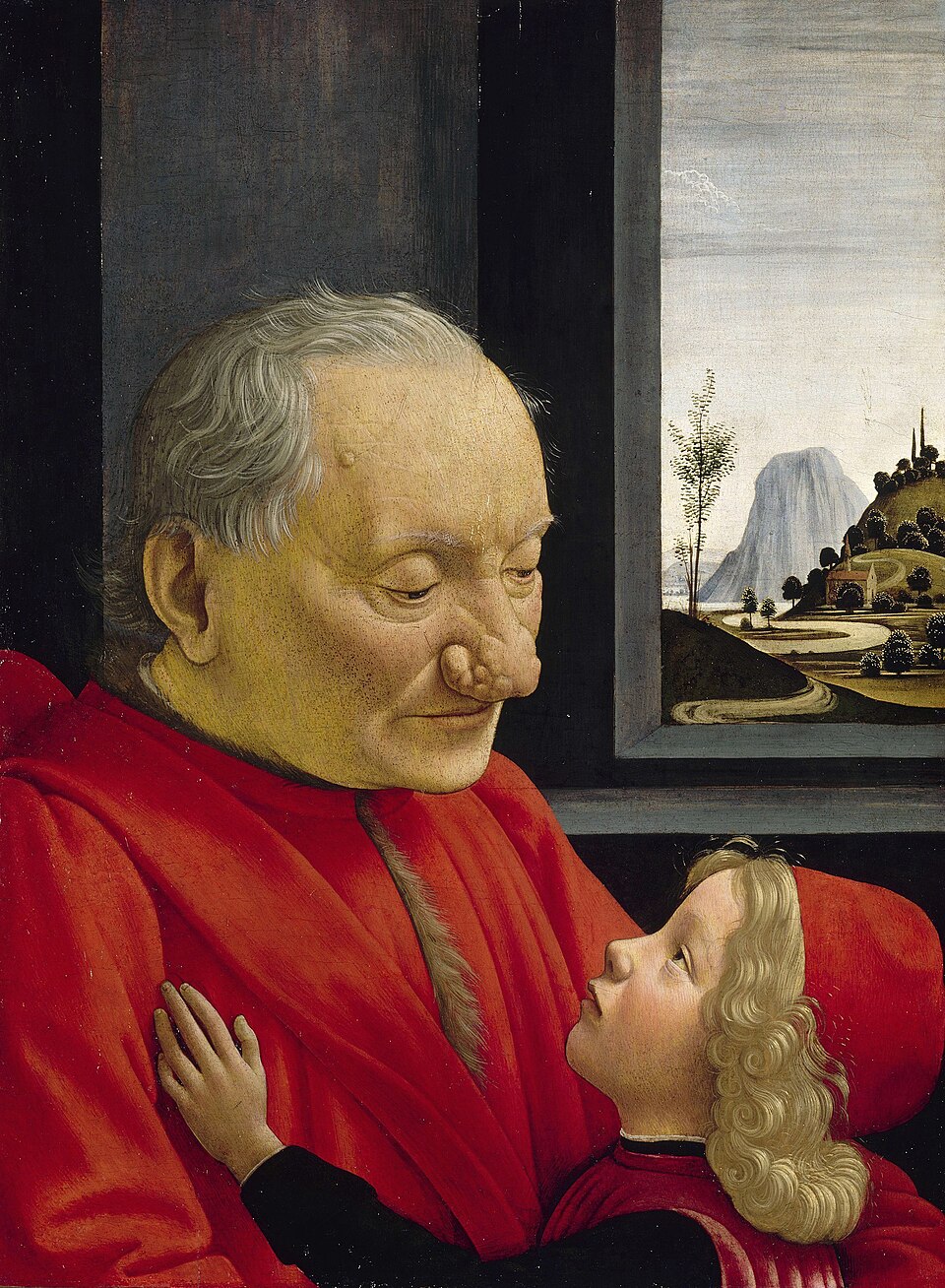
Web Gallery of Art · Domaine public — PD-Art / Public Domain Mark 1.0
Look closely
Follow the boy’s gaze towards the old man’s face, then notice the small hand resting against his clothing. Their closeness and gentle exchange give the portrait its emotional force.
The painter preserves the irregularities of the older face. A window opens onto a distant landscape, while the two figures remain together in an intimate space.
Understanding
Ghirlandaio depicts more than two faces: he suggests a relationship. Age, appearance and tenderness coexist within one painting.
The sitters are often described as a grandfather and grandson, but their identities and family relationship are not securely established. We can attend to what the painting shows without turning a hypothesis into a biography.
Florence Enters the Sacred Story
How to recognise Domenico Ghirlandaio?
Stories Within the Story
Around the main subject, gestures and secondary figures offer small scenes to discover.
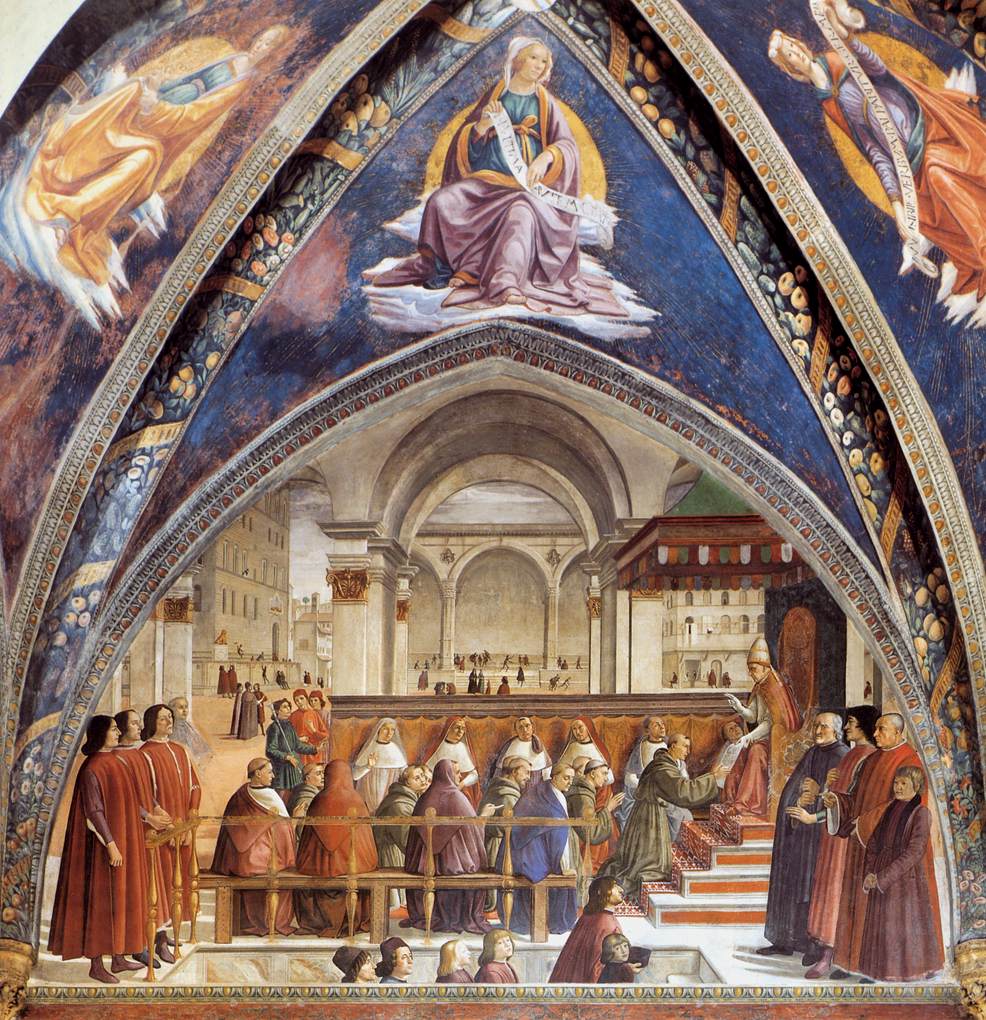
Florence in the Sacred Story
Interiors, clothes and portraits bring an old story closer to the world of the Florentine patrons.
Gestures That Tell the Story
Hands protect, accompany or push away. Poses make the action readable and convey emotion.
Spaces to Explore
Architecture and landscape lead the eye beyond the main figures and give the story a wider setting.
Distinctive Faces
Individual features and exchanged glances give the figures a human presence, even in sacred scenes.
Key takeaways
In Ghirlandaio’s paintings, a story unfolds as much through details as through the main action. A gesture, a fabric, a face or a building invites a longer look.
Begin by finding what is happening, then observe the people around the action. The sacred story also becomes an encounter with the men and women of the Renaissance.
Poursuivre la découverte
Discover another great storyteller of the life of Saint Francis.
Explore another major workshop in fifteenth-century Florence.