Inside a Florentine Workshop
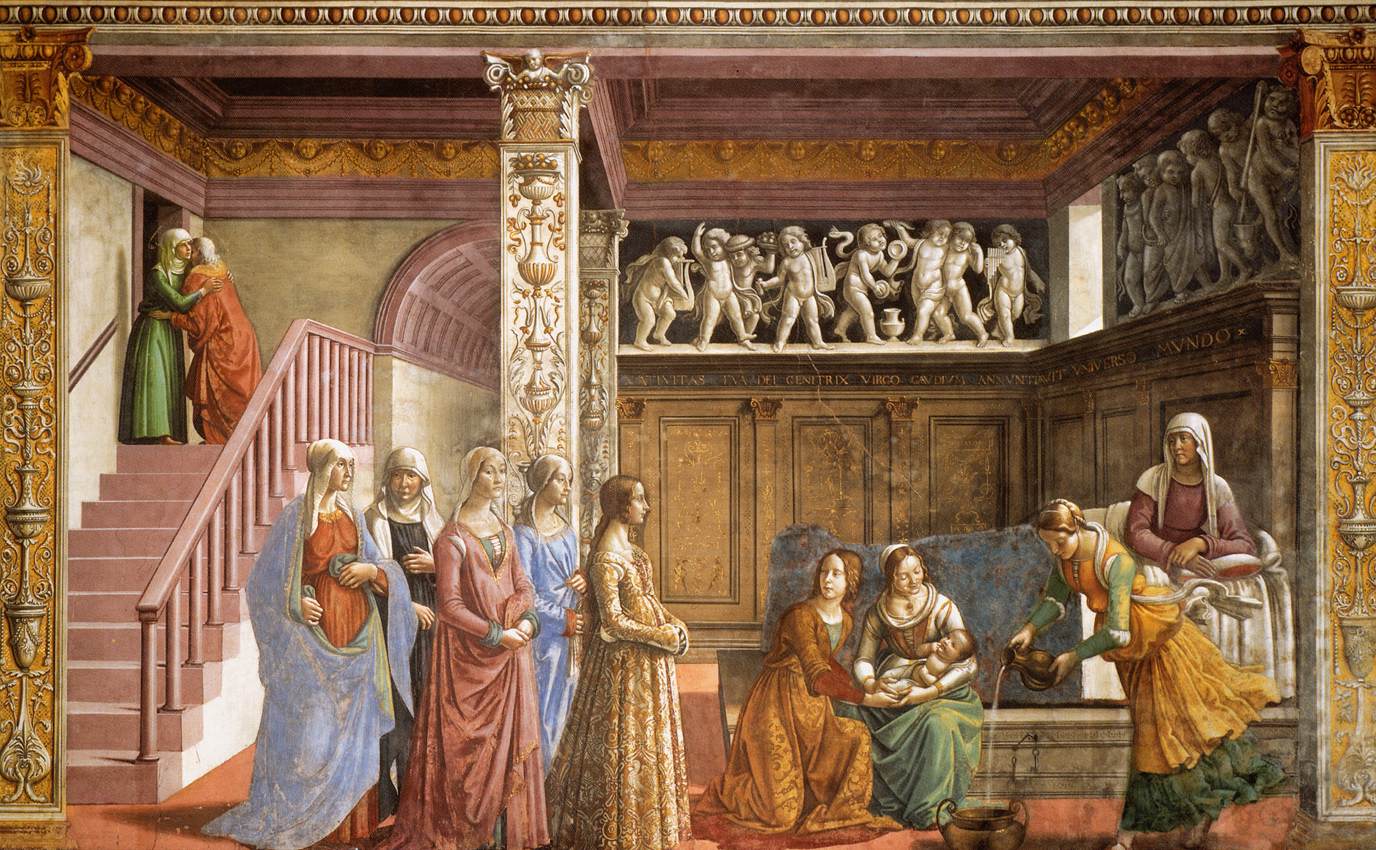
Imagine a chapel being decorated: whole walls to cover, compositions to prepare and several painters at work. A commission of this scale required collective organisation.
In Florence, the bottega was both a place of training and a place of production. Drawing was passed on, techniques were learned and tasks were shared. The master designed and directed; collaborators and apprentices contributed according to their experience and the needs of the commission.
Ghirlandaio worked with his brothers and other assistants. The young Michelangelo trained in this environment, learning drawing and painting among other skills. His time in the workshop is documented, but it does not justify attributing a particular figure in these frescoes to him without evidence.
A different way to look: when viewing a large decorative scheme, consider the hands that made it. The master’s name also represents a business, shared knowledge and teamwork.
[Florentine workshops — Metropolitan Museum of Art](https://www.metmuseum.org/exhibitions/listings/2017/michelangelo/exhibition-galleries)
[The Tornabuoni project — Santa Maria Novella](https://www.smn.it/en/artworks/the-tornabuoni-chapel-maggiore-chapel/)