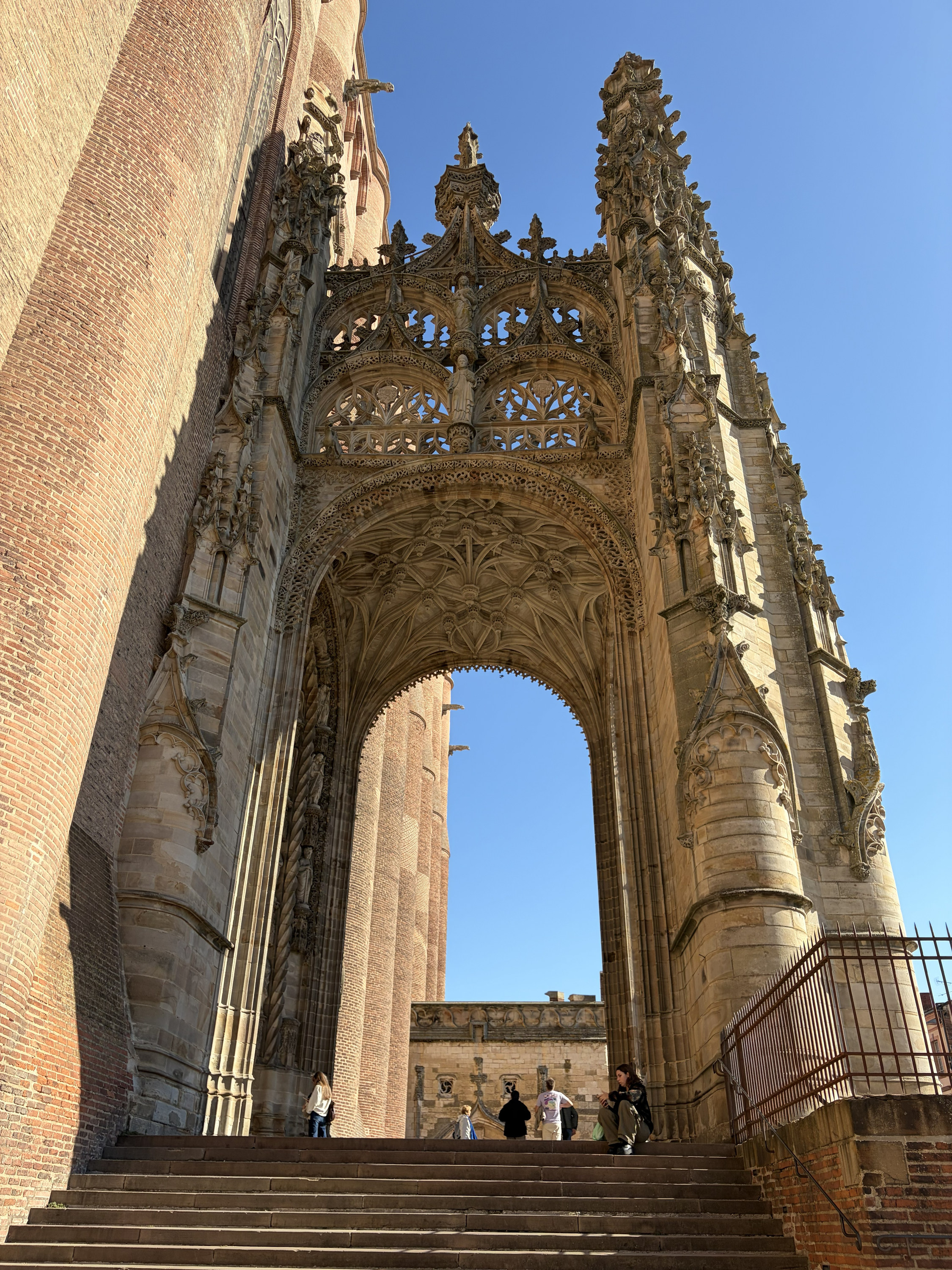
Saint Cecilia Cathedral
From the outside, Sainte-Cécile Cathedral impresses with its massive silhouette, almost like a fortress. Its immense brick walls seem to guard a secret.
But once inside, everything changes. Colour fills the space, paintings cover the vaults, and the stone rood screen becomes as delicate as lace. Everywhere, figures, stories and details catch the eye.
From the monumental Last Judgement to the dazzling colours of the ceiling, Sainte-Cécile reveals a striking contrast between the strength of its architecture and the delicacy of its decoration.
I invite you to step inside and look up.
The Last Judgement
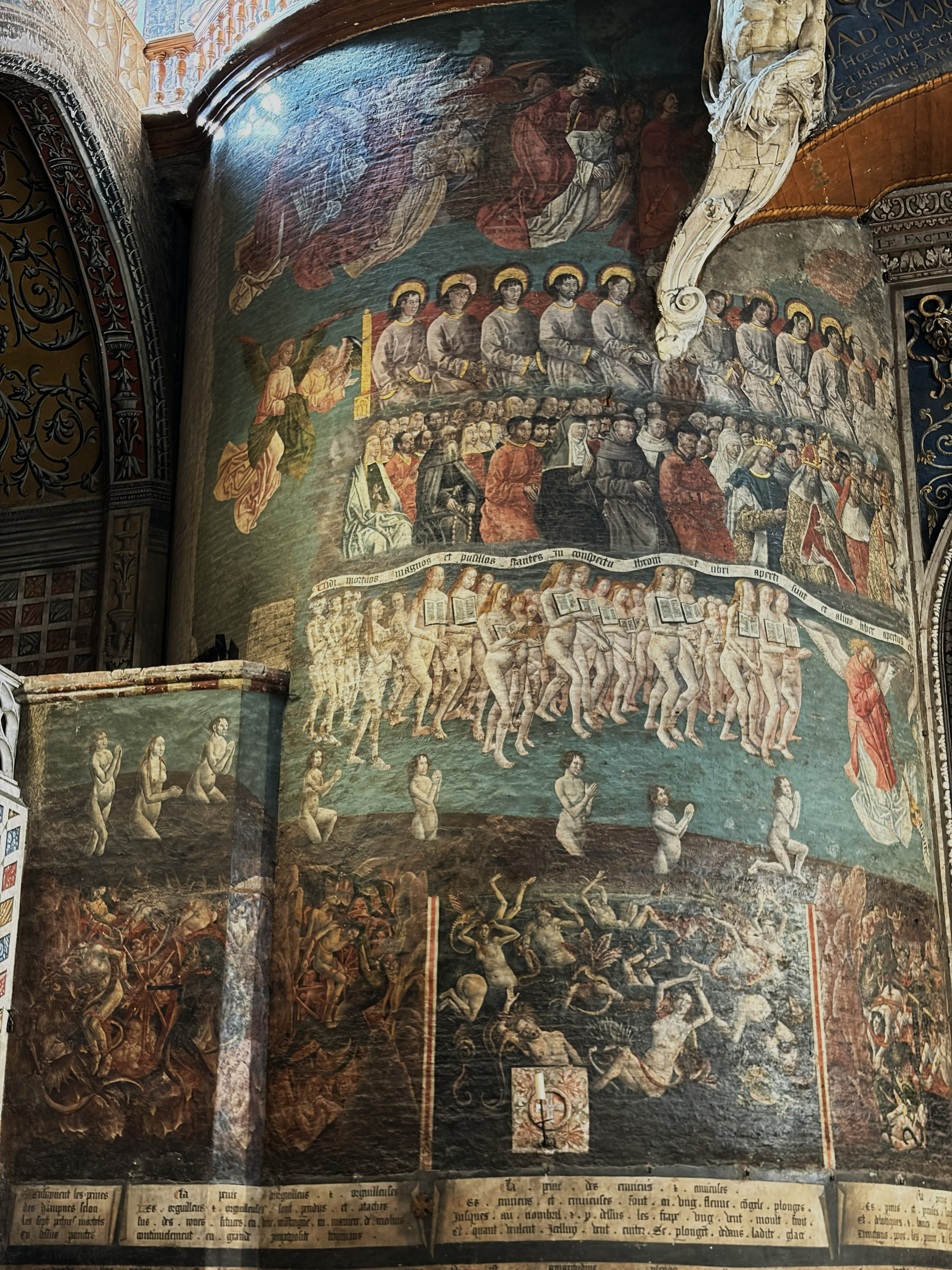
The saved advance in orderly ranks. Below, the torments of hell form a striking contrast with this peaceful procession.
Photographie personnelle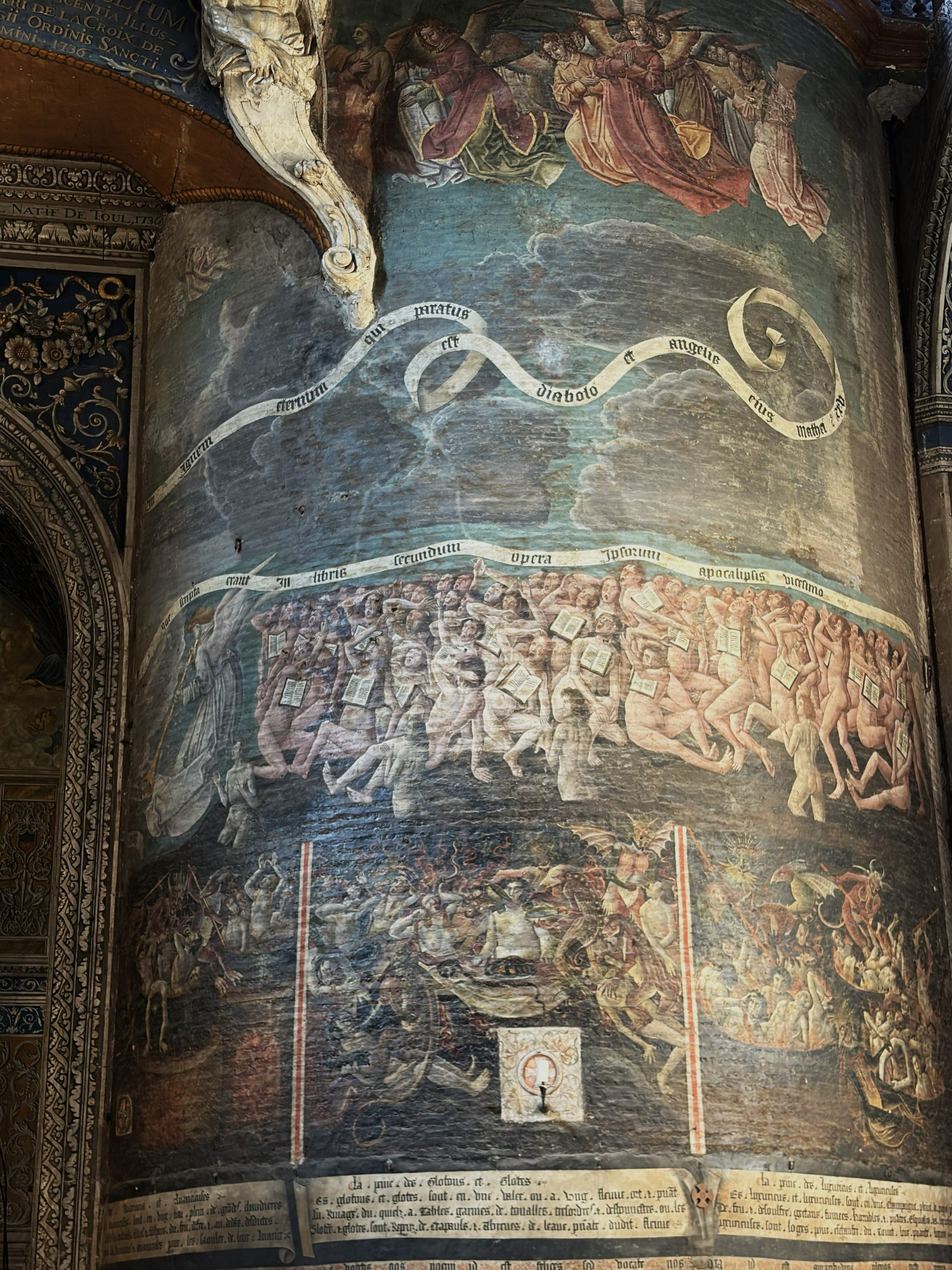
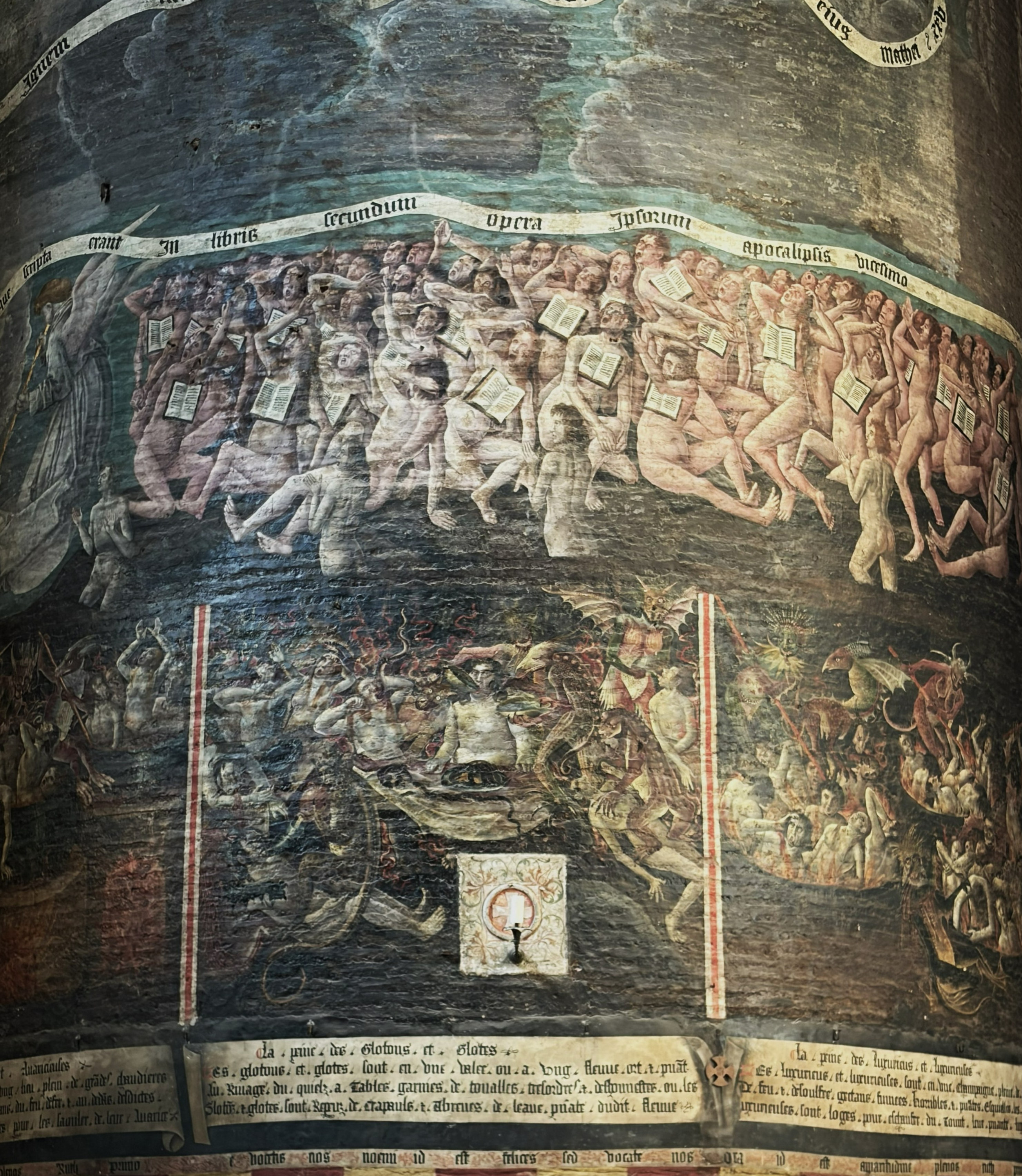
The damned crowd together, burdened by the books recording their deeds. Beneath their feet, demons and torments give terrifying form to their condemnation.
Photographie personnelle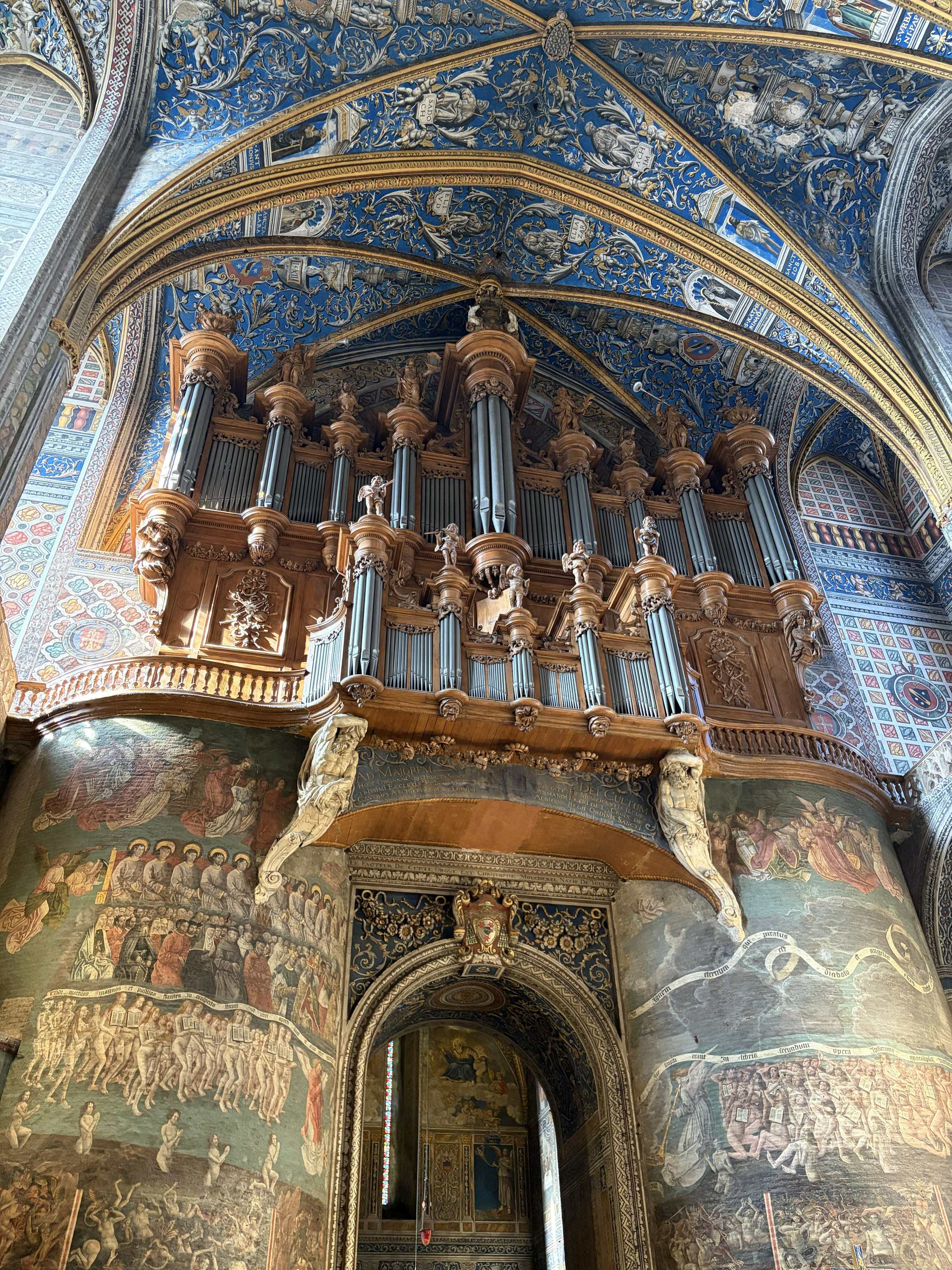
Compare the two crowds: the order of the saved on the left, the turmoil of the damned on the right. Look for the open books on their chests: each person carries the record of their deeds. Then move down towards the scenes of hell: find the demons, bodies and instruments of torment. How does the composition convey the difference between salvation and condemnation?
This vast painting depicts the judgement of humanity at the end of time. Each person answers for their deeds: some enter paradise, while others are condemned. Below, punishments associated with the deadly sins make the consequences of sin tangible and frightening. The image seeks to leave a powerful impression and encourage the faithful to live in pursuit of salvation.
Yet the centre of this story is missing: the section containing Christ the Judge was lost when an opening was cut through the wall in 1693.
The Rood Screen and Choir Enclosure
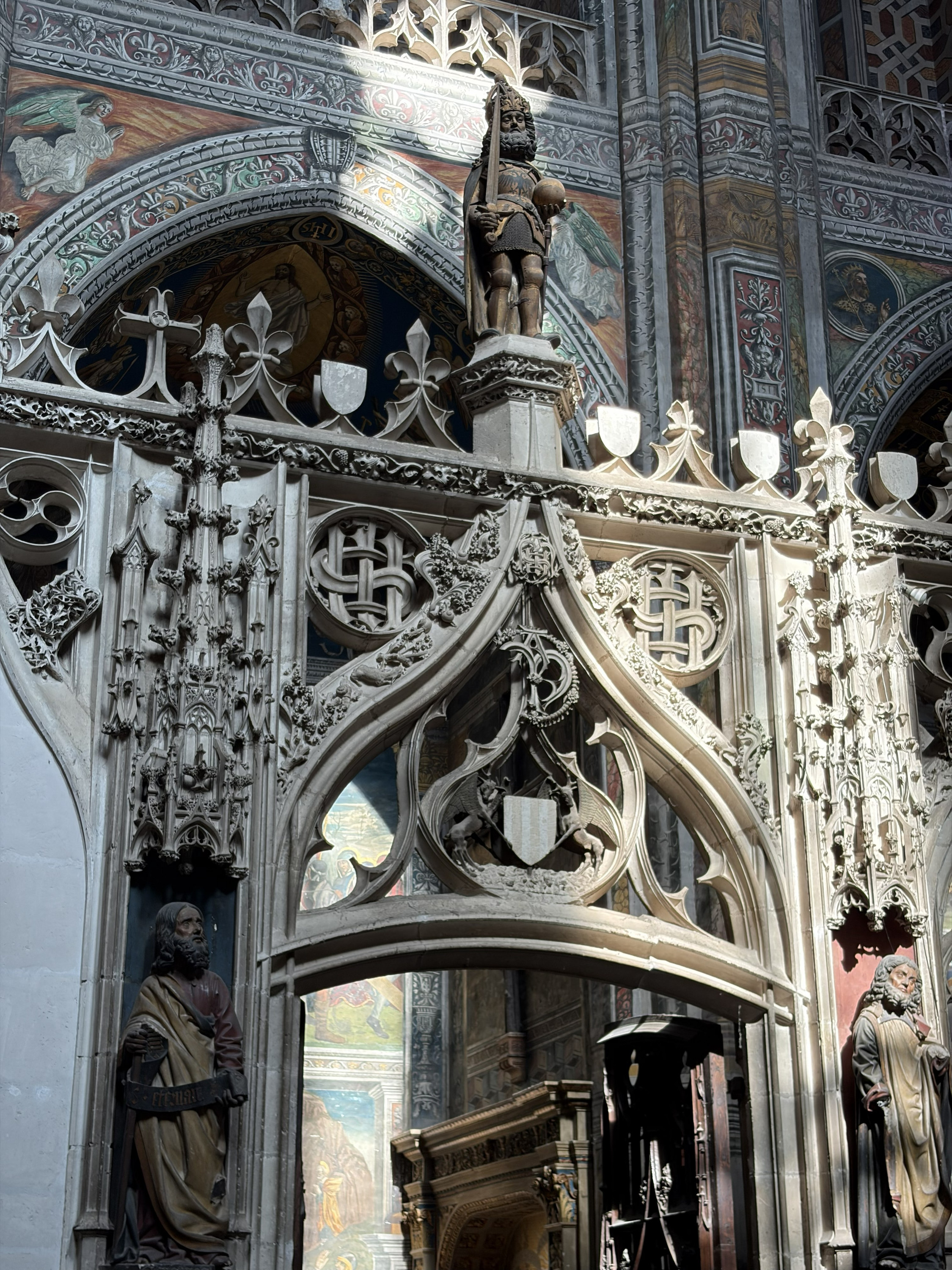
Above the doorway, Charlemagne holds a sword and an orb, symbols of imperial power.
Photographie personnelle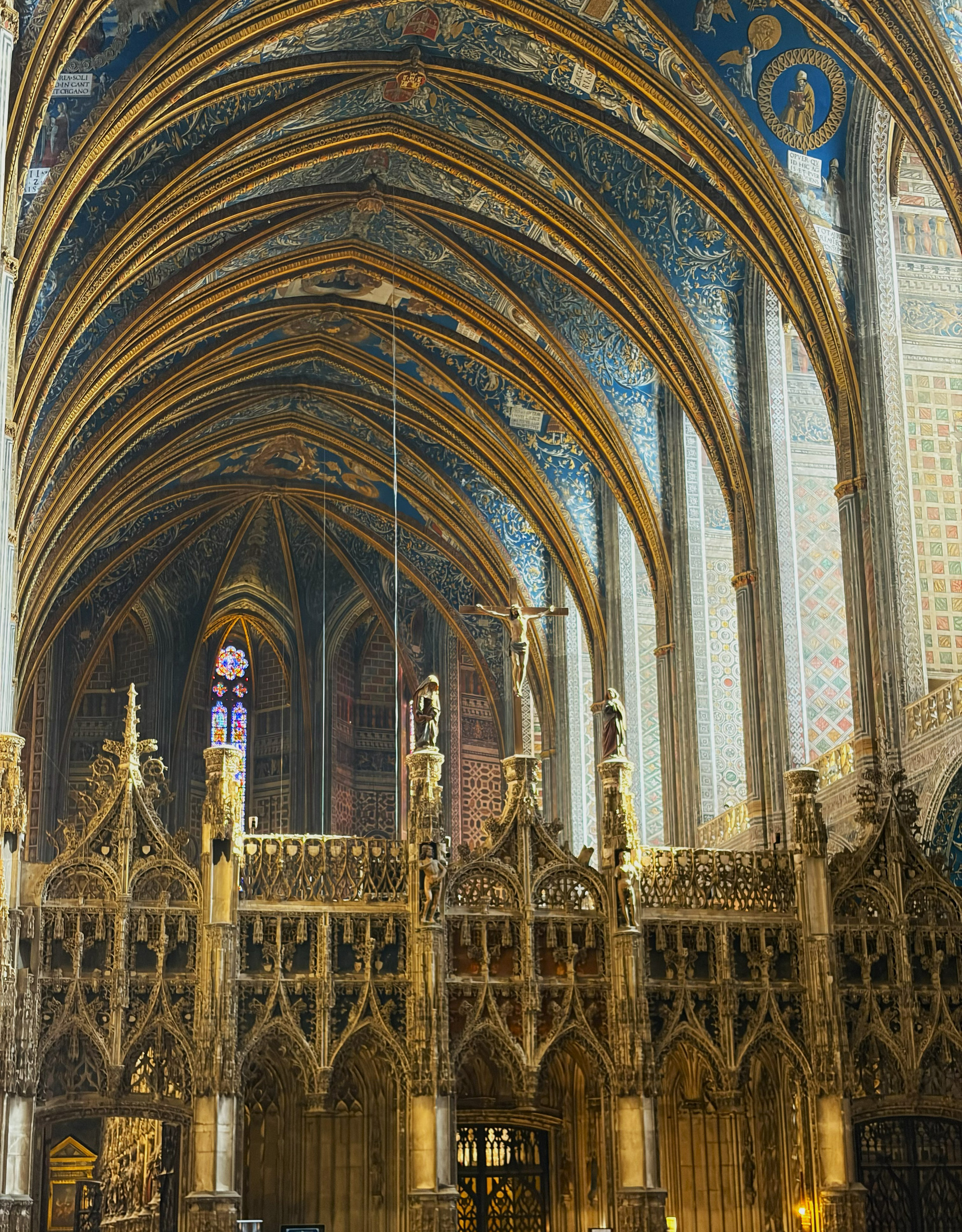
The rood screen marks the entrance to the choir: another space unfolds behind its openwork façade.
Photographie personnelle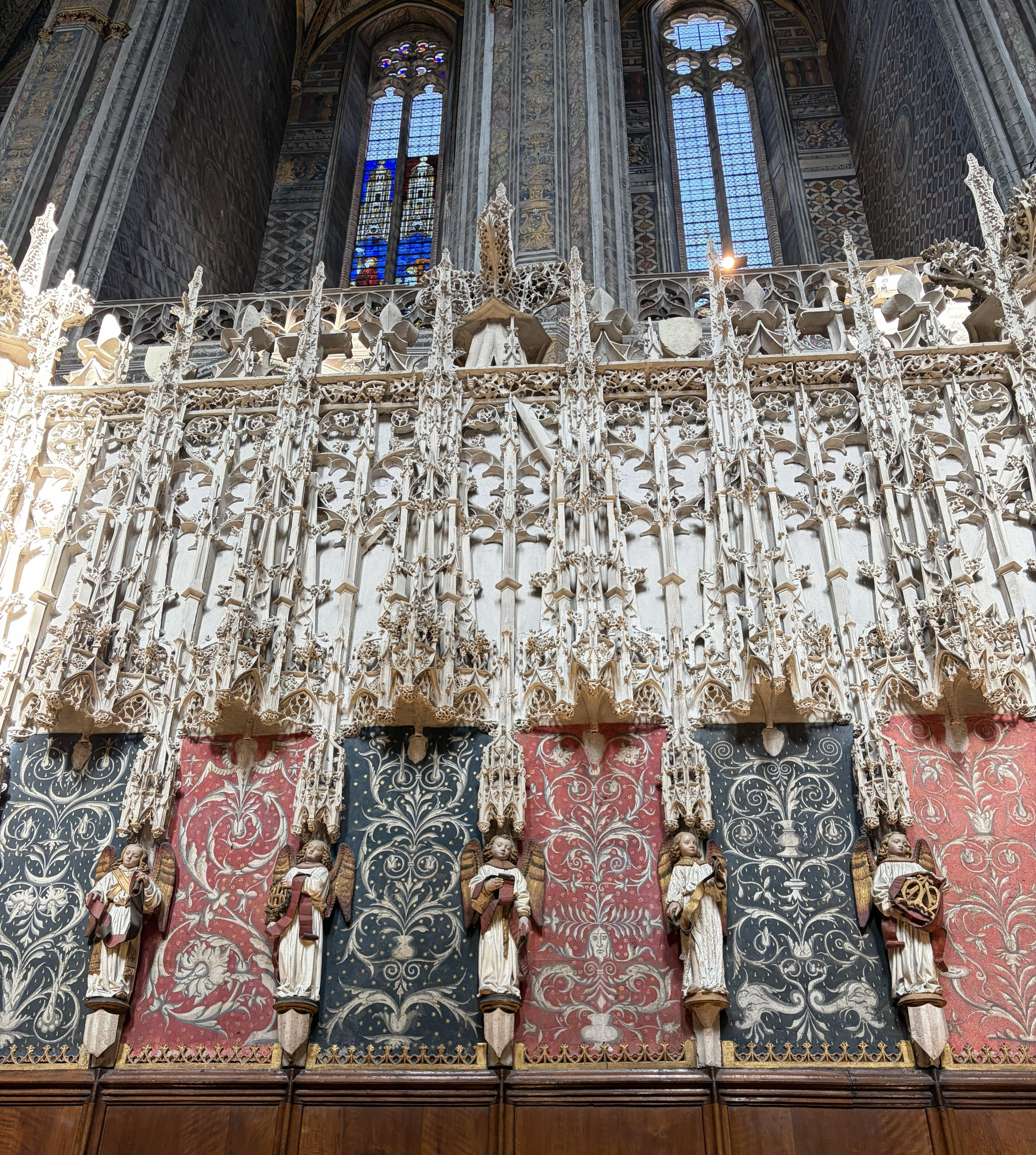
Blue may evoke the Virgin Mary and the heavenly realm, red may recall Christ's sacrifice and divine love, while white suggests purity and light. But these colours also serve another essential purpose: they bring the sculptures to life and make this sacred setting even more striking.
Photographie personnelle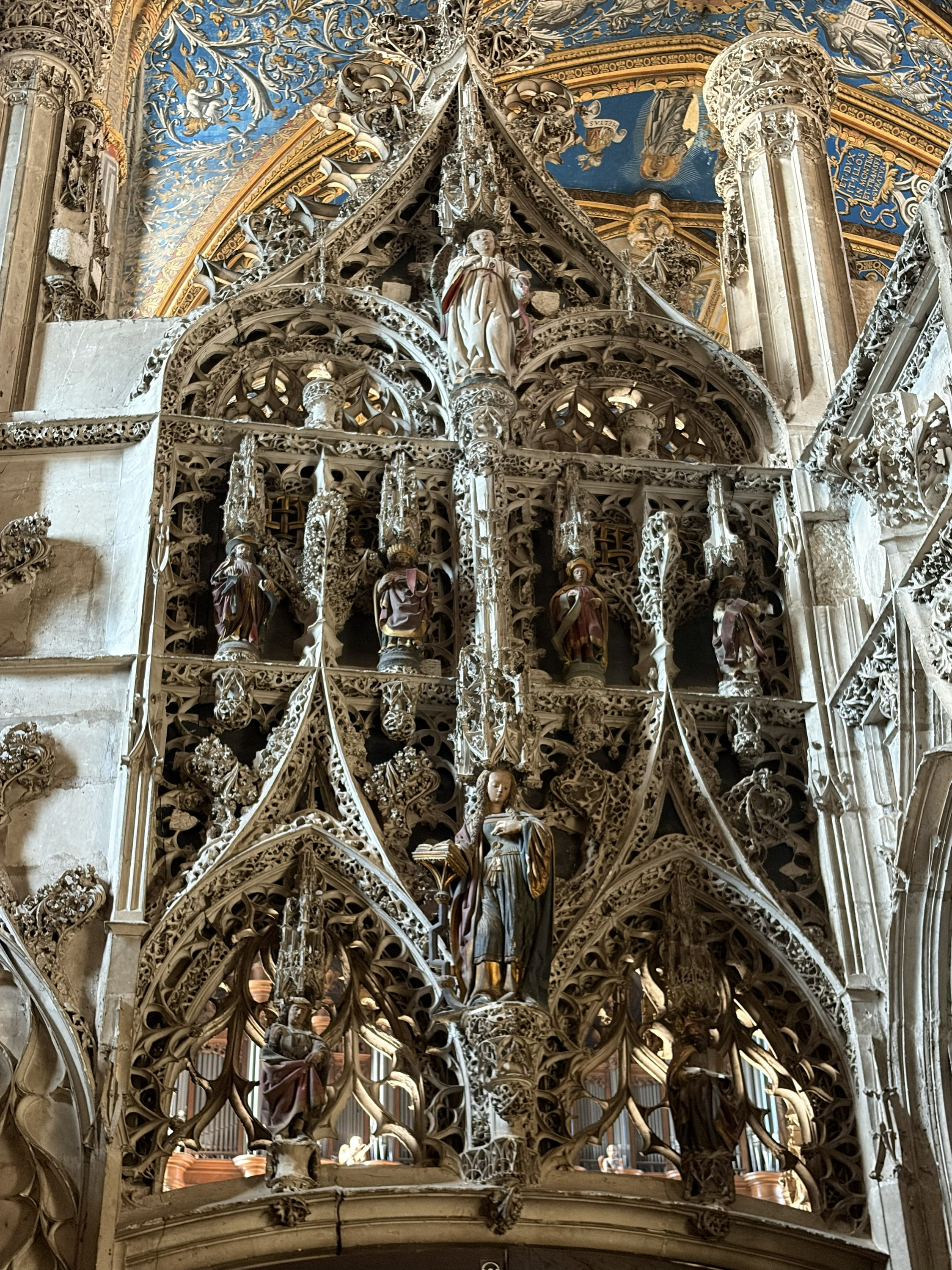
As we draw closer, new shapes emerge within the sculpted tracery.
Photographie personnelleThe rood screen marks the division between the nave, where the congregation gathered, and the choir reserved for the canons. Together with the surrounding enclosure, it forms a “church within a church”. In this Flamboyant Gothic setting, delicate stonework and colour frame biblical figures, giving visible form to the sacred.
The Painted Vaults — 1509–1512
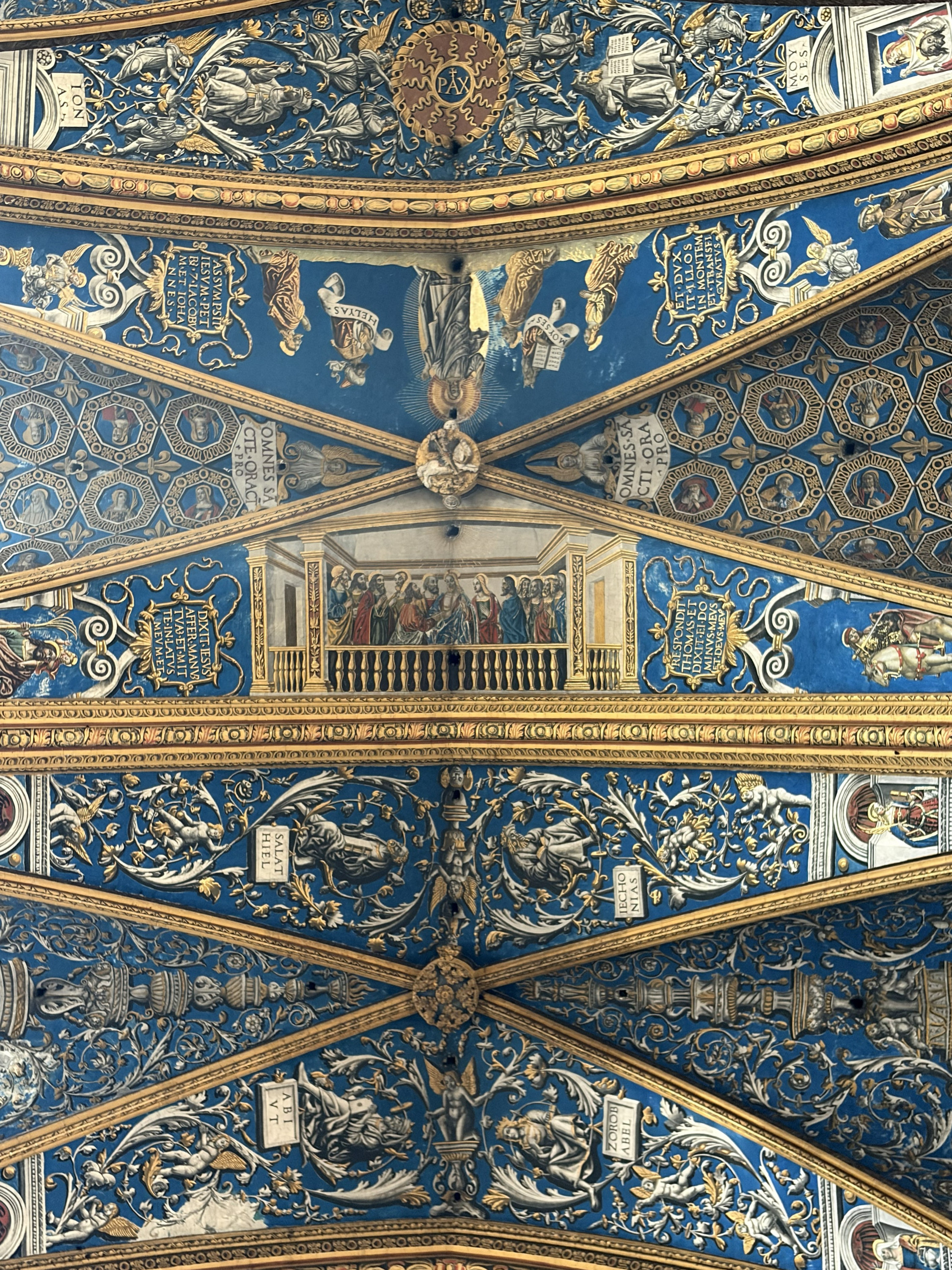
Foliage, figures and painted architecture unfold between the ribs. Against the deep blue, each detail seems to lead to another.
Photographie personnelle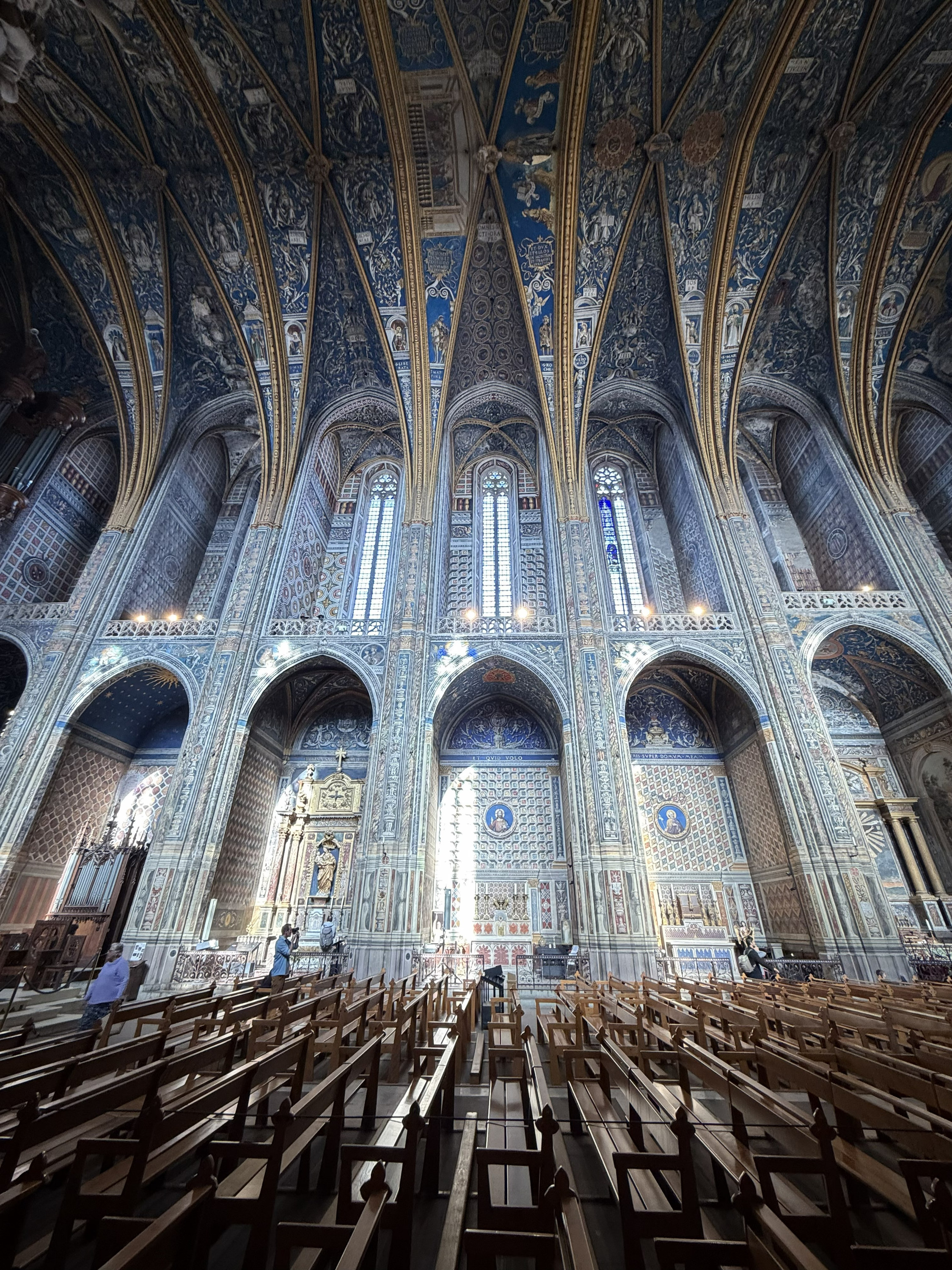
The pillars draw the eye up to the vaults: painting envelops the space and echoes the upward sweep of the architecture.
Photographie personnelleFollow the ribs, then explore the areas they frame: narrative scenes, medallions, scrolling foliage and small figures. Notice how golden tones stand out against the blue and how the decoration continues from one bay to the next.
In the early sixteenth century, Italian painters brought Renaissance decoration into a Gothic building. Around the religious scenes, they created ornaments inspired by antiquity, combining plants, figures and imaginary forms. The vaults thus bring together Christian narratives and a new decorative language.
The Treasury
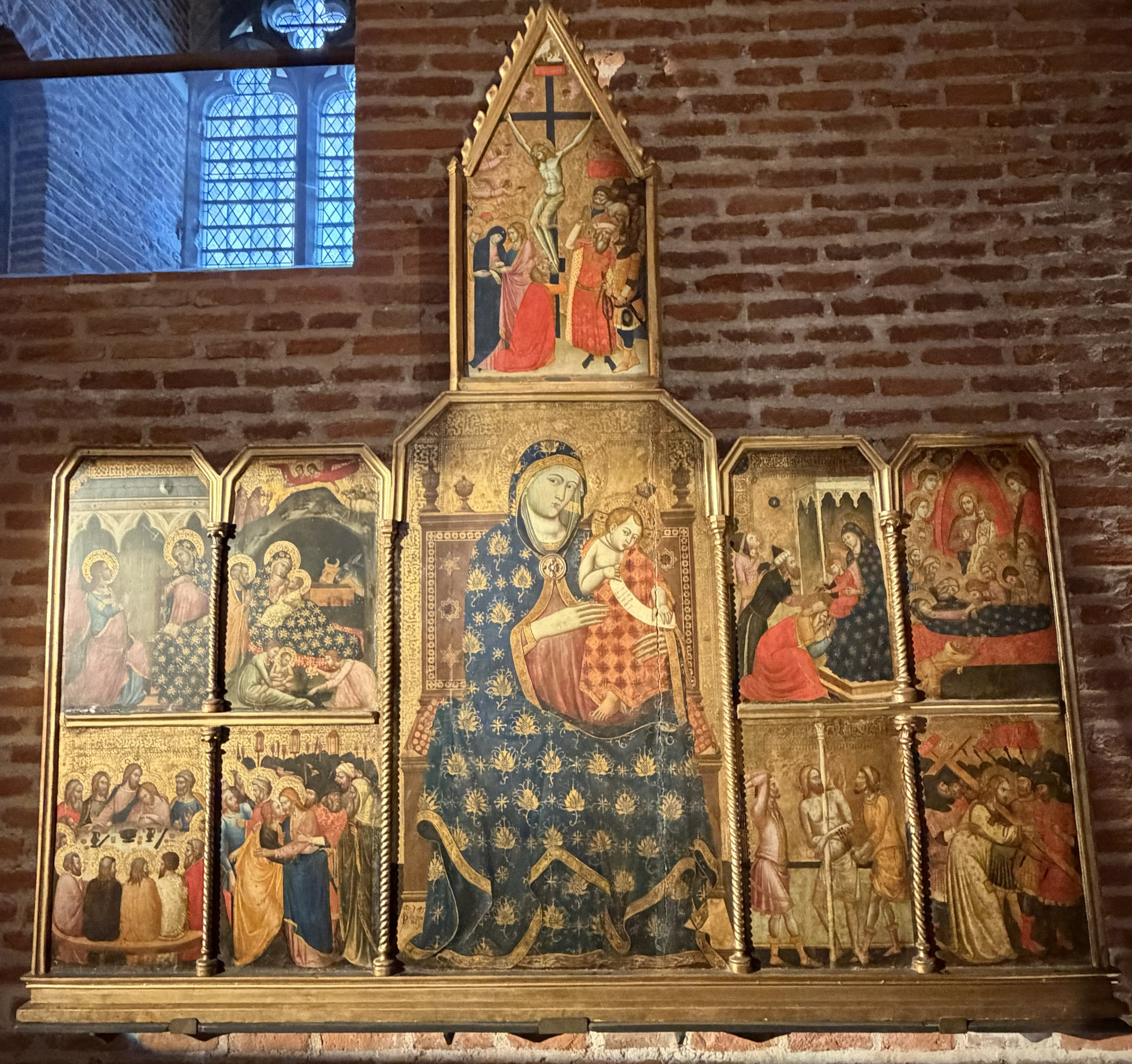
Created in 1345, this polyptych belongs to a medieval artistic tradition in which images helped communicate stories of faith. The composition follows a hierarchy: the Virgin dominates the ensemble, while the smaller scenes develop the religious narrative.
Gold, precious colours and intricate patterns do more than decorate the painting. They lend the figures a special dignity and evoke a sacred world beyond everyday life.
Photographie personnelle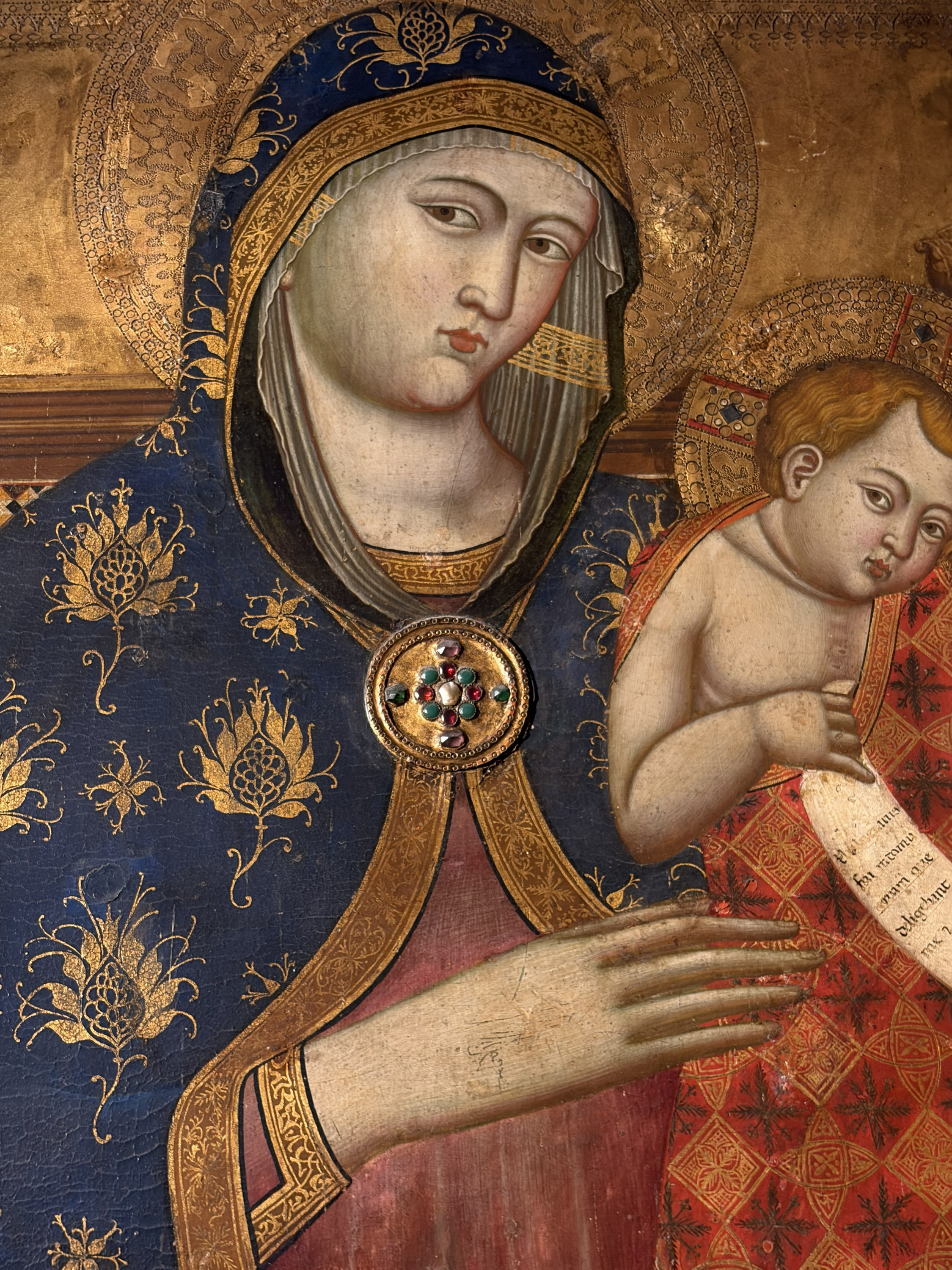
Notice the blue mantle adorned with golden patterns, the halos and the delicately painted faces. Blue and gold emphasise the Virgin's sacred status. But look at their gestures too: Mary holds her child tenderly. The artist combines the majesty of a religious figure with the affection of a mother.
Photographie personnelle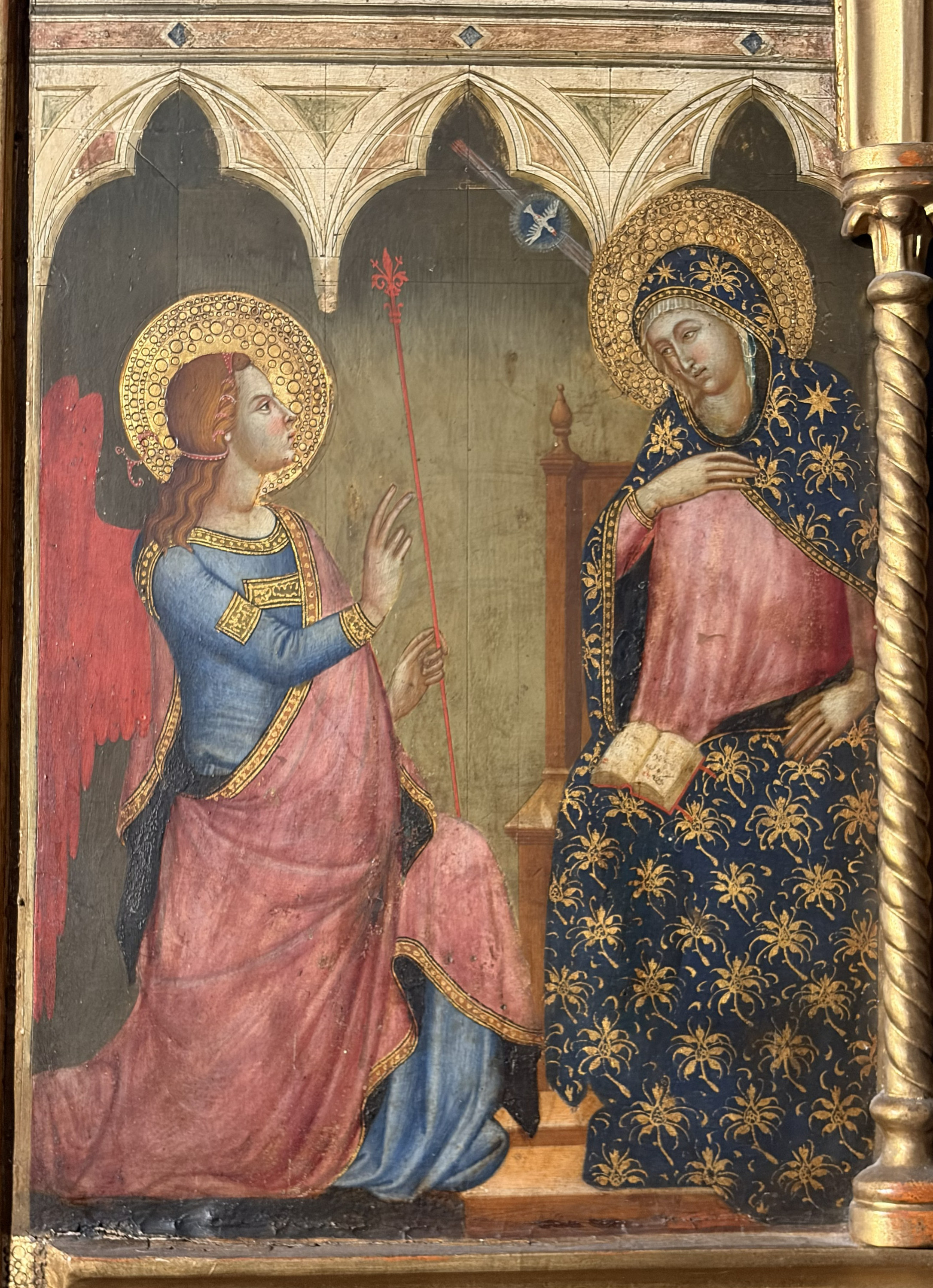
The angel Gabriel, recognisable by his wings, announces to Mary that she will give birth to Jesus. Notice their gestures: the angel appears to be speaking, while Mary places a hand on her chest, suggesting surprise and acceptance. The golden halos, richly decorated garments and Gothic arches lend solemnity to this encounter.
Photographie personnelle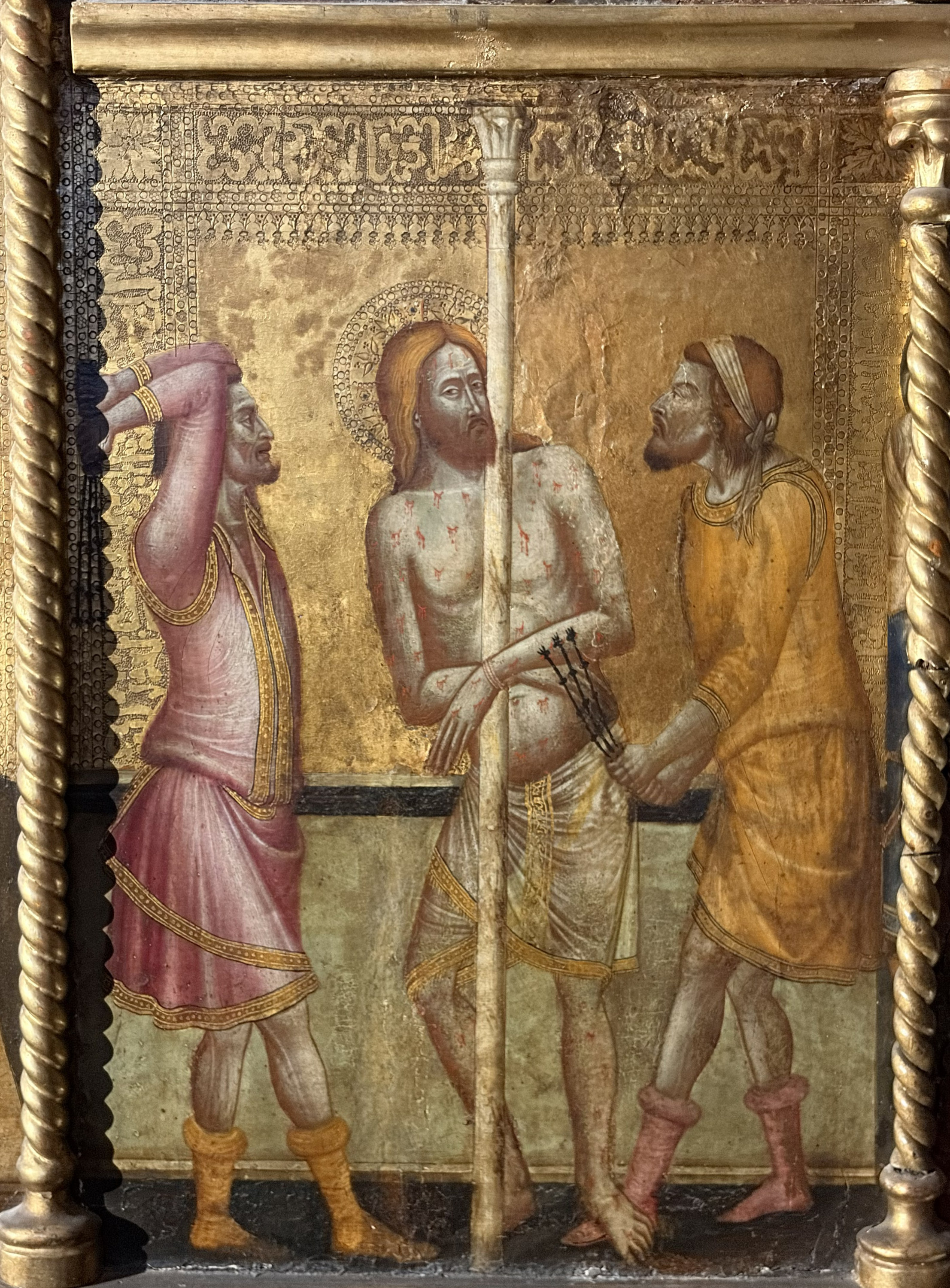
Tied to a column, Christ is being scourged before his crucifixion. His body bears the marks of the blows, while two tormentors stand on either side of him. Notice the contrast between their violent gestures and Jesus's almost motionless posture. The painter sets human brutality against Christ's quiet acceptance of suffering.
Photographie personnelle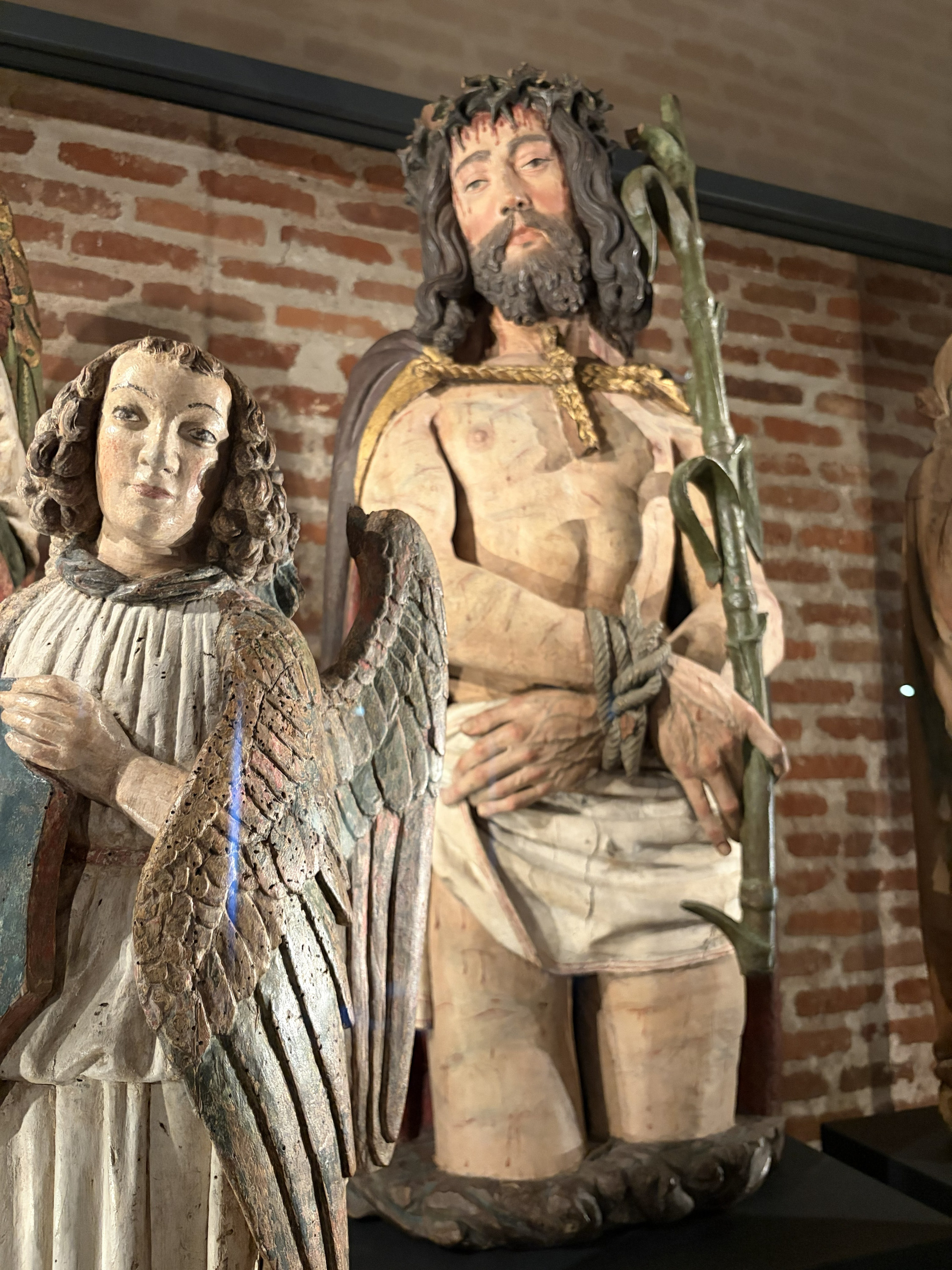
Crowned with thorns, Christ is shown after being mocked and mistreated, before his crucifixion. “Ecce Homo” means “Behold the man”, the words spoken by Pontius Pilate as he presented Jesus to the crowd. Notice his wounded body and sorrowful expression: the sculptor seeks to awaken compassion in the viewer. The sculpture's origins remain mysterious: some believe it may have come from the cathedral's former Gothic organ.
Photographie personnelle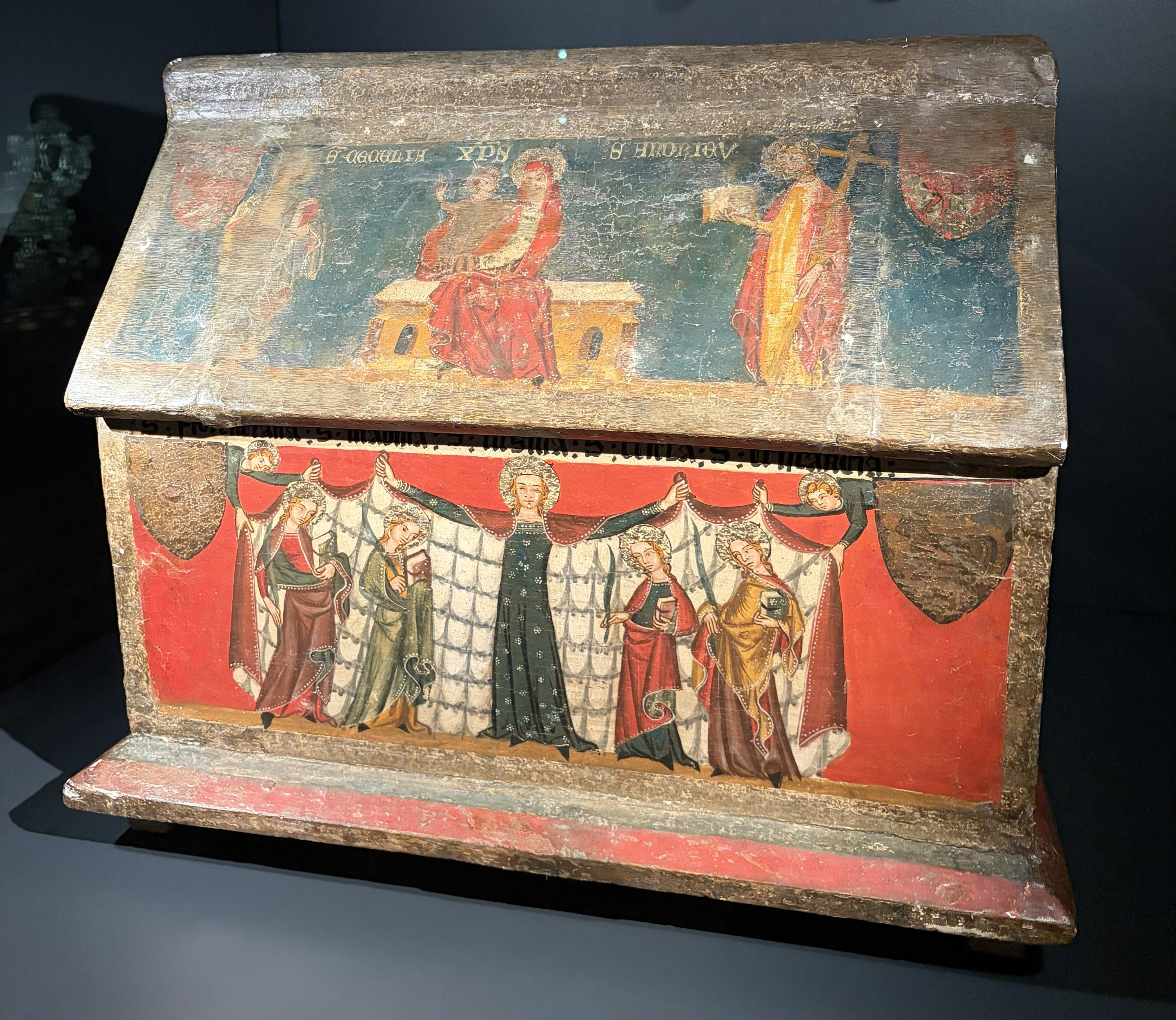
ehind its vivid colours and carefully painted figures, this object had a sacred purpose: to preserve and protect relics. For medieval worshippers, these remains or objects associated with saints were especially precious. The reliquary provided a setting worthy of their importance, while telling a story through its painted images.
Photographie personnelleWhat can be found in a cathedral treasury? Not necessarily gold or precious stones! It preserves objects that have accompanied religious life for centuries: reliquaries, paintings, sculptures and objects used during ceremonies.
Some were meant to be admired, others handled or carried in processions. Each tells, in its own way, the story of faith, craftsmanship and the people who preserved these treasures.