Andrea del Verrocchio
Vers 1435, Florence – 1488, Venise
Verrocchio gives gesture a new role and changes the way we see the whole figure.
In a few words
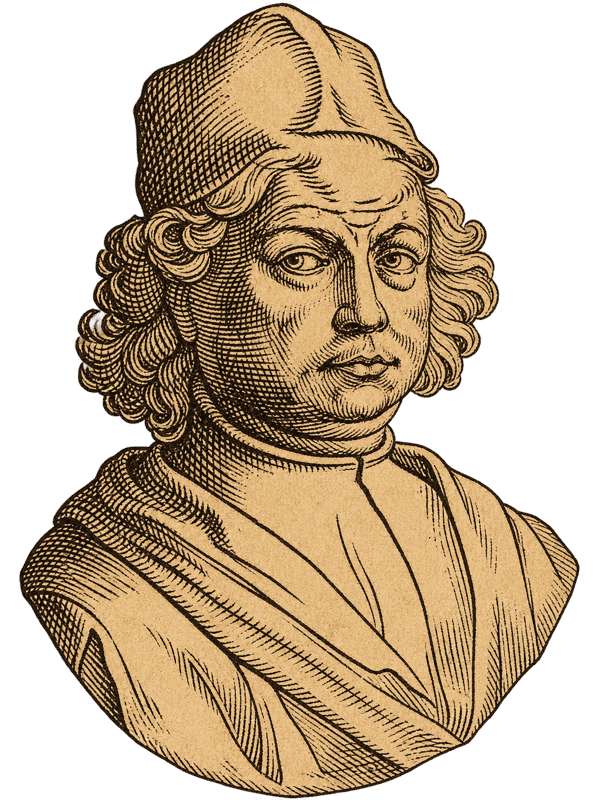
Andrea del Verrocchio (c. 1435–1488) learned goldsmithing before becoming a sculptor and painter. In Florence, he worked for the Medici and ran a workshop where the young Leonardo da Vinci trained. Towards the end of his life, he worked in Venice on the equestrian monument to Colleoni.
From a niche in Orsanmichele to a square in Venice, his works pose practical problems. Where can two figures fit when space is tight? How can a bronze several metres tall show a horse in motion? In each work, look for the detail where Verrocchio finds his answer.
One Foot Beyond the Niche
Look closely
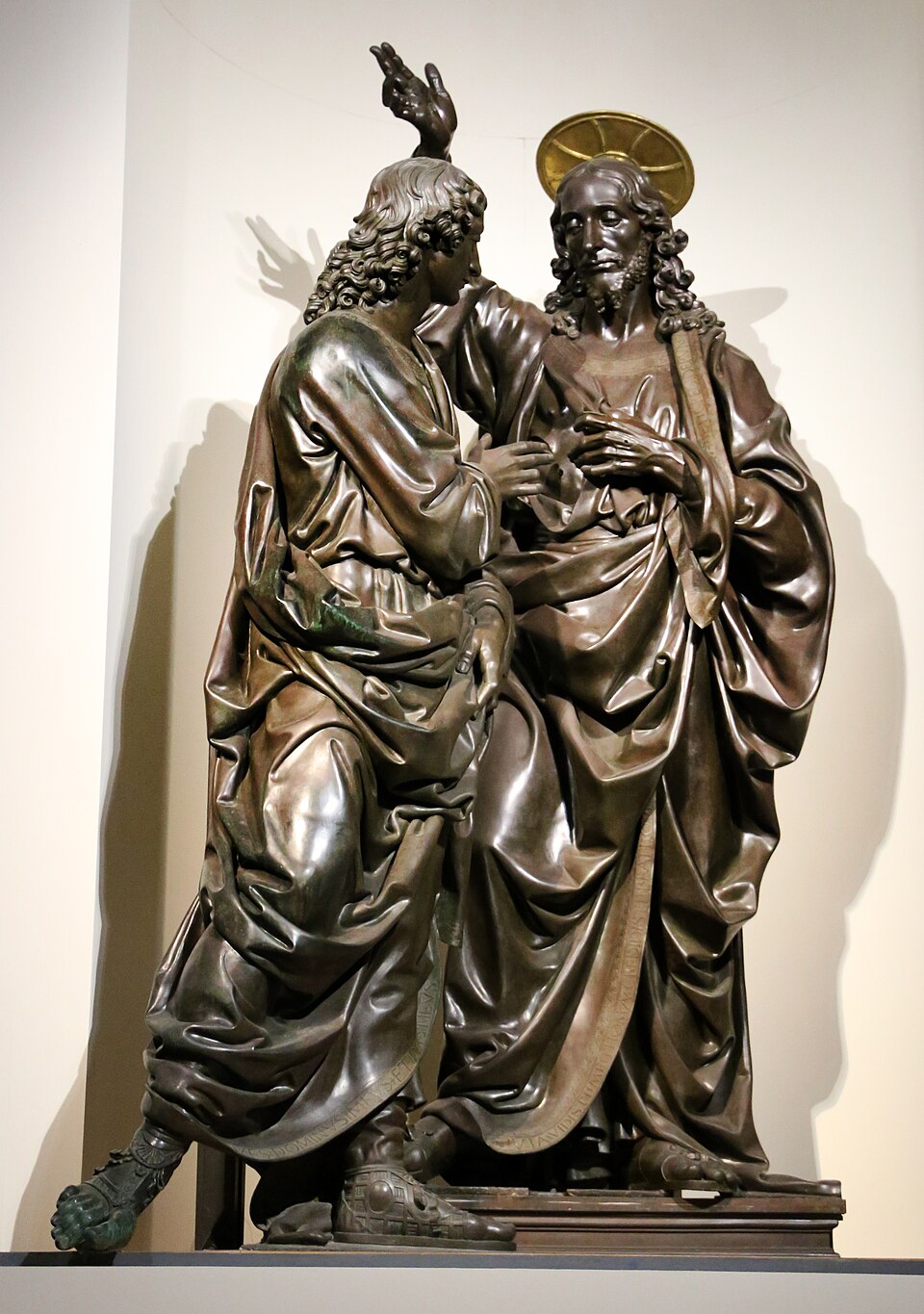
Find Thomas’s foot on the left. It projects beyond the ledge, while Christ stands further inside the niche. Follow Thomas’s leg up and then find his hand. It comes close to Christ’s wound, where the robe opens.
Understanding
Making room for two figures
The niche at Orsanmichele had held a single statue. Bringing Thomas forward leaves room for Christ further back. Look at what this does for the story: Thomas has already stepped into the scene, while his hand still has those last few inches to go. From the street, you see the apostle approaching to find out for himself whether what he has been told is true.

Lady with a Bunch of Flowers
Look closely
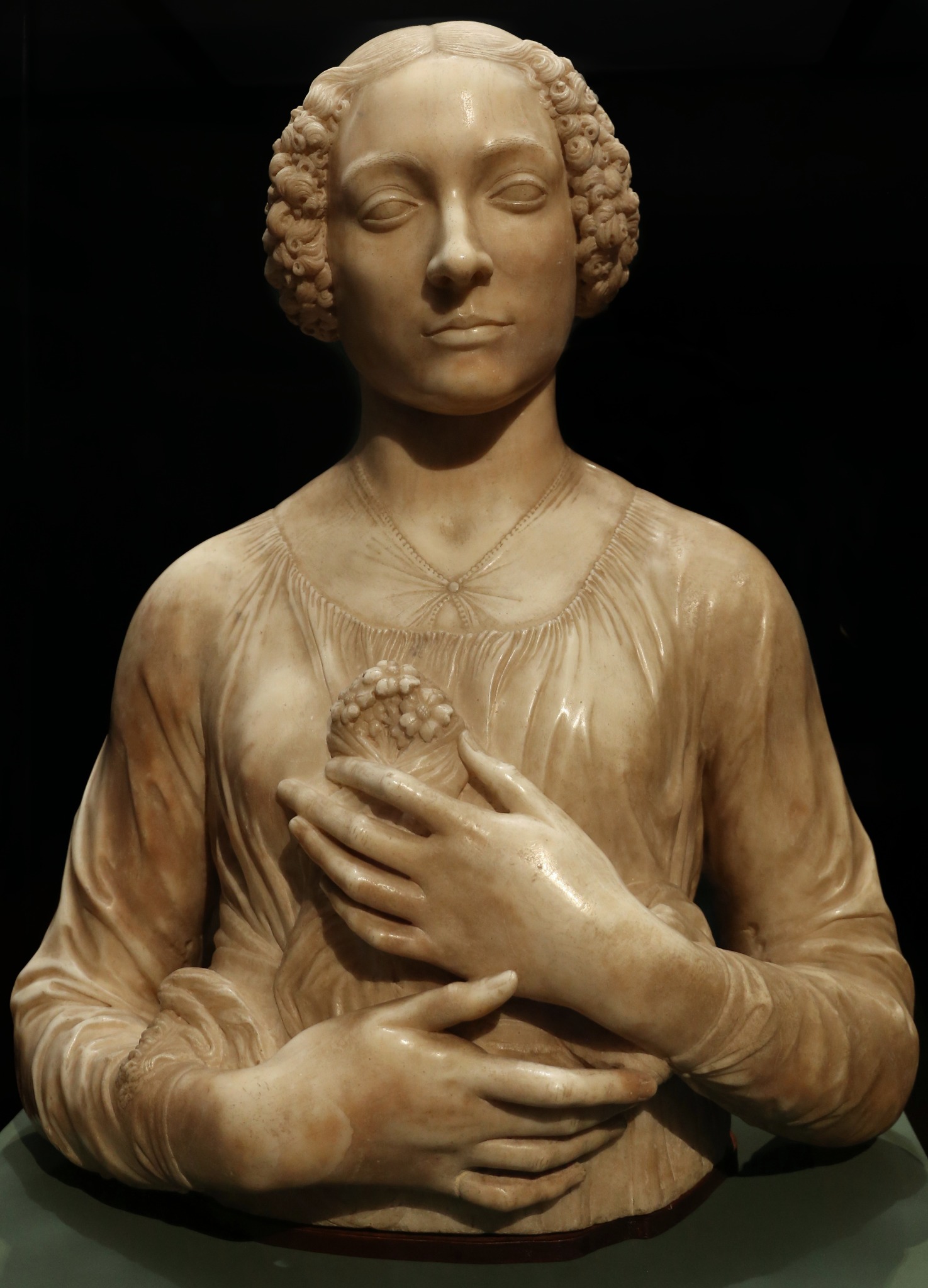
Look first at the face, then move down to the bouquet. Follow the stems to the hand holding them. The other hand rests lower down against the dress. If you can view the bust from an angle, look for the shadow between fingers and fabric.
Understanding
What the hands add to the portrait
Florentine portrait busts of the period often end at the chest. Verrocchio goes down to the waist, far enough to show what the young woman does with her hands. You can see just how she draws the flowers close to her body. That particular gesture is as much a part of the portrait as her facial features. The meaning of the bouquet remains uncertain.
Two Davids After the Fight
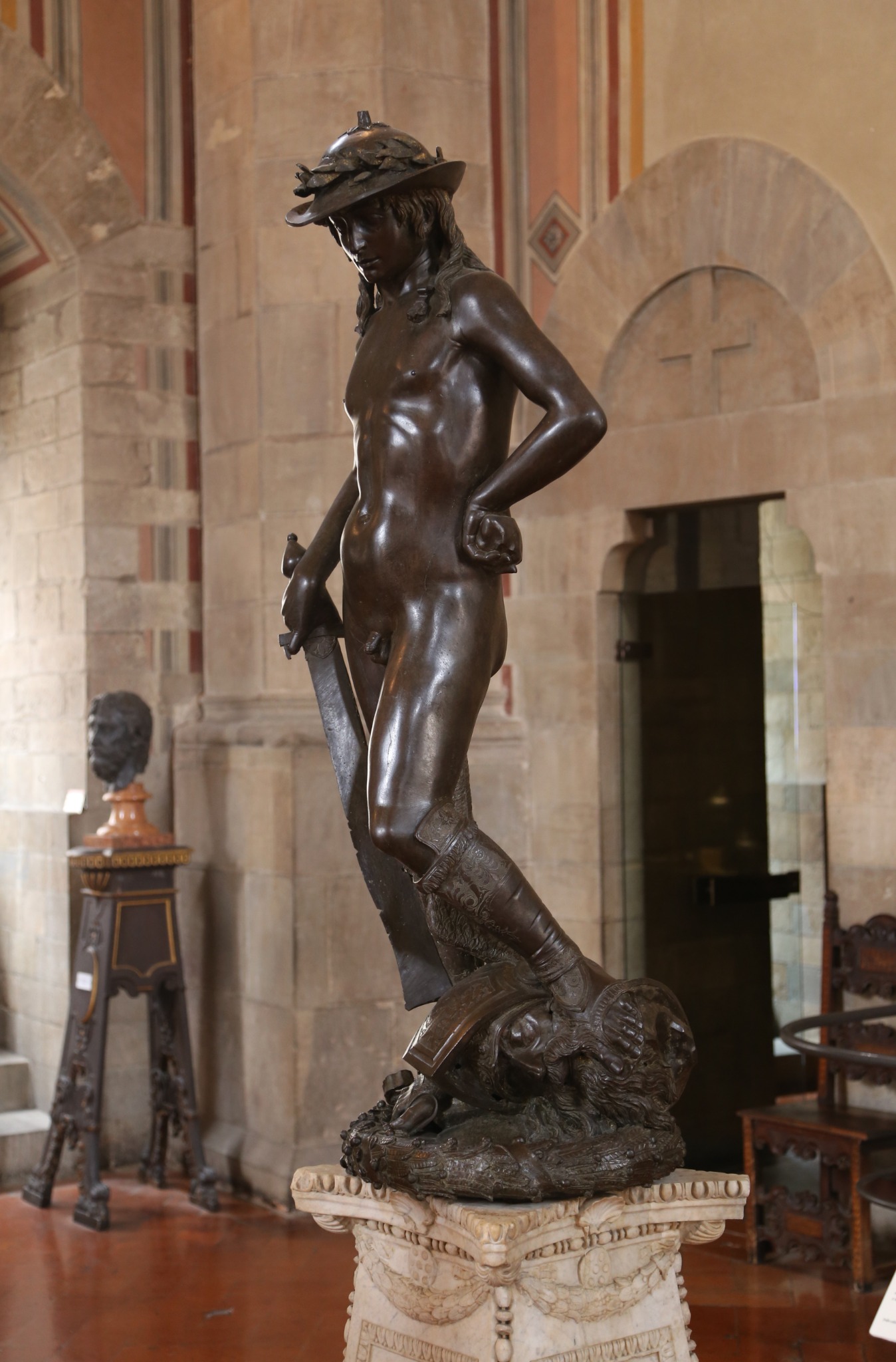
Donatello, bronze David
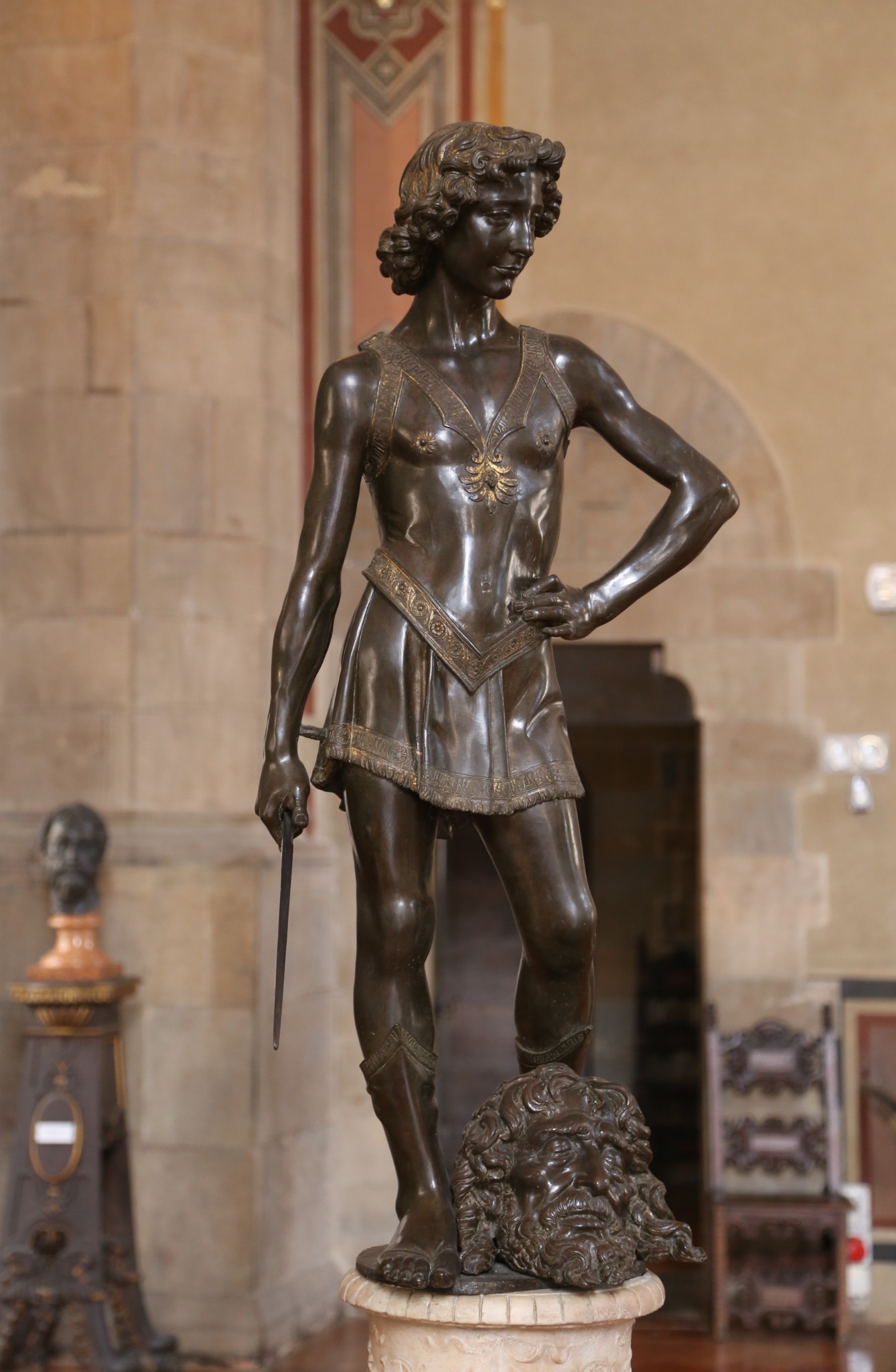
Verrocchio, bronze David
Both bronzes show the young David after his victory over Goliath. Find the giant’s head on the ground in both images.
Look closely
In Donatello’s bronze, start with the foot on Goliath’s head and work your way up to David’s face, lowered beneath his hat. In Verrocchio’s bronze, follow the hand on the hip. The elbow angles away from the body and the face turns to the side.
Understanding
Victory takes on a different air
In Donatello’s bronze, David’s foot still connects him to the giant he has just defeated. Verrocchio’s hand on the hip and turned head draw your eye up from the trophy to the young man’s stance. The subject is the same, yet the impression changes. One David seems absorbed in what has just happened. The other appears to be taking stock of his victory.
Putto with a Dolphin
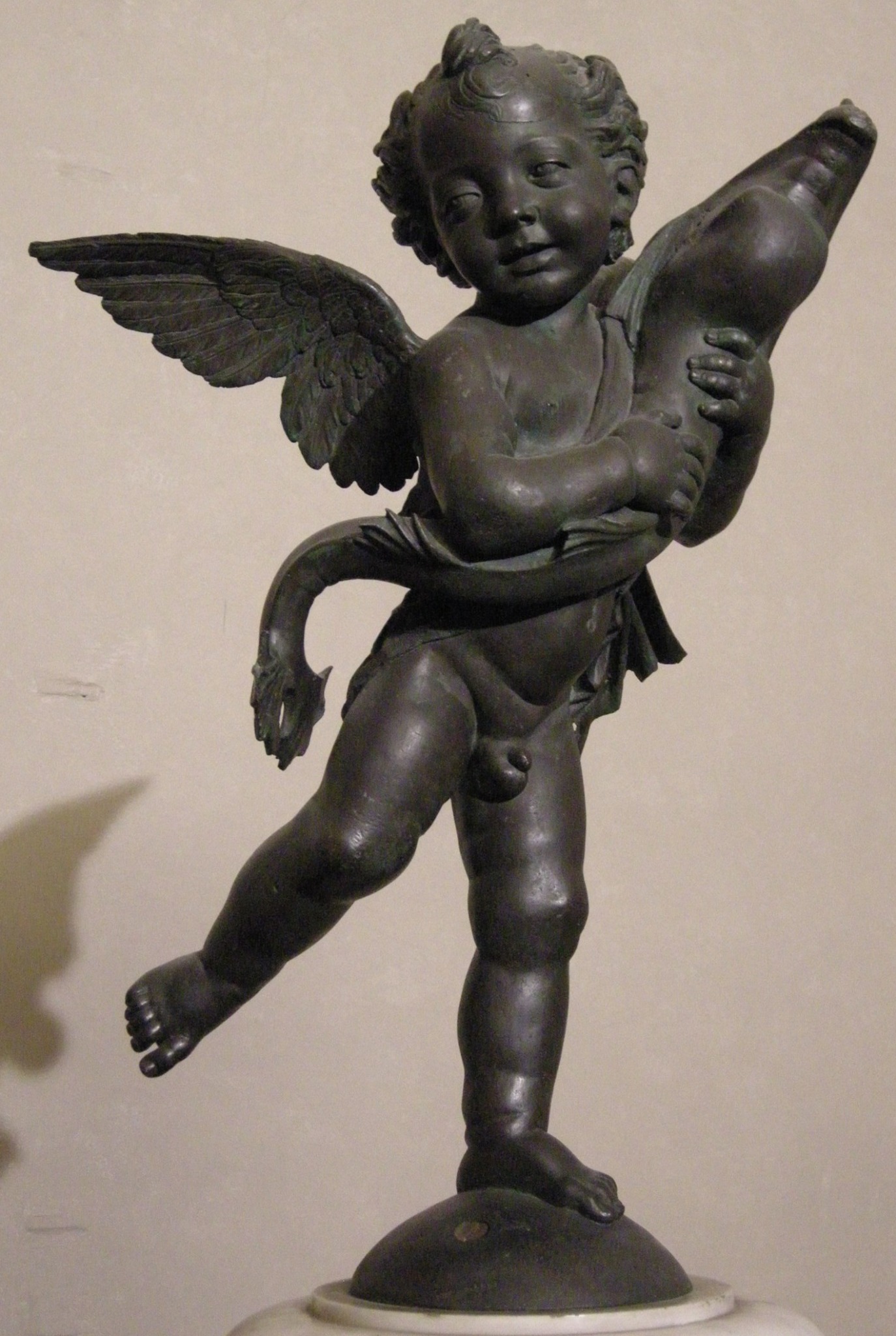
Look closely
Find the weight-bearing foot and the free leg lifting off the ground. Look up at the arms holding the dolphin. If you can walk around the sculpture, stop where you can see the dolphin most clearly, then where the wings stand out.
Understanding
A sculpture to walk around
This little winged child once stood above a Medici fountain. As you walked around the basin, the lifted leg, the dolphin and the wings would come into view in turn. Verrocchio spreads the details across several sides. Follow them around the figure and you can see why one view rarely tells the whole story of the pose.
The Baptism of Christ
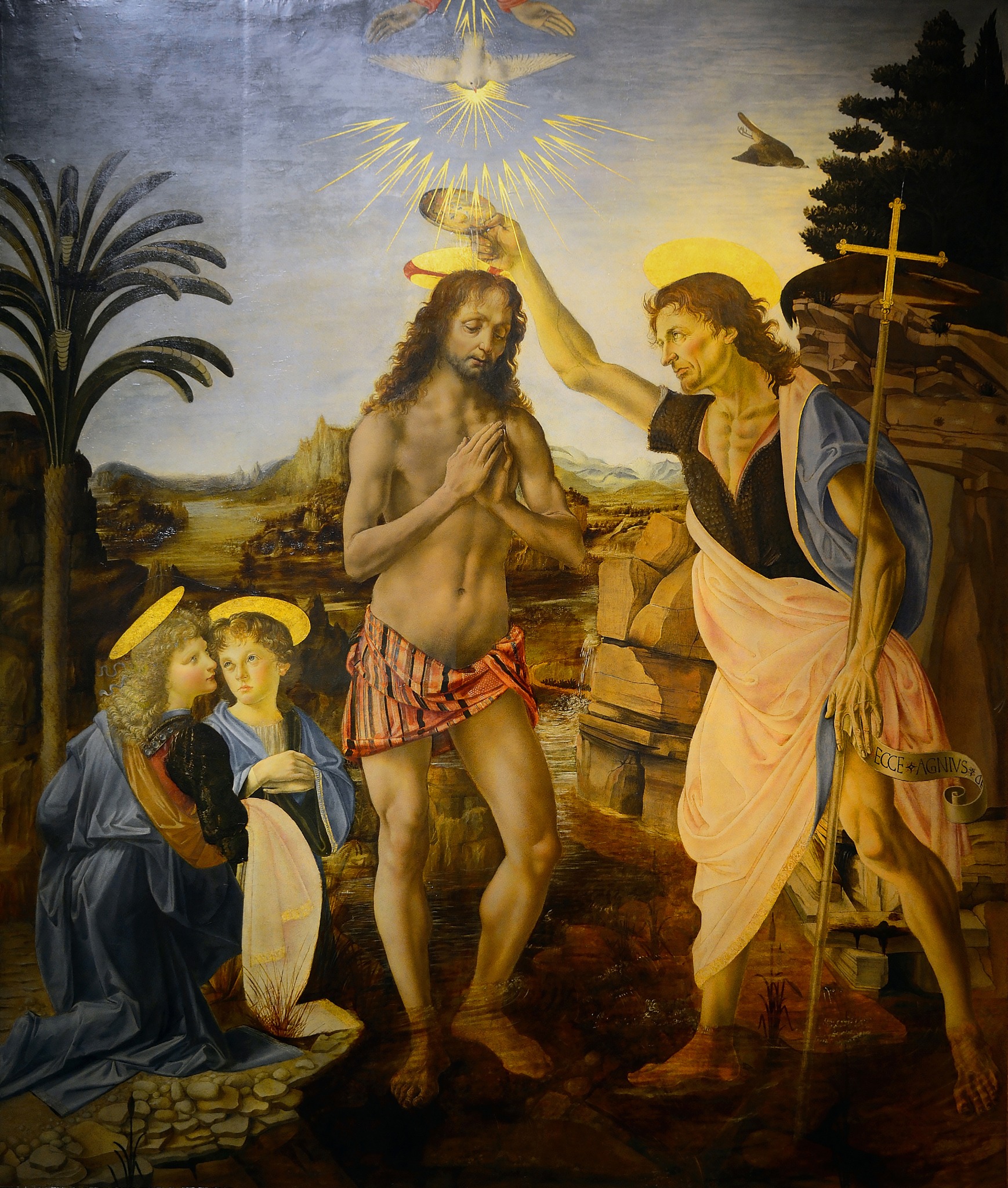
Look closely
At the lower left, find the angel with blond curls. Look at the back, then move up to the face in profile. The head turns to the right and tilts upwards. Follow that movement across the painting towards Christ and John the Baptist’s hand.
Understanding
An angel leads your eye back to the baptism
The profile of the angel attributed to Leonardo gives your eye a direction, while the figure’s back still faces us. You see both where the angel is kneeling at the edge of the scene and where the head turns. This small movement ties a figure painted in Verrocchio’s workshop to the gesture at the centre of the composition. The accompanying story takes a closer look at what we know about Leonardo’s contribution.
Your Turn! Two Bronze Horses
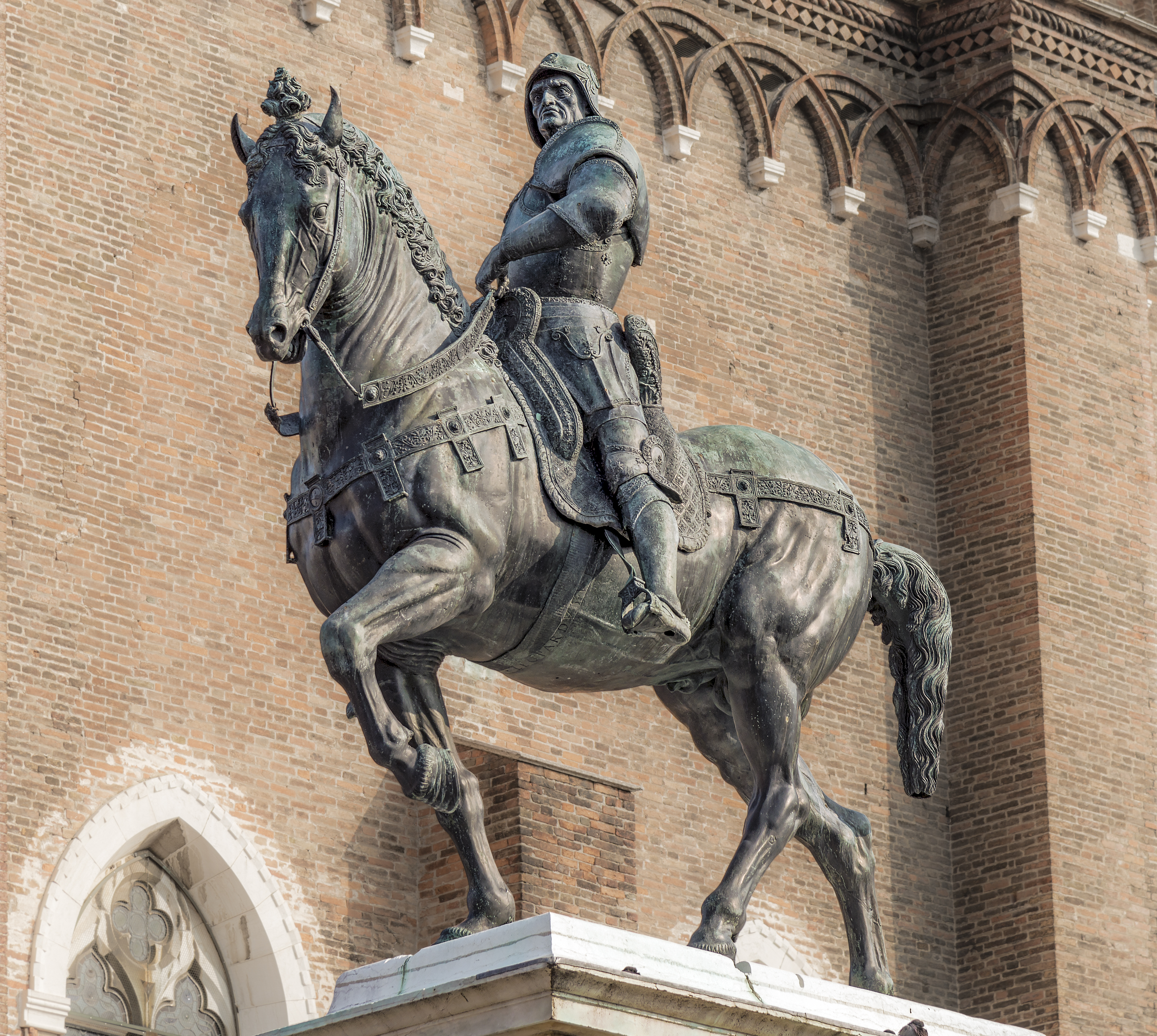
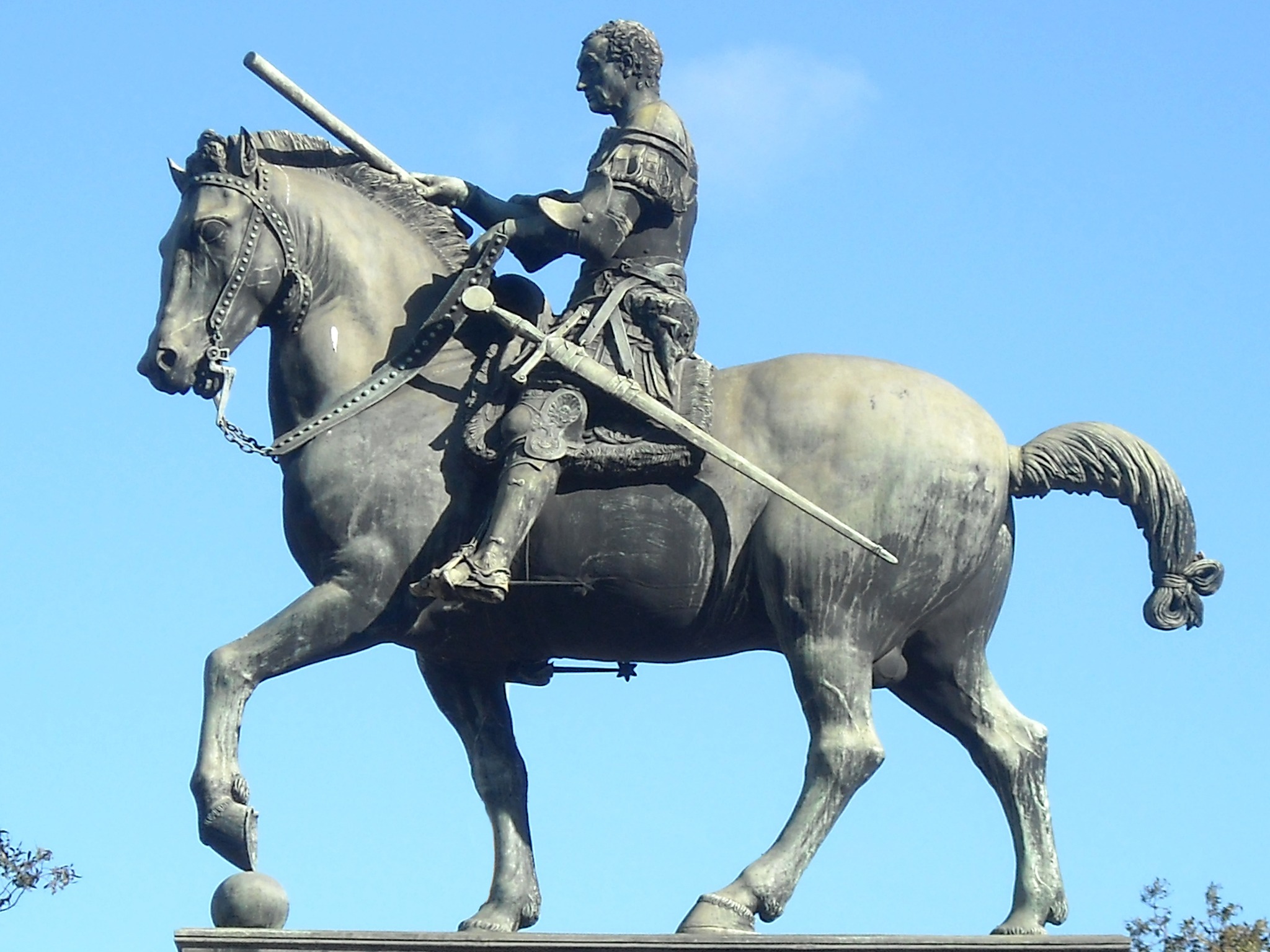
Which horse seems to turn as it moves forward?
In which monument does the raised hoof rest on a ball?
Explore Further
How to recognise Andrea del Verrocchio?
A gesture that goes beyond the edge
Thomas’s foot crosses the ledge. When you look at a figure in a niche, see what comes furthest towards you.
Hands that help tell you who you are looking at
The hands of the Lady with a Bunch of Flowers show you how she holds the flowers. In another portrait, see whether the fingers tell you something the face only hints at.
A foothold that sets the figure in motion
The Putto stands on one foot. Look for where the weight falls and compare it with the leg that lifts away.
A pose that sends your eye sideways
David’s elbow and turned face invite you to look at him from an angle. In another work, look for what makes you want to take a step to one side.
Key takeaways
Verrocchio gives gesture a new role. In Lady with a Bunch of Flowers, he extends the bust to include the hands, making the way the woman holds her flowers part of her portrait. At Orsanmichele, Thomas’s foot projects beyond the ledge so that passers-by can see him stepping towards Christ. In the Colleoni, the space beneath a raised hoof is enough to make you feel the bronze horse’s forward motion.
When you look at another of his works, ask yourself which gesture helps you understand the figure, and what Verrocchio came up with to make you notice it.