Observing nature to paint the sacred
How can an angel seem believable?
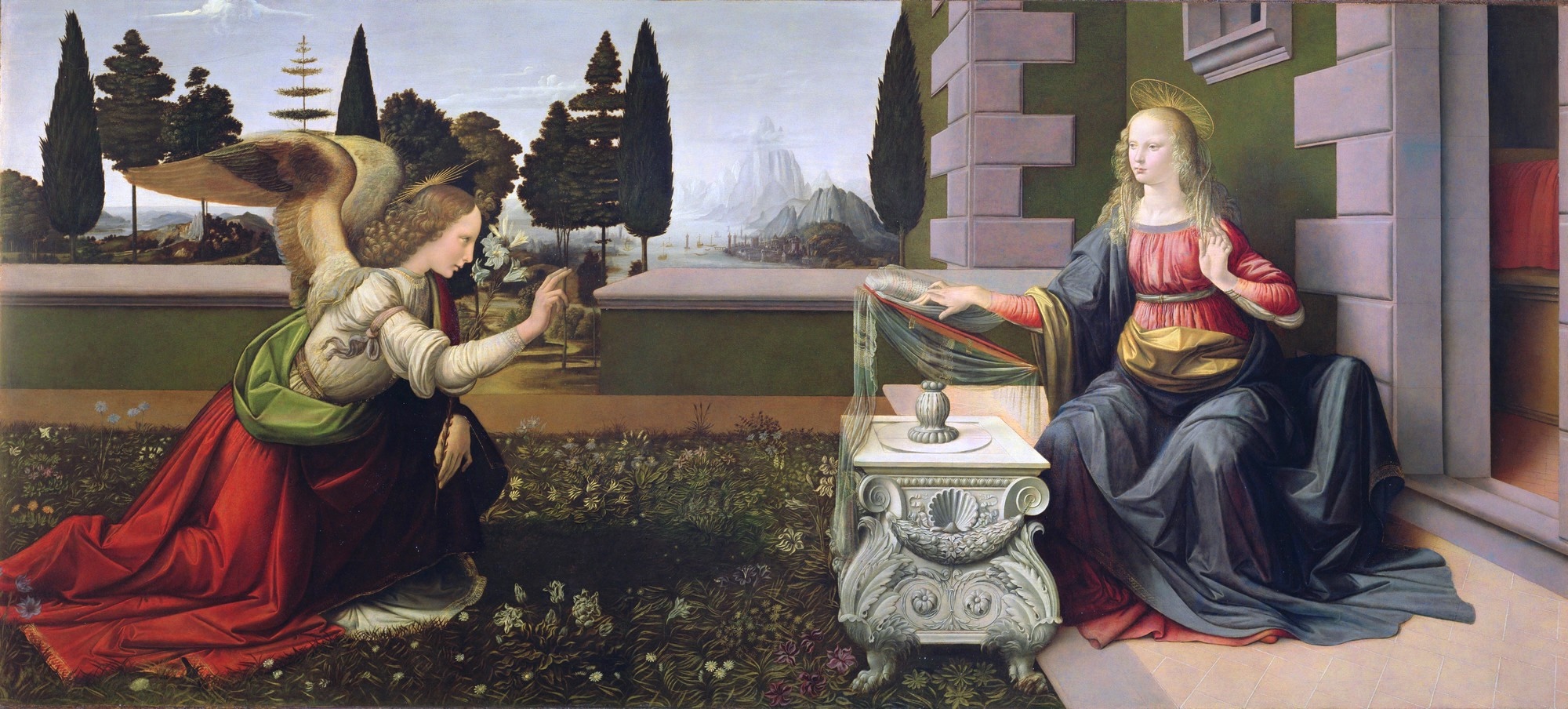
In this early painting, Leonardo gives a supernatural encounter the presence of a real event. We can already see the questions that would shape his work: how to observe nature, understand light and bring painted figures to life.
An angel with a physical presence
Gabriel has a solid body, clothing with substantial folds and a shadow on the grass. His wings draw on the observation of birds. The heavenly messenger shares Mary’s space: studying the natural world makes the miracle more tangible.
Depth beyond geometry
The architecture organises the space, but the landscape adds another dimension. Distant mountains become paler and their outlines less distinct. Colour and clarity also help us perceive distance. Leonardo explores how to paint the world as we see it, with air between our eyes and distant objects.
Light brings the scene together
Faces, fabrics, plants and architecture share the same light. Notice how it gives volume to forms while connecting the figures to their surroundings. The sacred encounter takes place within a coherent, observable world.
What makes this approach distinctive?
Leonardo did not invent volume, expressive gestures or perspective on his own. Earlier painters had already explored them. His distinctive contribution lies in bringing these concerns together through particularly attentive observation of nature.
Here, we discover a young painter beginning to turn painting into an investigation of the visible world.