A Dragon at the Heart of a Pagan Temple
A Dragon at the Heart of a Pagan Temple
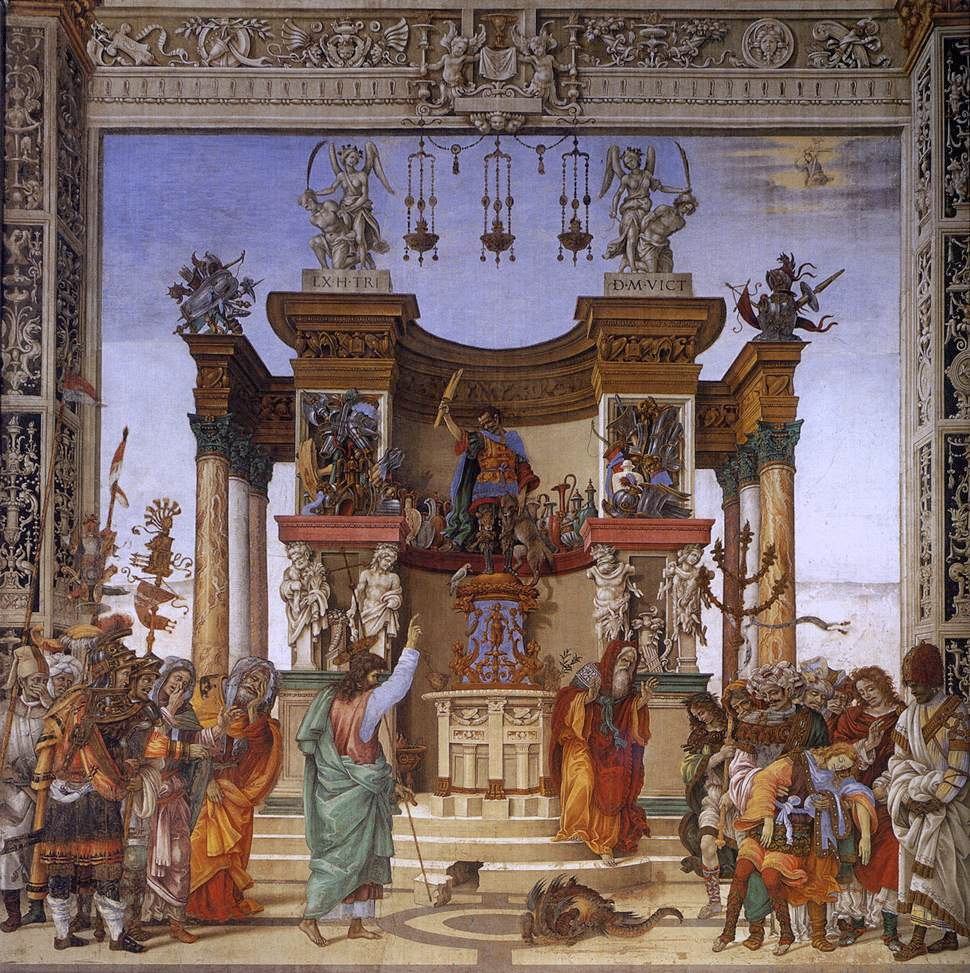
Saint Philip and the Dragon — Filippino Lippi
In the ancient city of Hierapolis, the inhabitants worship the god Mars. But one day, a dragon emerges from the temple, spreading its poisonous breath. Several people collapse, including the son of the priest responsible for the cult.
Saint Philip intervenes. Confronting the monster, he raises no weapon: instead, in the name of Christ, he commands it to leave the temple and disappear into the desert.
The dragon flees. Philip then prays for the victims, who are brought back to life.
But why did Filippino Lippi paint a dragon in the middle of an ancient temple?
Because this creature represents far more than a monster. In the legend, it embodies the forces of evil associated with the ancient pagan idols. By driving it away, Saint Philip demonstrates the triumph of the Christian faith over paganism.
Filippino Lippi gives this episode a spectacular dimension: a temple adorned with strange decorations, figures overwhelmed by emotion, and an almost fantastical dragon. The scene resembles a theatrical performance unfolding before the viewer's eyes.
This story comes from the legendary tradition of Saint Philip, notably preserved in the Acts of Philip and The Golden Legend. It is not a historically established event.