From Chloris to Flora: the birth of a flower goddess
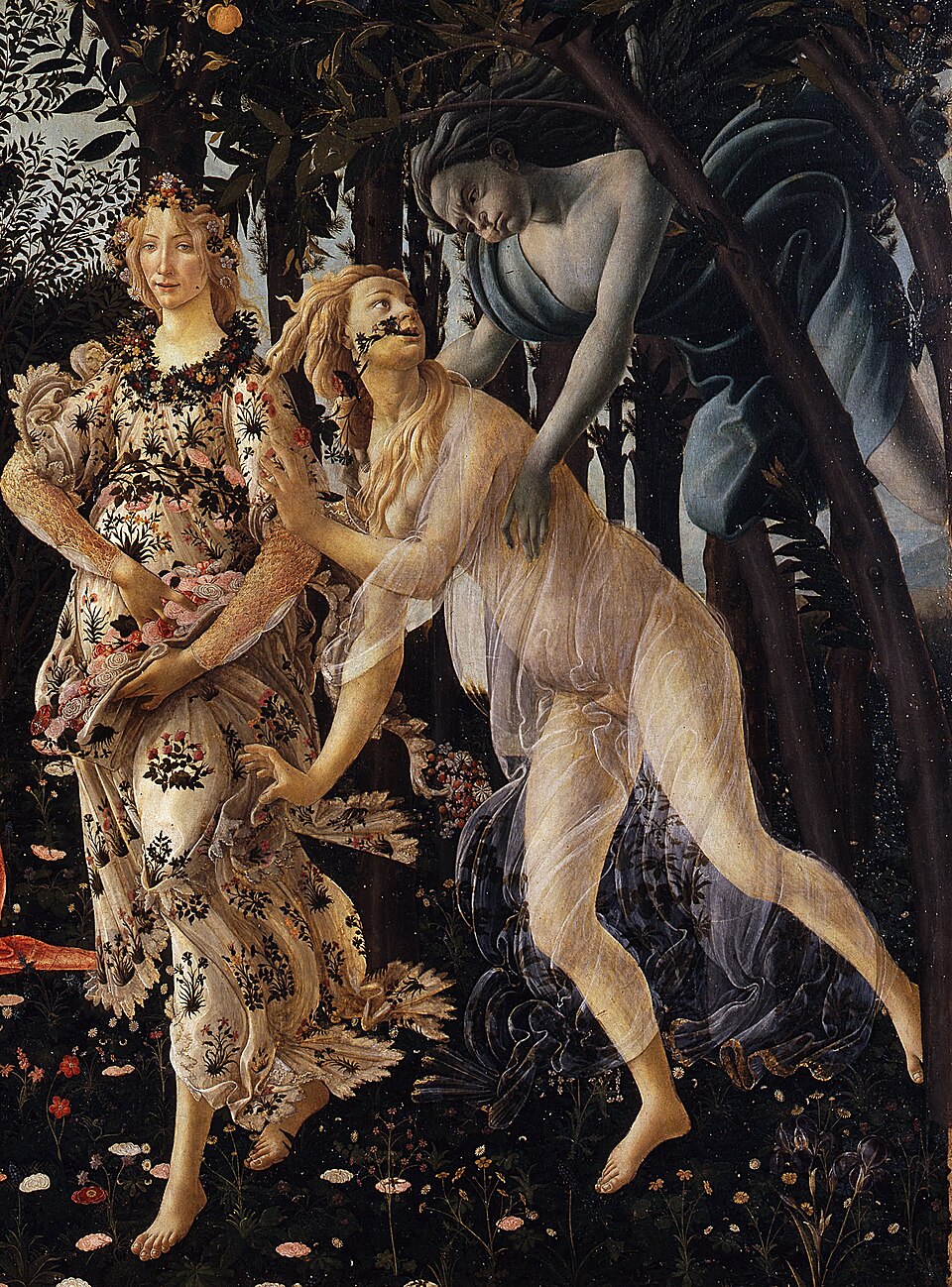
Zephyrus, the west wind, sweeps in from the right and seizes the nymph Chloris.
Chloris tries to escape him, and the flowers spilling from her lips foreshadow her transformation.
nymphe sème les roses qu’elle porte dans les plis de sa robe. Now Flora, goddess of spring, the nymph scatters roses from the folds of her dress.
In Ovid’s Fasti, Flora tells her own story. She was called Chloris when Zephyr pursued and seized her. He later married her and granted her power over flowers. The story locates an act of violence at the origin of spring’s abundance.
Botticelli gives this sequence two bodies. On the right, Chloris looks back as flowers emerge from her mouth. Beside her, Flora advances in a flowered dress and scatters roses. The flowers crossing Chloris’s lips connect the two moments, making the transformation visible within the painting.
Ovid, Fasti, book V, lines 193–214.