Andrea Mantegna
Vers 1431–1506 · Padoue et Mantoue
When painting sculpts bodies and opens up walls.
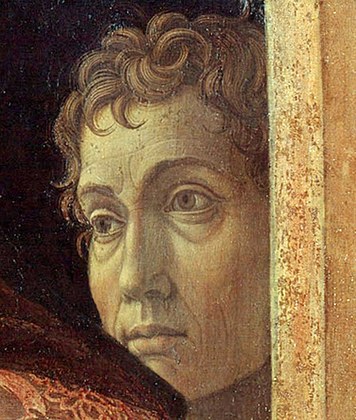
In a few words
Trained in Padua, Andrea Mantegna became fascinated by classical antiquity and perspective. As court painter to the Gonzaga family in Mantua, he created the celebrated Camera degli Sposi.
With Mantegna, painting does more than open a window onto a scene: it can transform an entire room and place the viewer at the heart of the illusion. His bodies have the force of sculpture, and his settings bring antiquity back to life.
The ceiling seems to open, the figures look down at you.
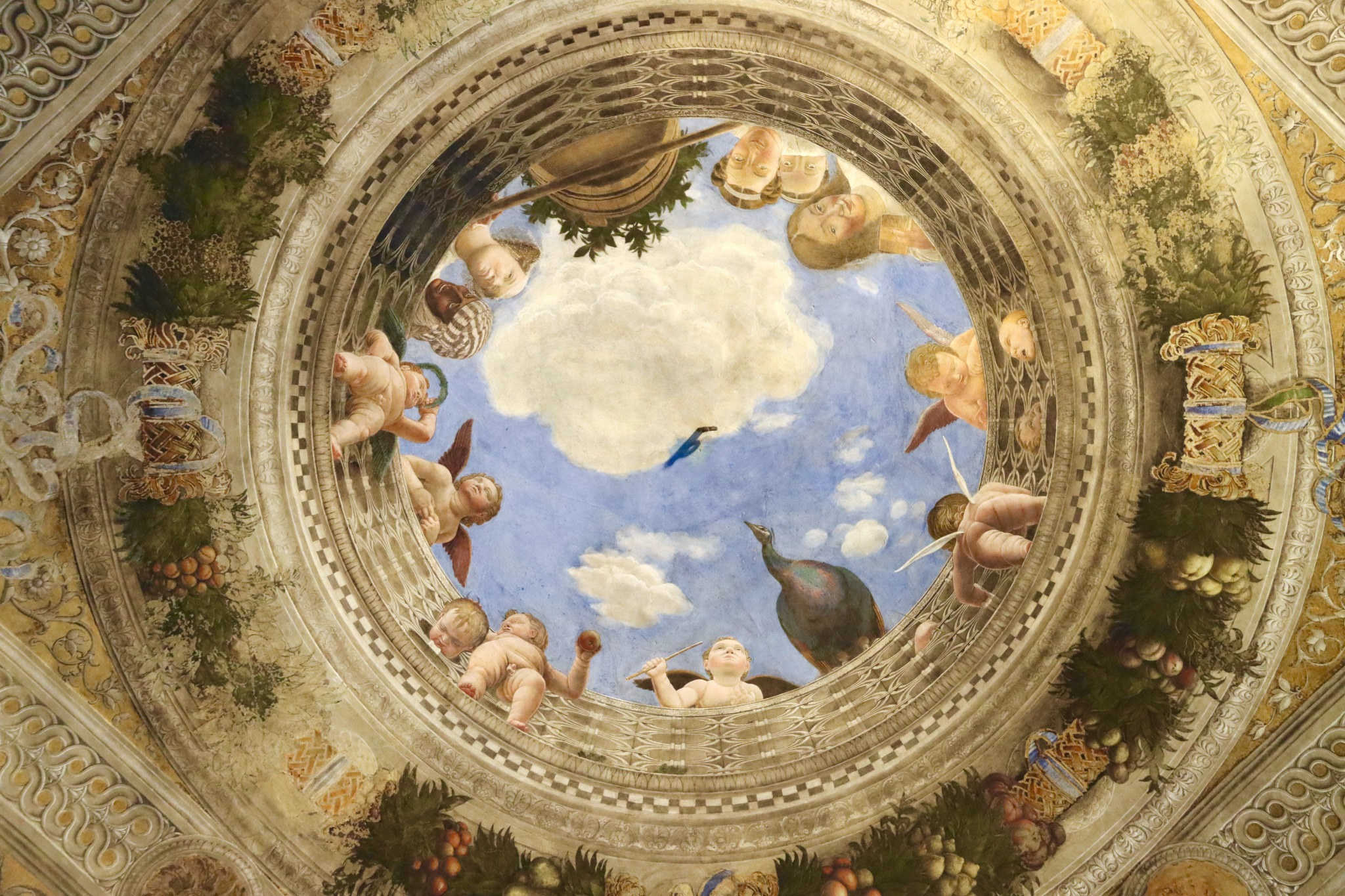
Gonzaloferjar · CC BY-SA 4.0
Look closely
In the ceiling, a painted oculus opens onto a blue sky. Figures lean over a balustrade, seen from below. On the walls, the court occupies a setting that seems to extend the real room.
Understanding
What is new: Mantegna designs the entire room as one illusion. Painted columns, curtains and balustrades interact with the real architecture, while the oculus seems to open above our heads. The visitor is not merely in front of an image: the painting surrounds them.
The Gonzaga family appears among relatives and courtiers. Portraits, everyday gestures and lavish decoration create a carefully staged image of power.

A viewpoint that brings us close to the body.
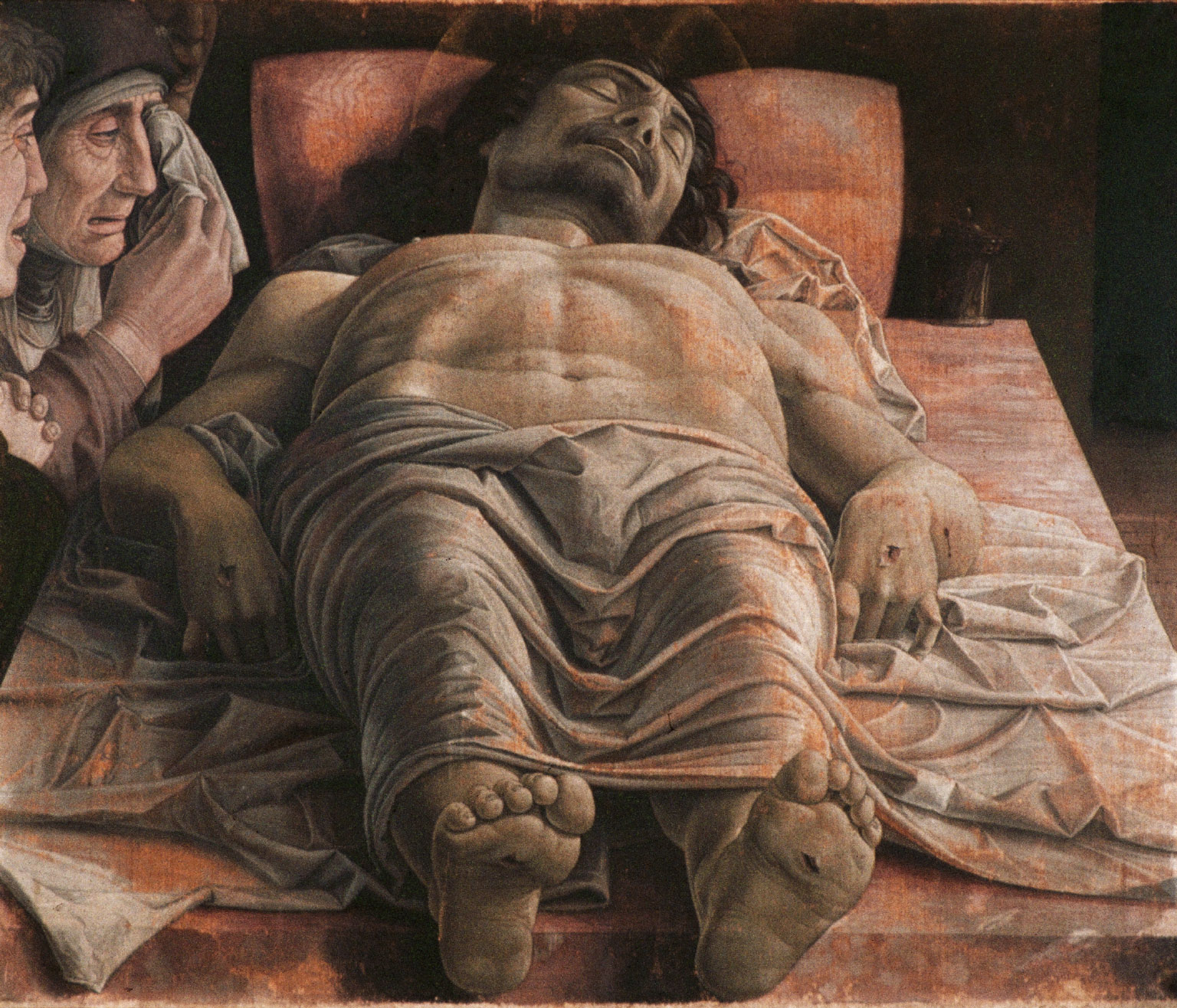
Web Gallery of Art · Domaine public — reproduction fidèle d’une œuvre du domaine public
Look closely
The body recedes into depth from feet to head. The wounds in the hands and feet remain visible. At the left edge, mourners crowd close to the body.
Understanding
What is daring: the body is shown almost along its length, feet towards us. This striking foreshortening brings the scene into our space. Mantegna does more than demonstrate perspective: he confronts us with death and the grief of those nearby.
The folds of the shroud and the outlines of the body are almost carved in their precision. The technical feat intensifies the solemnity of the scene.
A garden becomes a theatre of the imagination
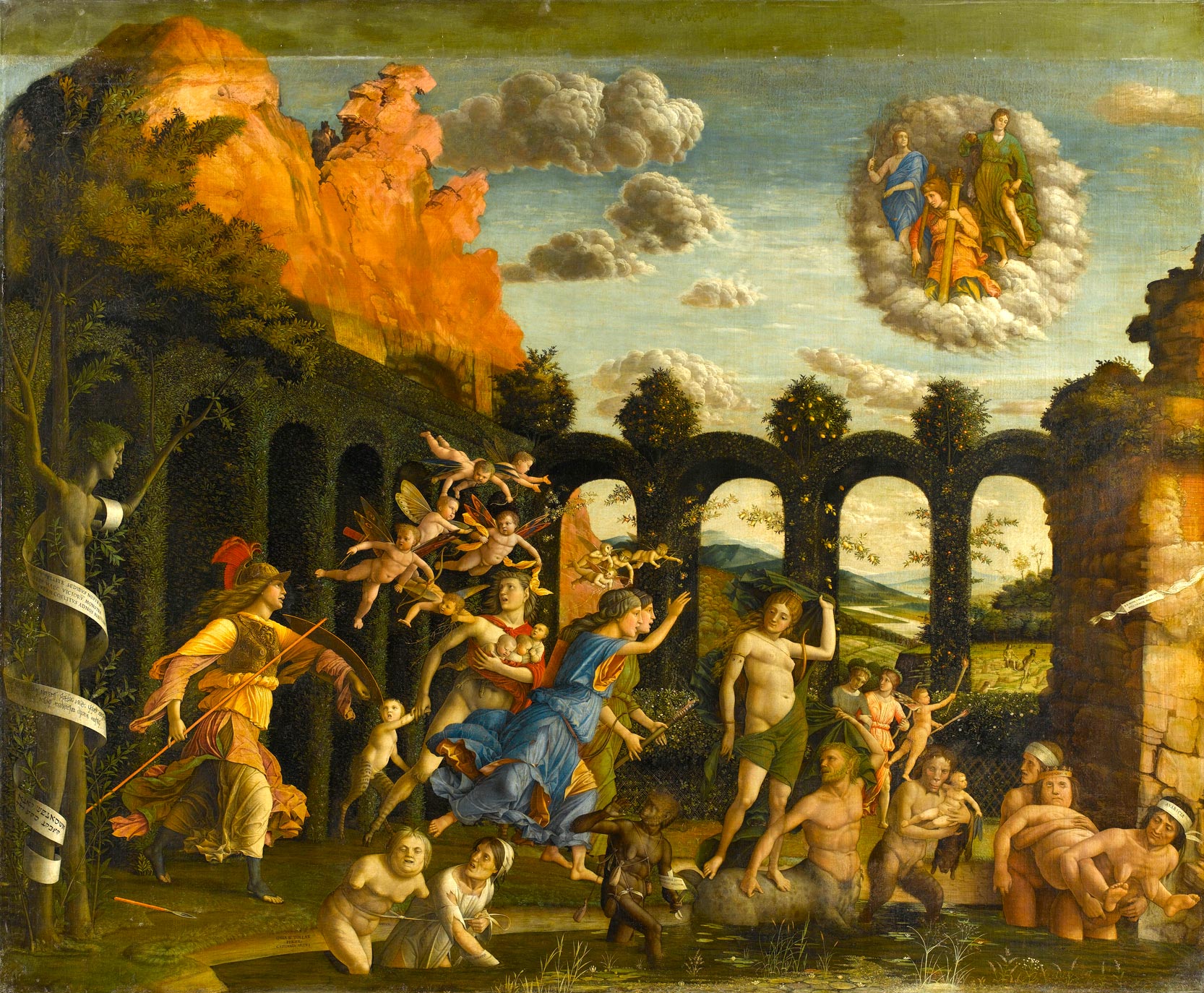
Musée du Louvre · Domaine public — reproduction fidèle d’une œuvre du domaine public
Look closely
On the left, Minerva advances with a spear and shield. Around her, the Vices flee: distorted bodies, hybrid creatures and surprising gestures crowd the scene. Above, the Virtues appear in the sky.
Understanding
The surprise: Mantegna turns a moral idea into a fantastic spectacle. Minerva, goddess of wisdom, drives the Vices out of the garden so that Virtue can return. The story comes from classical mythology, not from the Bible.
Why it matters: commissioned for Isabella d’Este’s private study, the painting shows how Renaissance patrons used ancient stories to celebrate knowledge, morality and their own cultural refinement.
Look for the unexpected: a painting can be both a puzzle and a lesson in classical culture.
Can You Recognise a Mantegna?
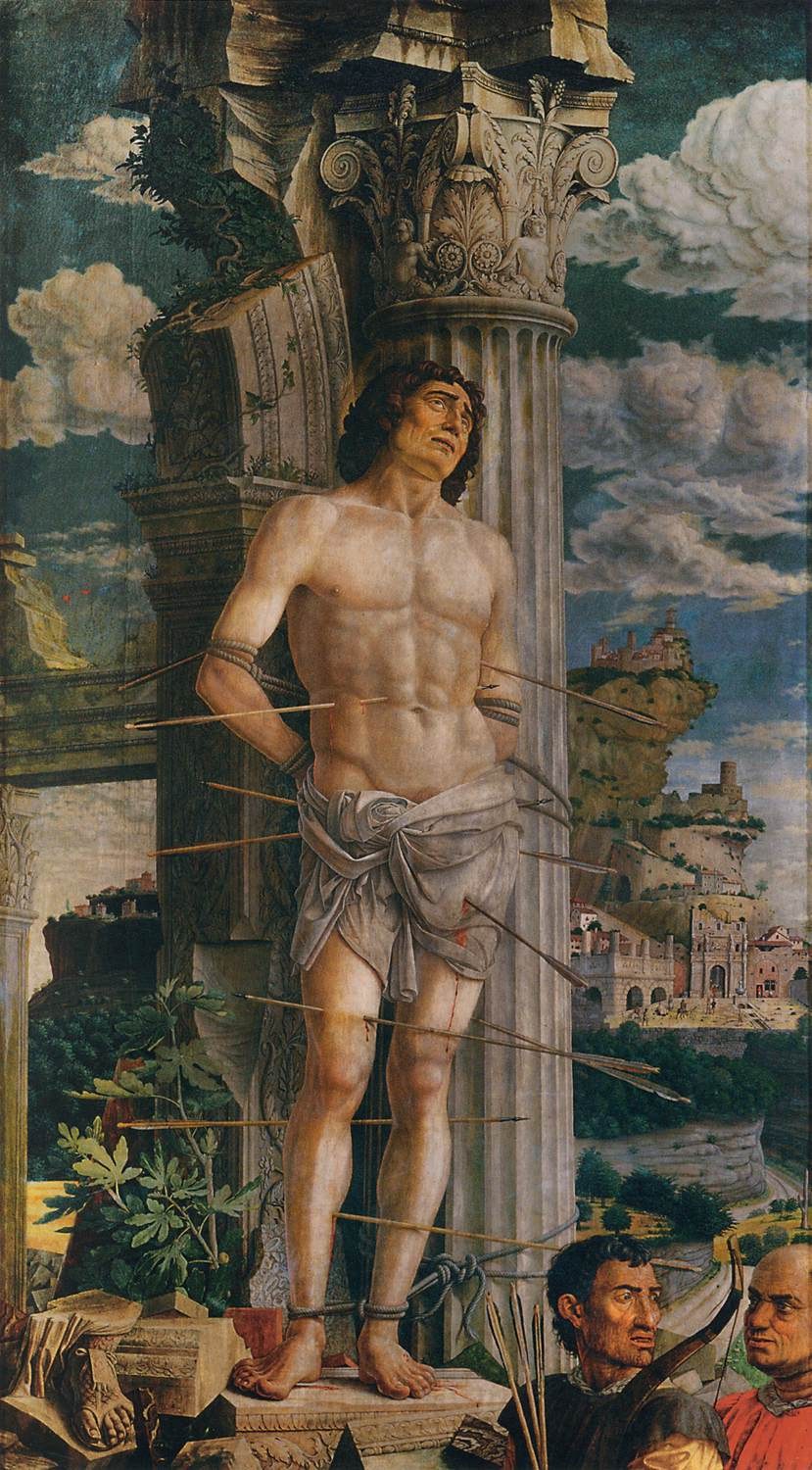
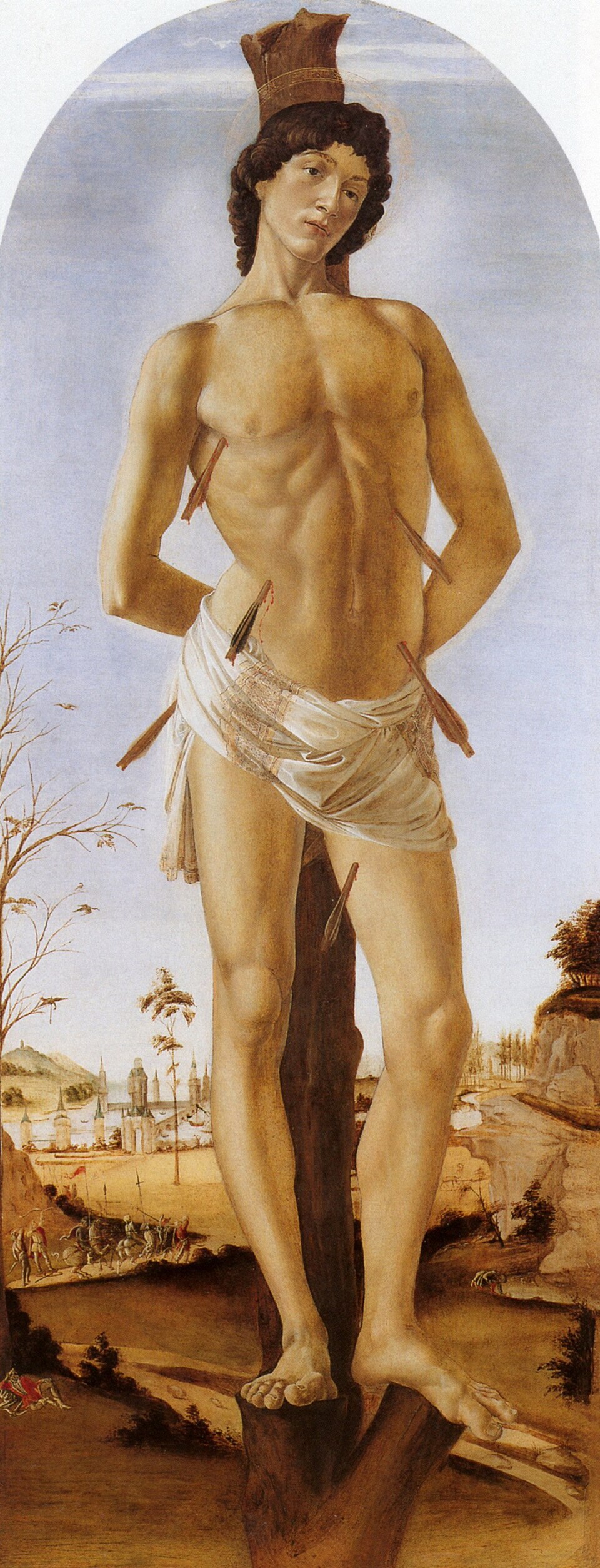
Two paintings of Saint Sebastian, but only one is by Mantegna. Which one?

His Place in Art History
How to recognise Andrea Mantegna?
Almost Sculpted Bodies
Firm outlines, sharply defined muscles and drapery.
Unusual Viewpoints
Foreshortened figures, views from below and painted architecture that seems to enter our space.
A Passion for Antiquity
Roman architecture, ancient myths and figures reminiscent of classical sculpture.
Key takeaways
Mantegna made perspective feel dramatic, gave painted figures the force of sculpture and brought ancient Rome into Renaissance painting. Those are the clues to look for in a new picture.
Pour aller plus loin
Daniel Arasse · France Culture · Une histoire de · 19 min. Audio in French. In the Camera degli Sposi, Andrea Mantegna does more than play with perspective: he stages the power and court of the Gonzaga family. An invitation to look at the details and understand what images tell us.