Donatello
Vers 1386–1466
Bringing sculpture to life. Donatello turns bodies, faces and carved spaces into a deeply human experience: a saint poised to act, a victor at rest, a palace carved into the depth of marble sonne littéral. A saint poised to act, a victor at rest, a palace carved in shallow relief.
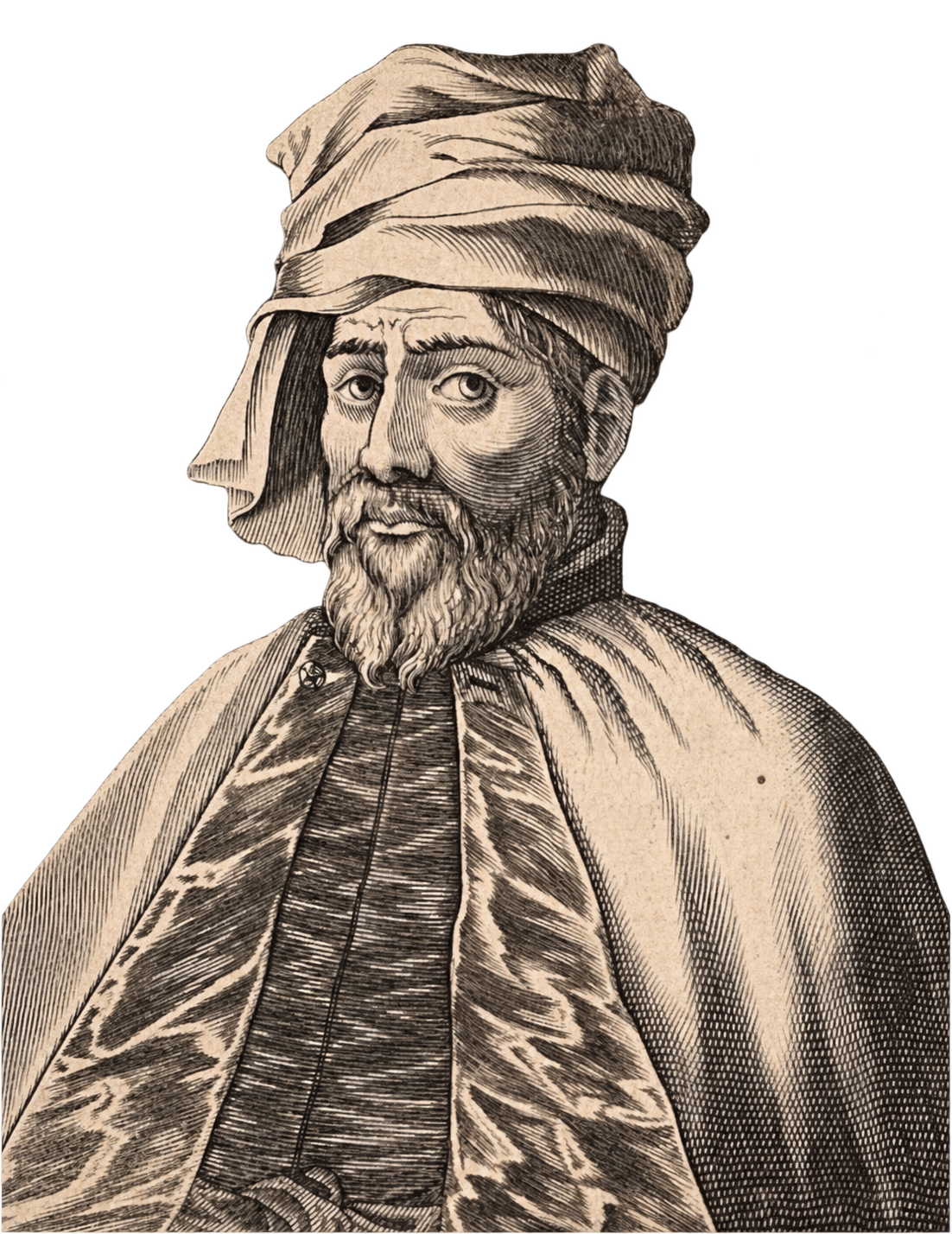
In a few words
Born in Florence around 1386, Donatello worked alongside Lorenzo Ghiberti early in his career. He received commissions from the Florentine guilds, worked for the baptistery in Siena and spent several years in Padua. He died in Florence in 1466.
From carved marble to cast bronze and painted wood, he adapted his materials to the effect he wanted. How can sculpture suggest that a man is about to act, or that a space extends behind the surface of the marble? The works on this page trace his answers.
Saint George
Look closely
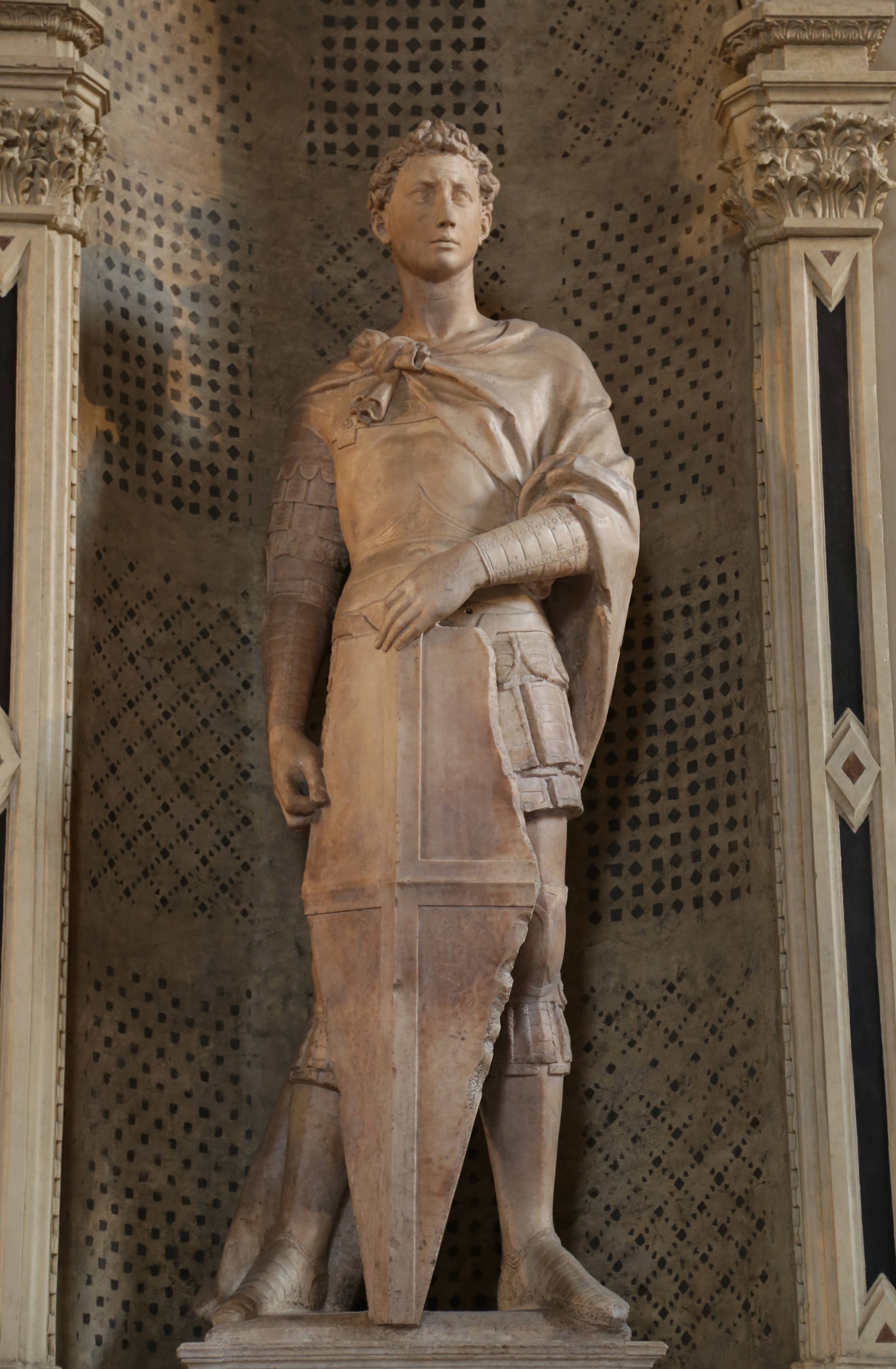
Start with the widely planted feet and follow the shield up towards the shoulders. The cross on the shield faces forwards, while the head and gaze turn slightly to one side. Look at the crease between the brows.
Understanding
A body poised to act
The Florentine guild of armourers and sword makers commissioned its patron saint for a niche at Orsanmichele. Donatello uses the armour and shield to shape the figure’s stance. The widely planted feet give it a firm footing. The head and gaze introduce a different direction, away from the axis of the shield. This slight turn is enough to make the saint seem alert to something beyond the niche.
David in Bronze
Look closely
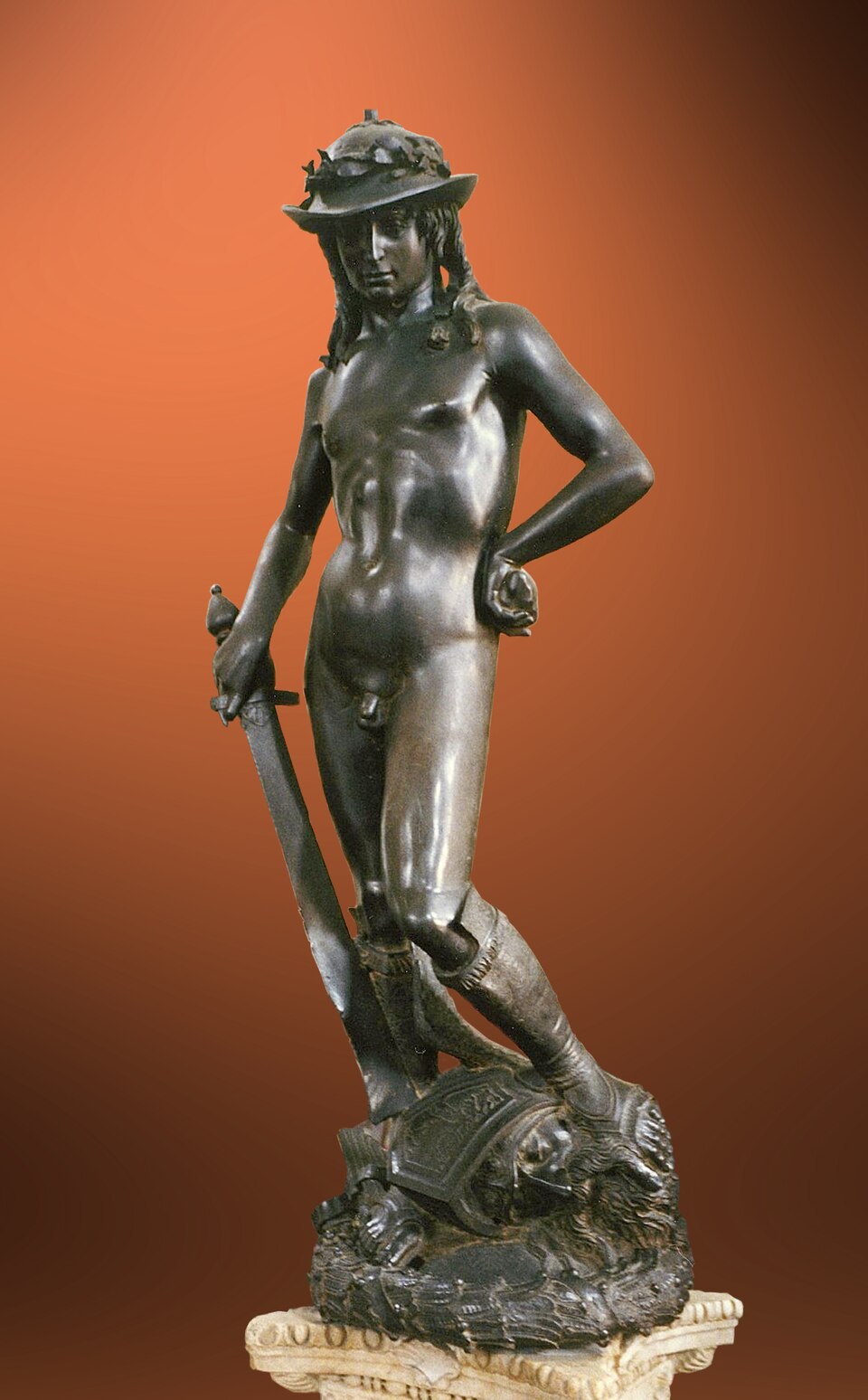
Follow the leg bearing the figure’s weight. The other bends, with its foot resting on Goliath’s head. Let your eye travel from the long sword up towards the hip and the lowered face. The hat and boots frame an almost entirely naked body.
Understanding
Giving victory the body of an adolescent
The shift of weight onto one leg and the tilt of the hip recall the contrapposto of ancient statues. Donatello gives the pose a new meaning by using it for a young biblical hero. The sword and Goliath’s head convey the violence of the fight, while the relaxed leg and lowered face place David in the quiet that follows. The bronze is made in the round. As we move around it, the relationship between the young body, the sword and the trophy at his feet changes.

Penitent Mary Magdalene
Look closely
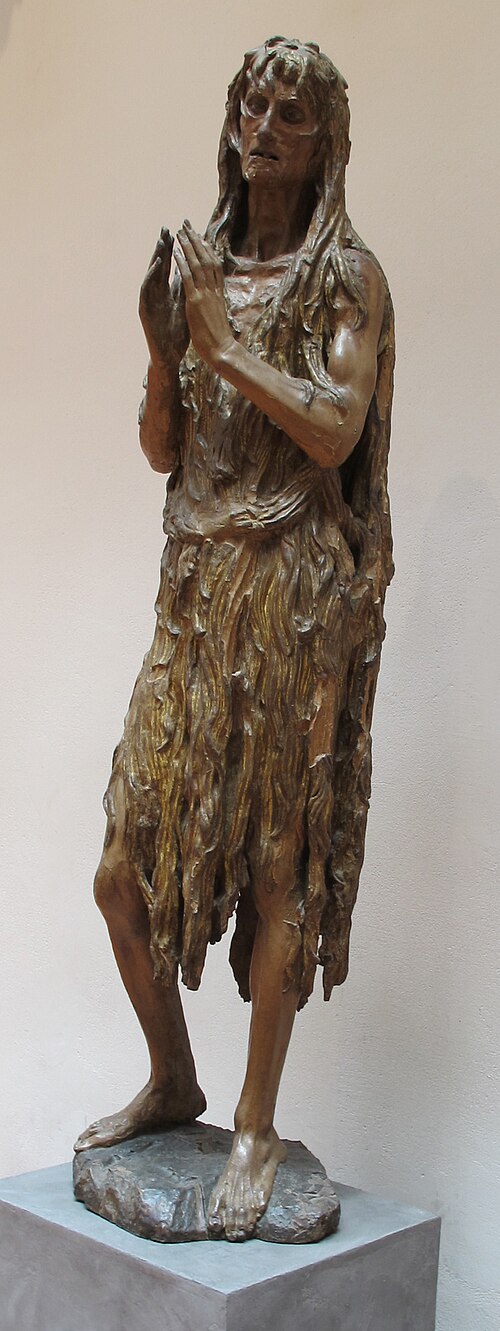
Look at the hollow cheeks, the parted lips and the tendons standing out in the neck. Move down to the raised hands, close together at chest height. Then follow the strands of hair as they blend into the rough surface covering the body.
Understanding
Giving form to penitence
Donatello portrays Mary Magdalene in her years of seclusion and penitence, an episode developed in medieval tradition. In the carved poplar, the hollows of the face deepen the shadows. The long hair and rough garment set off the slender fingers. The body bears the marks of her austerity, and the hands show what still holds her attention. Together these details make prayer a visible action.
Saint George and the Dragon
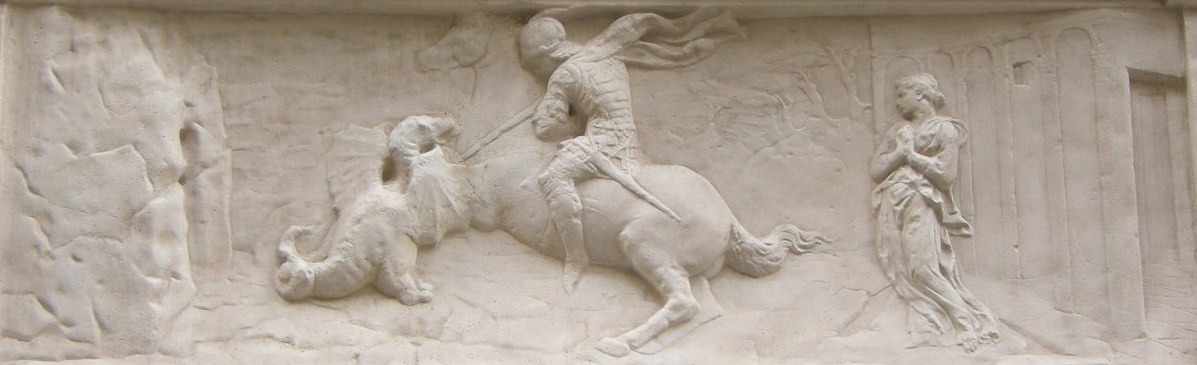
Look closely
Find the horse, rider and dragon in the centre. On the right, behind the princess, follow the lines of the loggia as they recede into the scene. Compare the outline of the horse with the barely visible lines in the distance.
Understanding
Carving distance into marble
This panel formed the base of the niche of Saint George at Orsanmichele. In the battle scene, Donatello combines the receding lines of the loggia with variations in the depth of the carving. The foreground figures catch the light, while those in the distance are reduced to shallow incisions. This is the principle of stiacciato, or flattened relief. The eye reads this slight difference in the marble as a distance to travel.
The Feast of Herod
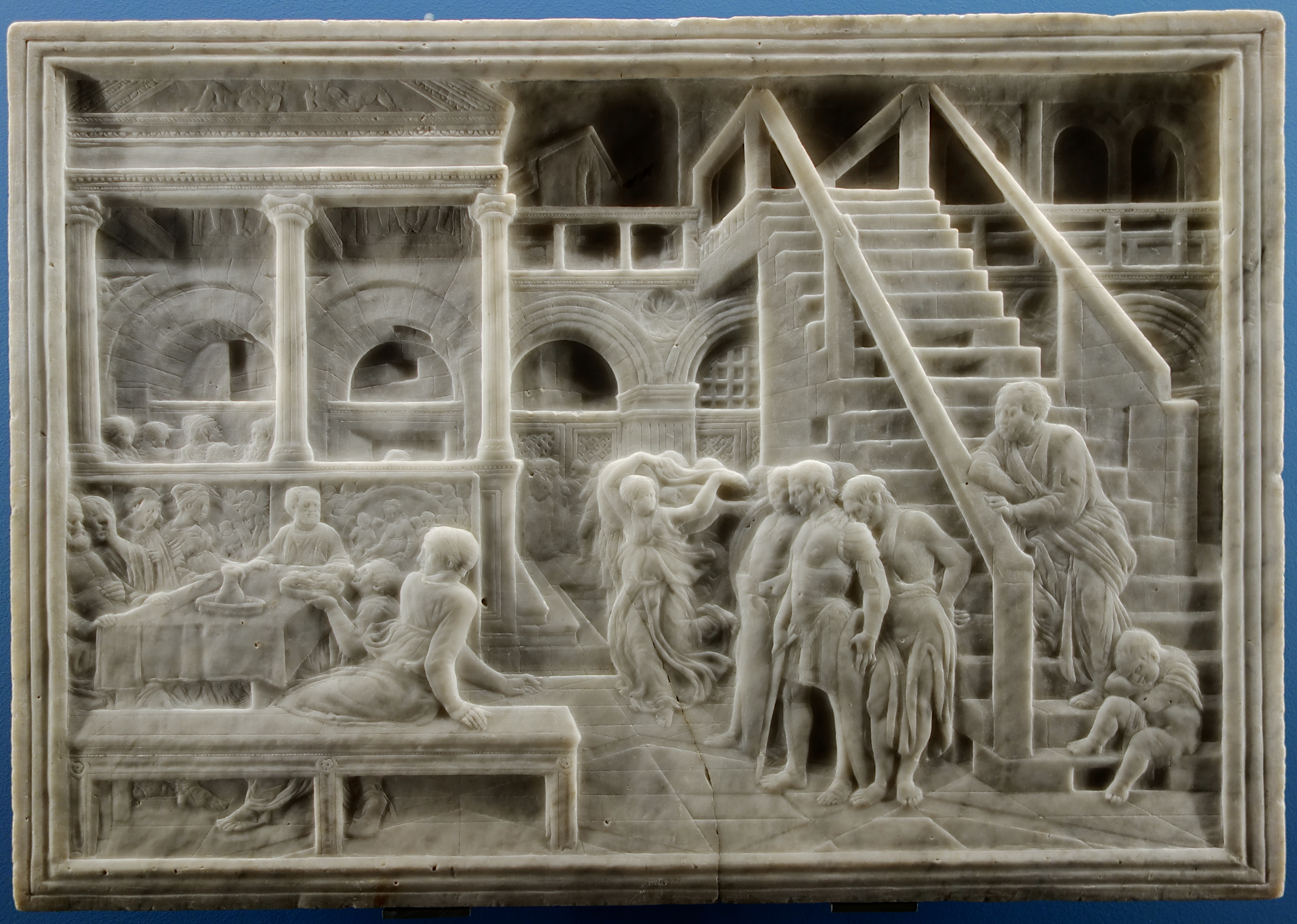
Look closely
In the courtyard, find Salome dancing in front of an arch. To the right, spectators watch from the stairs. Move left to the group gathered around the table. A kneeling servant presents the head of John the Baptist. Salome appears a second time, seated among the guests.
Understanding
Giving each moment of the story a place
In the Lille marble, Donatello sets two successive moments within the architecture of one palace. The courtyard is the setting for the dance that precedes Salome’s request. At the table, the head is presented. Seeing Salome standing and then seated tells us that time has passed.
The arches and staircase are carved in very shallow relief. In Saint George and the Dragon, near-flat carving suggested distance. Here it also gives the eye a route from one moment of the story to the next.
Two Crucifixes, Two Visions of Christ
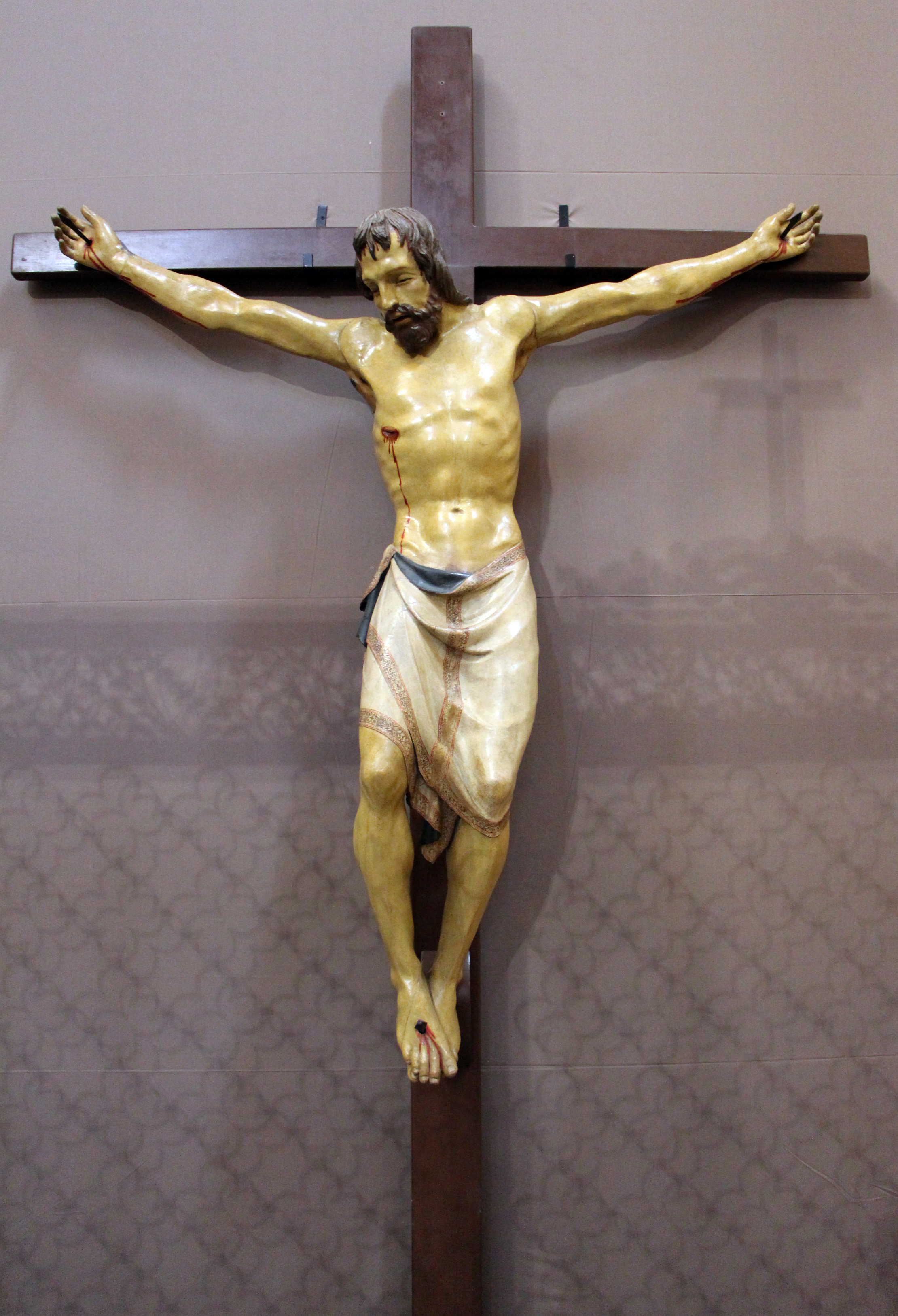
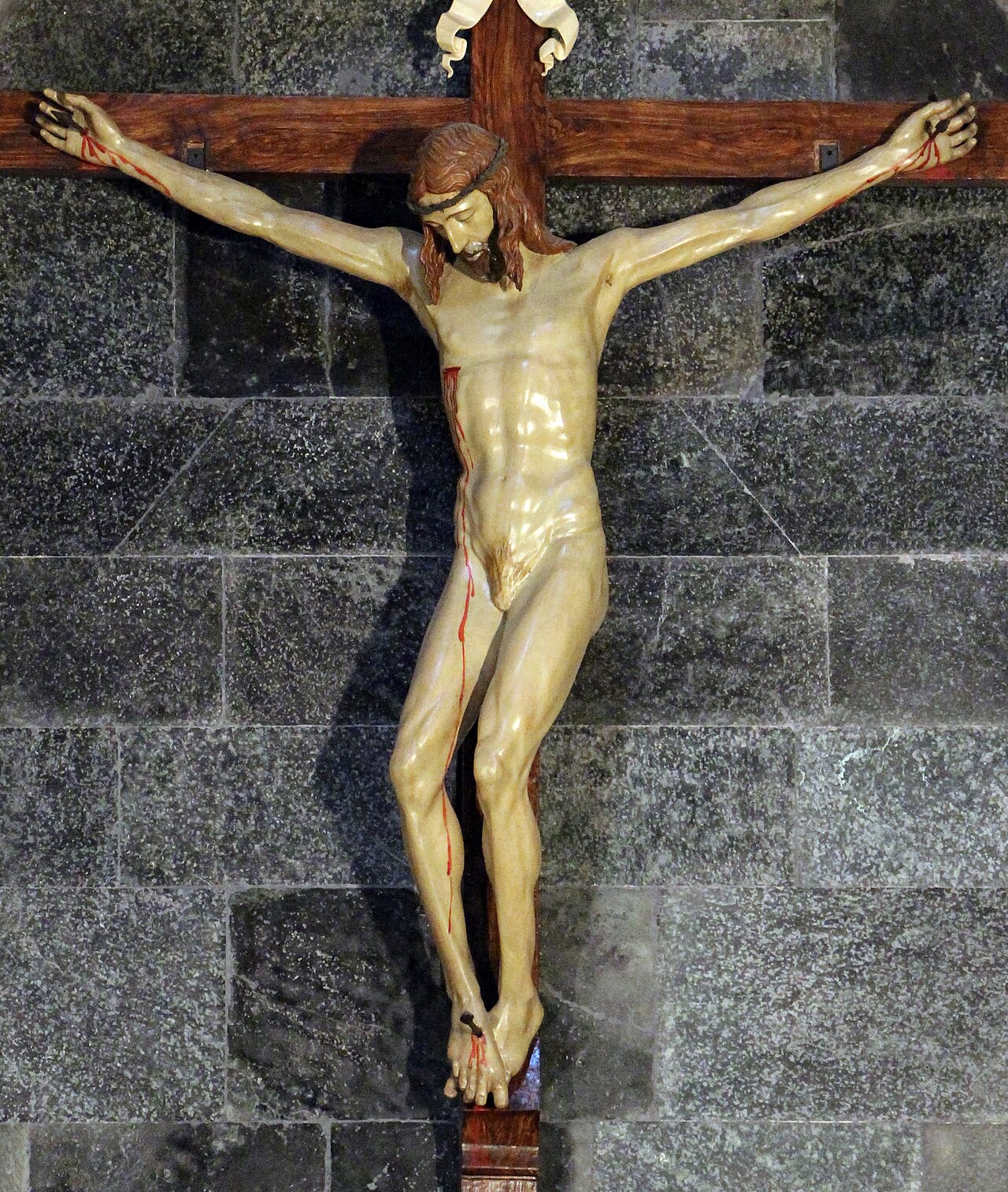
Writing more than a century later, Vasari tells how Brunelleschi supposedly carved his crucifix in response to Donatello’s. The anecdote shows how the two works were already being read together in the sixteenth century.
Look closely
Compare the heads, shoulders and arms. In Donatello’s figure, follow the tilt of the head and the way the torso sags. In Brunelleschi’s, look at the span of the arms and how the body fits the width of the cross.
Understanding
Both sculptors work with the same subject, the suspended body. Donatello conveys it through the sagging torso and the tension in the face. Brunelleschi organises the same body through a measured relationship between its arm span and its height. The comparison shows how proportion shapes what the viewer feels before each crucifix.
How to recognise Donatello?
A stance that suggests movement
Start with the feet. Saint George’s wide stance gives his body a firm footing. His face and gaze already give it a direction.
Surfaces that make the body tangible
Follow the light in the hollows of Mary Magdalene’s face and across her fingers. The carving gives force to the marks of austerity and the gesture of prayer.
Relief that fades into the distance
In the dragon relief, find where the foreground forms give way to fine lines. The change in carving makes the background recede.
An ancient pose in a biblical story
David’s weight on one leg and the tilt of his hip recall ancient sculpture. Goliath’s head turns the pose into an image of victory.
Key takeaways
Donatello’s sculpture makes tangible what it leaves us to imagine. Saint George’s stance suggests a movement about to begin, David’s youthful body gives victory an unexpected appearance, and Mary Magdalene’s hands make prayer almost tangible. The two reliefs show how sculpture can also create space with very little depth. Comparing the crucifixes brings out what made Donatello distinctive in Brunelleschi’s Florence.
When you encounter another work, start with a specific detail. A foot bearing weight, two hands drawing together or a line fading into the background can suggest movement, feeling or distance.