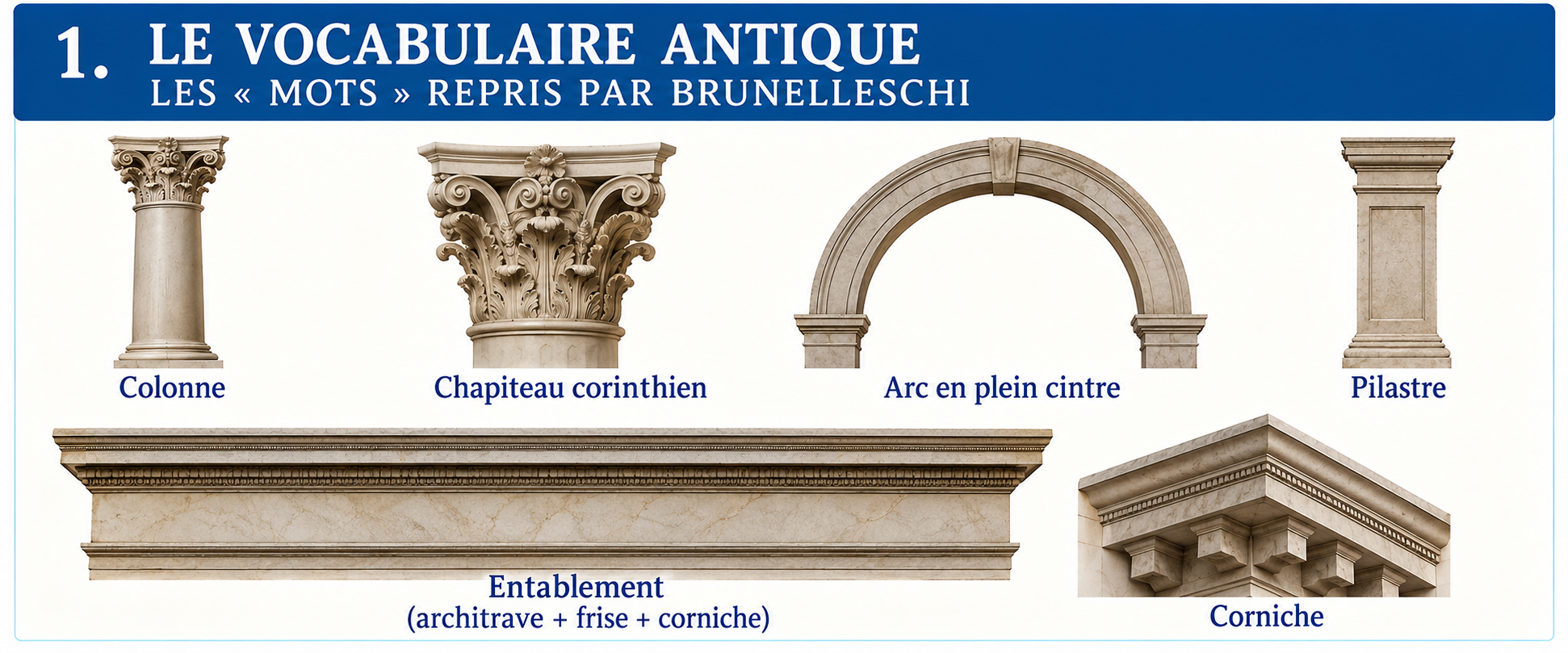
Le vocabulaire antique
Illustration pédagogique1377–1446
Three buildings, one idea
Antiquity provides the words; the Renaissance invents a new grammar. With Brunelleschi, columns, arches and proportions organise space into a clear, rhythmic and measurable whole.
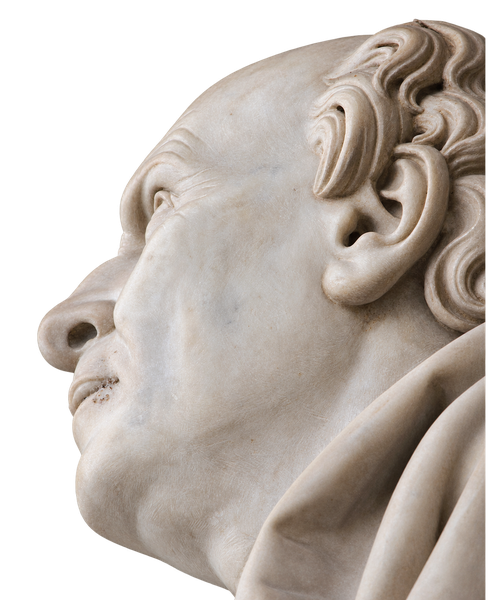
A Florentine architect and sculptor, Brunelleschi transformed architecture by rediscovering the proportions and forms of Antiquity. Designer of the famous dome of Florence Cathedral, he also played an essential role in the development of geometric perspective.
1 · The vocabulary — Columns · arches · entablatures
2 · Measurement — A nearly cubic bay
3 · The grammar — Repetition · rhythm · proportion
Brunelleschi reuses the vocabulary of classical architecture, but combines its elements in a remarkably regular system.
Le vocabulaire antique
Illustration pédagogiqueThe column supports the elements above; its capital marks the transition.
A semicircular arch that gives rhythm to the openings.
Horizontal and vertical elements that visually structure a building.
Imagine a bay as a section of architecture whose dimensions relate to one another. At the Ospedale degli Innocenti, the width, depth and height of the portico are conceived in proportions close to a cube: not a literal cube, but a way of thinking about space.
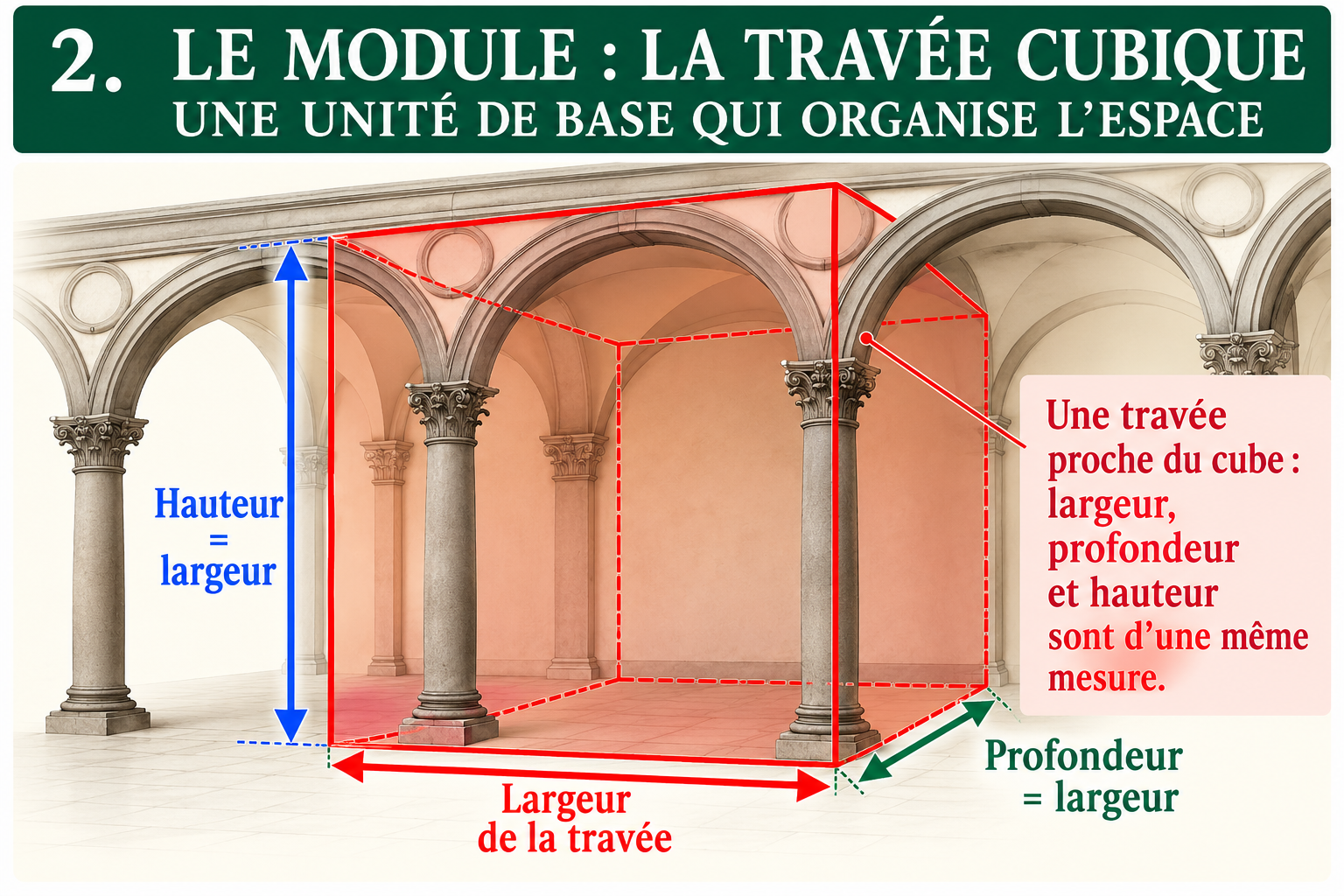
Le module et la travée cubique
Illustration pédagogique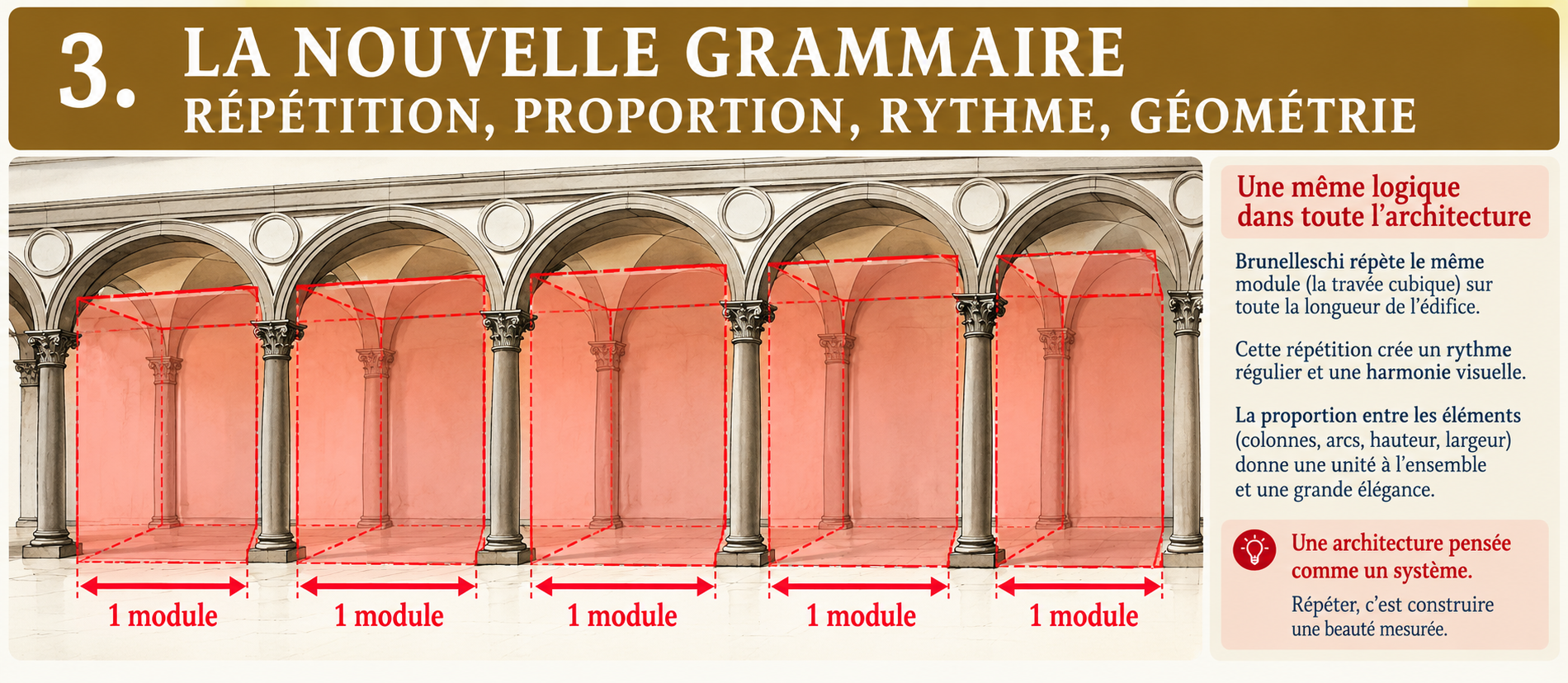
La répétition des modules
Illustration pédagogiqueRemember: Brunelleschi organises space by repeating coherent units, much as a musician repeats a musical phrase.
The module becomes visible in the portico : Start with a single arch: notice its width, the height of its column and the depth of the portico. Then move to the next arch. What stands out is not an isolated decoration, but the regularity.
A succession of regular arcades makes the rhythm immediately apparent. Columns and arches structure the façade.
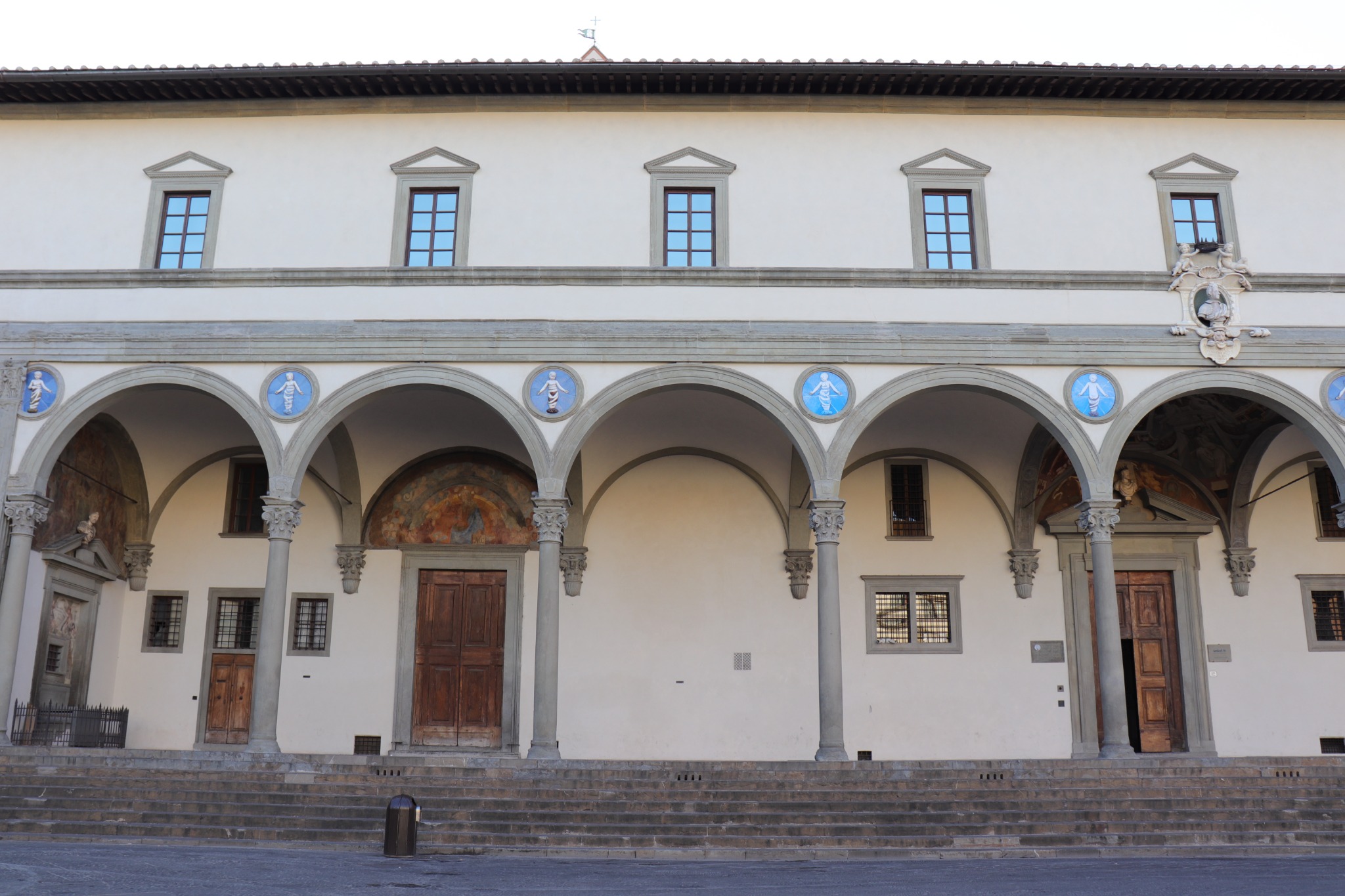
Façade of the Hospital of the Innocents — close view of the arcades
Photographie : HuthBerlin · CC BY 4.0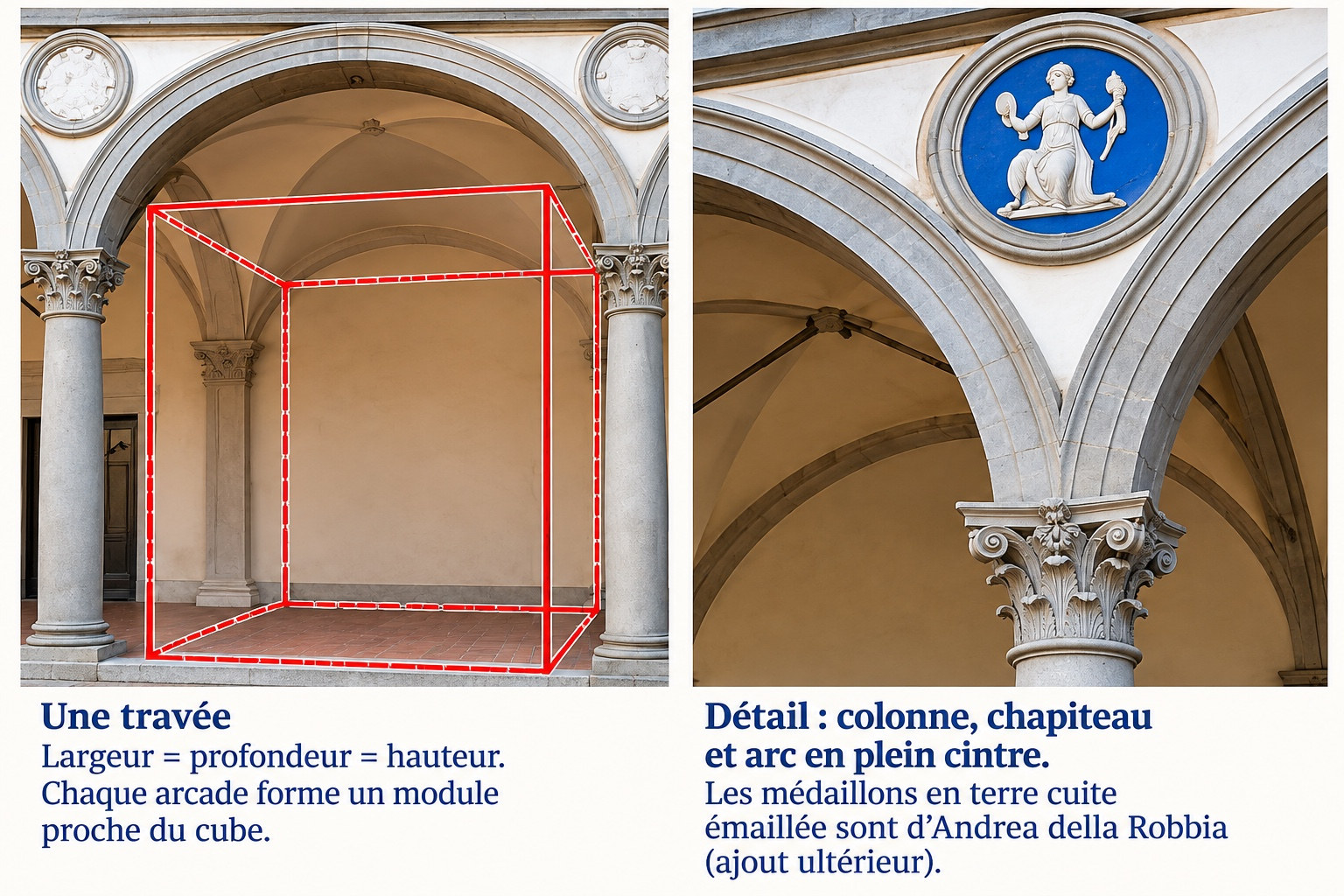
Hospital of the Innocents — cubic bay and portico detail. Click to enlarge.
Illustration pédagogiqueLook at the distance between two columns, then compare it with the depth of the portico. The blue glazed terracotta medallions were added after Brunelleschi's original design.
Remember: The module becomes visible in the portico.
The module organises the nave
Look straight down the nave. Columns and arches follow one another like beats in a musical bar. Their repetition draws the eye towards the far end of the church and makes the space easy to read.
The pietra serena columns, pale walls and regular arches lead the eye towards the choir.
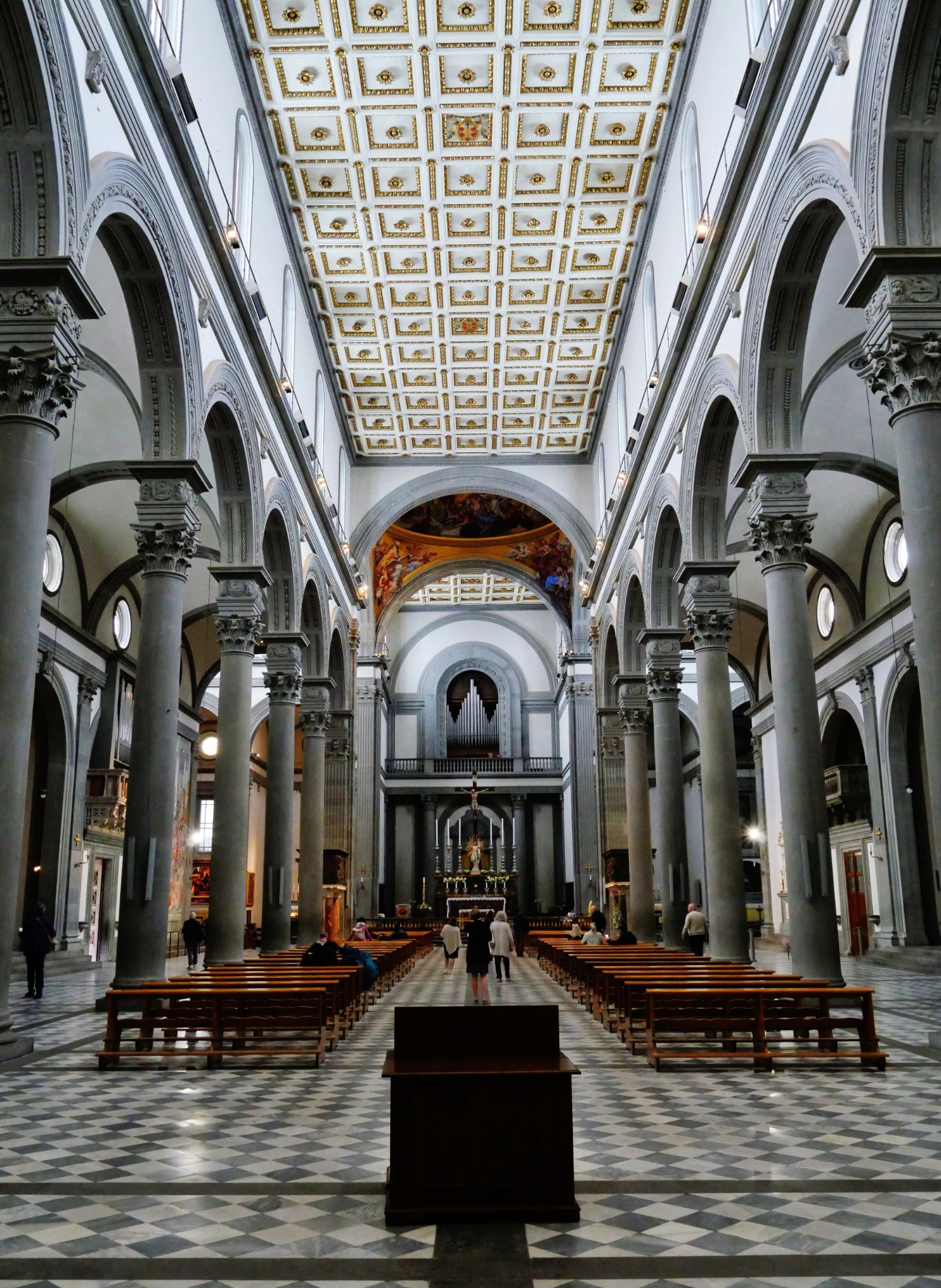
Basilique San Lorenzo, photographie de l’architecture
Zairon · CC BY 4.0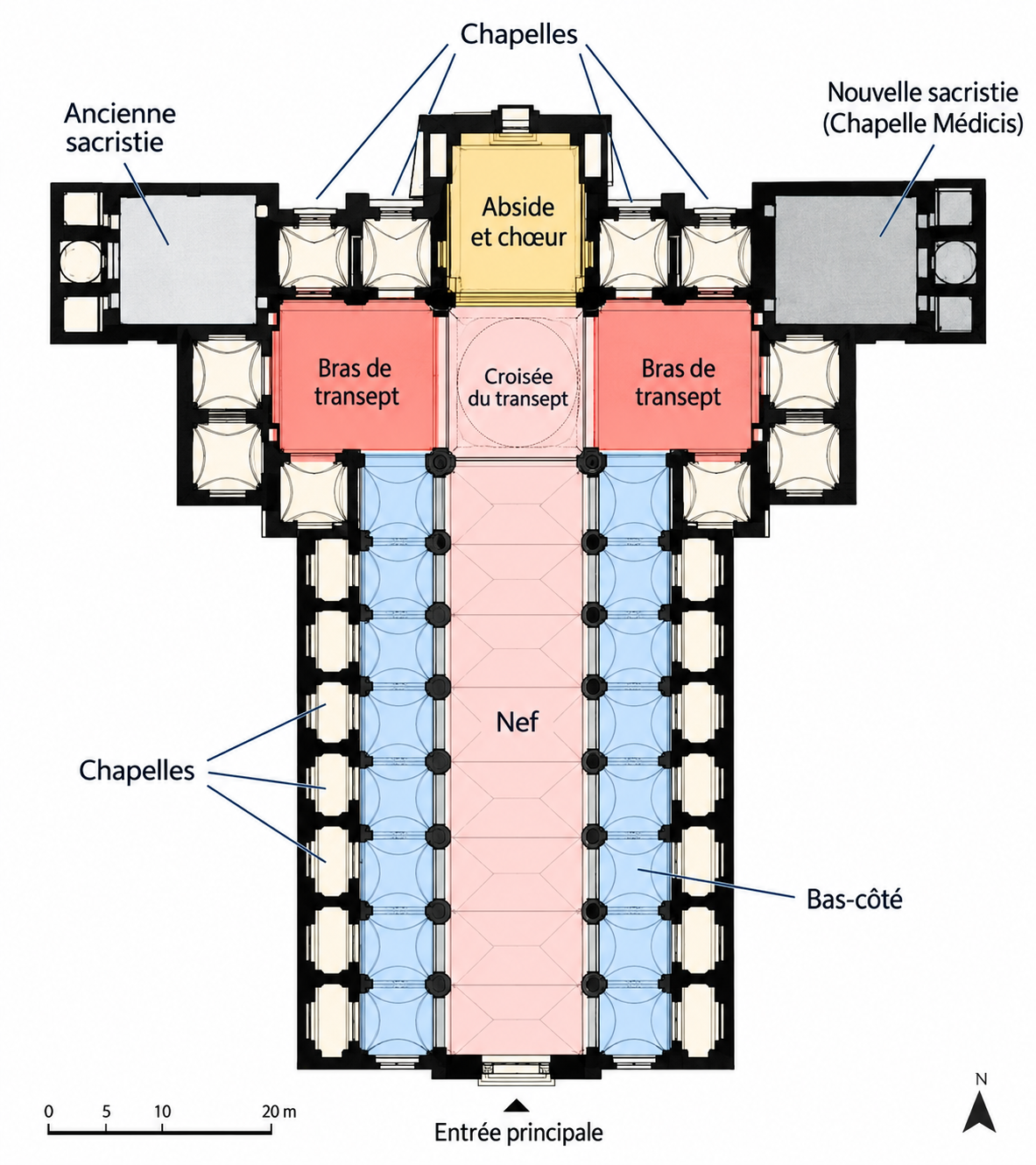
Colour educational plan
Plan pédagogiqueNotice how the same column–entablature–arch sequence is repeated. The decorated ceiling and some fittings date from after Brunelleschi.
Remember: The module organises the nave.
The system achieves greater unity : Compare the nave and the side aisles: the same language of arches and columns extends in several directions. Rhythm no longer organises just a façade or a row of bays; it brings coherence.
The repetition of bays continues through the nave and side aisles; the Latin-cross plan unifies the whole.
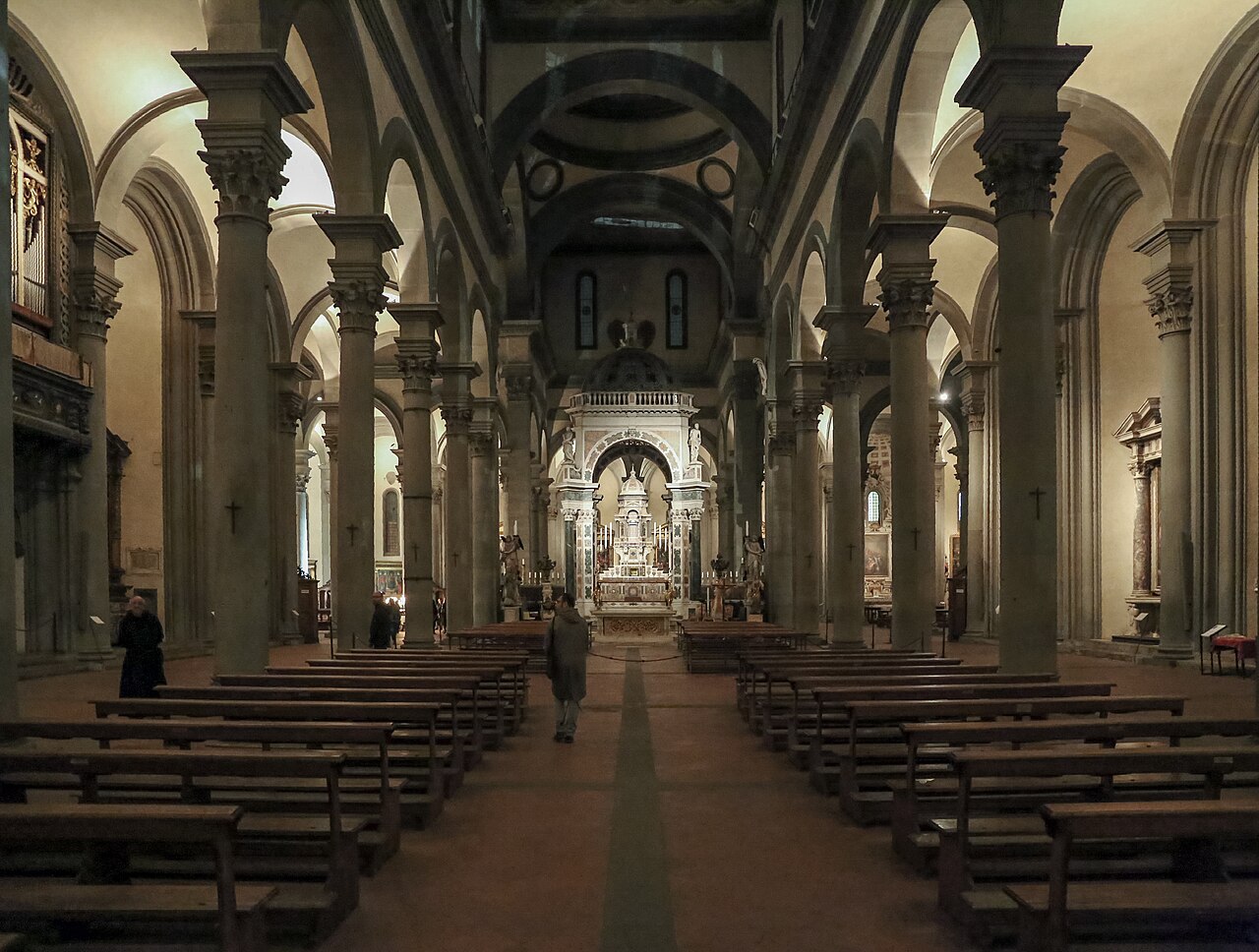
Basilique Santo Spirito,
CC BY 3.0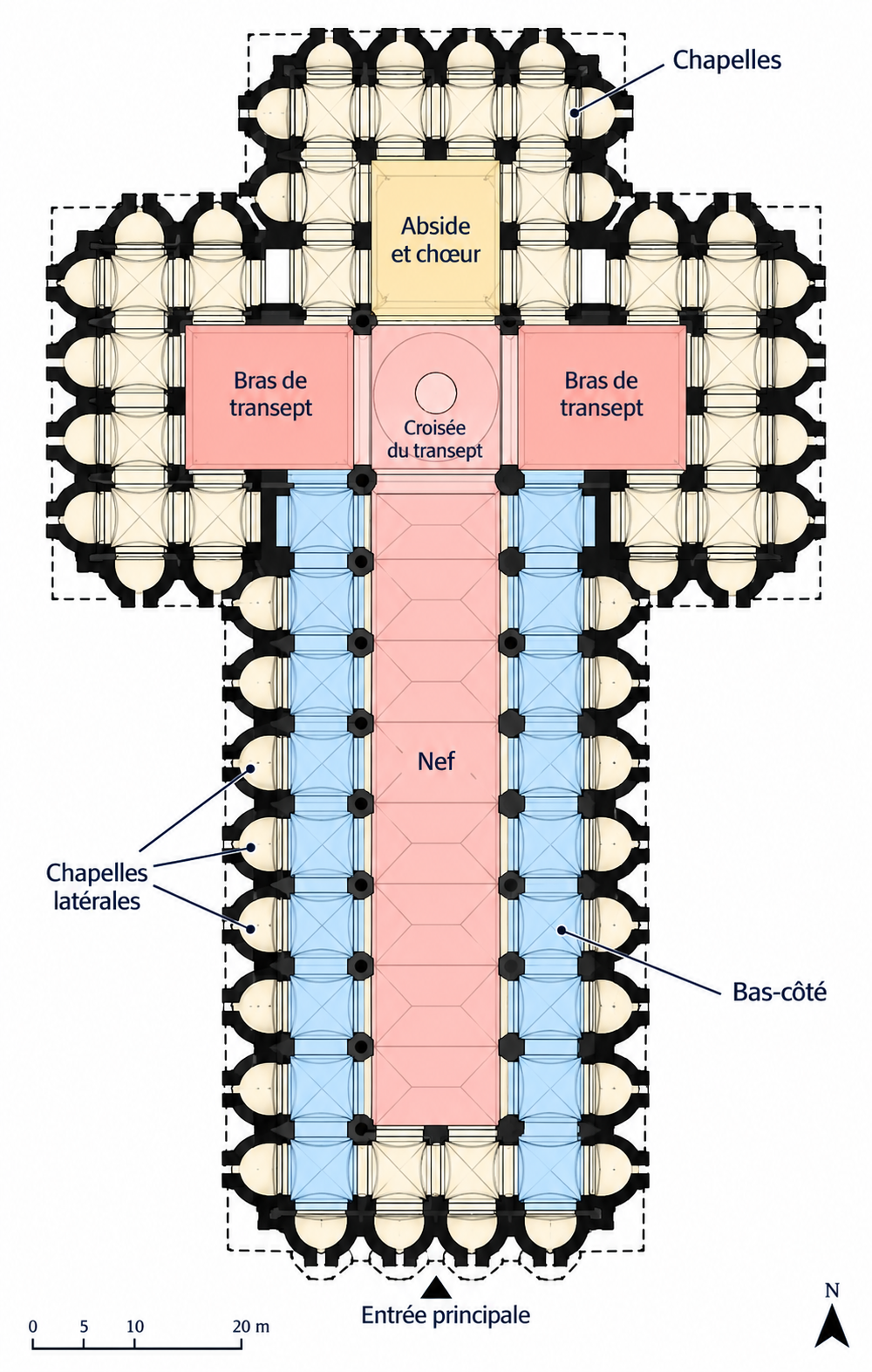
Colour educational plan
Plan pédagogiqueLook for the same proportions from one bay to the next. Semicircular chapels punctuate the perimeter of the building.
Remember: The system achieves greater unity.
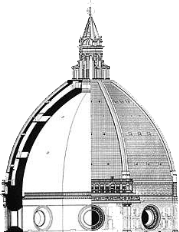
The Duomo dome — click to discover the illustrated page (preview)
Illustration pédagogiqueBrunelleschi did more than renew architectural proportions: he also devised a remarkable technical solution for raising the great dome of Santa Maria del Fiore. A dedicated page will explain the double shell and construction without a full-scale supporting centring.
What makes it revolutionary: an architecture conceived through measurement, geometry and overall coherence, using a rediscovered classical vocabulary.
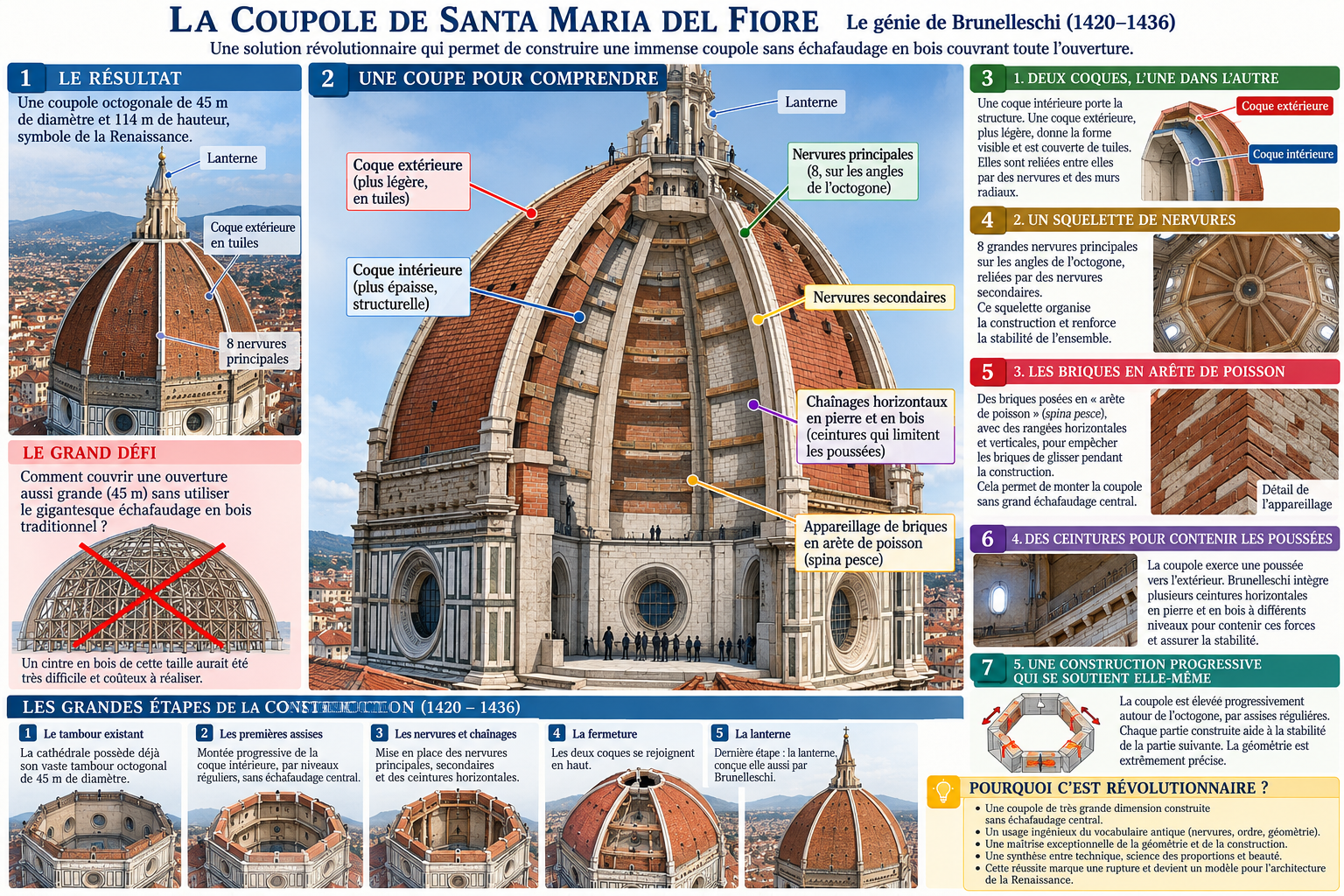
The Duomo dome — complete illustrated sheet
Illustration pédagogiqueWhat makes it revolutionary: an architecture conceived through measurement, geometry and overall coherence, using a rediscovered classical vocabulary.